India has almost no lithium mines of its own. Yet every year, millions of spent lithium-ion batteries come off its roads, out of its laptops and out of its factories — and every one of them carries lithium, cobalt, nickel and manganese inside. A Gurugram company called BatX Energies has built its business on a simple idea: the country’s richest lithium deposit is the pile of dead batteries it already owns.
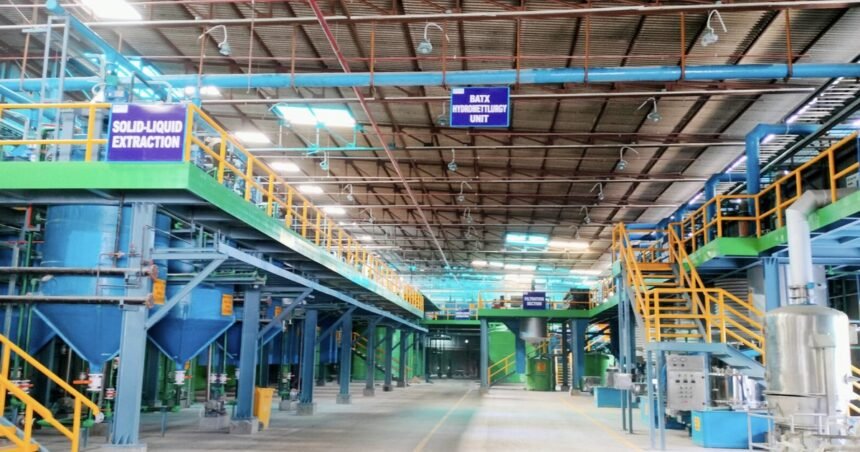
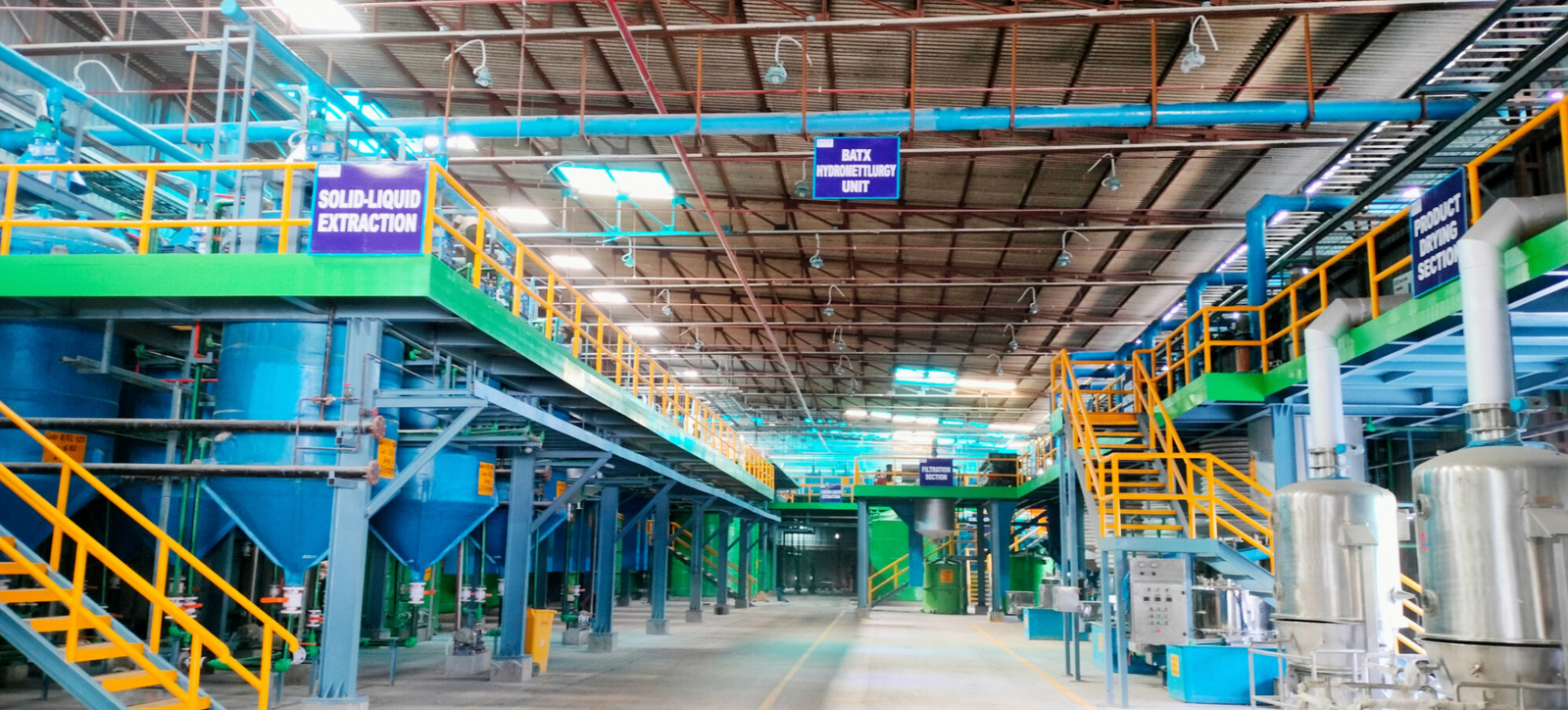
The company runs HUB-1, a Critical Minerals Extraction facility at Sikandrabad in Uttar Pradesh, where spent batteries are taken apart and refined back into battery-grade materials. The plant processes up to 5,100 metric tonnes of lithium-ion batteries a year, and the company says it processes around 200 metric tonnes of battery waste a month, with a hub-and-spoke network of collection points and micro-facilities that takes its total capacity past 20,000 tonnes a year.
From a dead pack to battery-grade salts
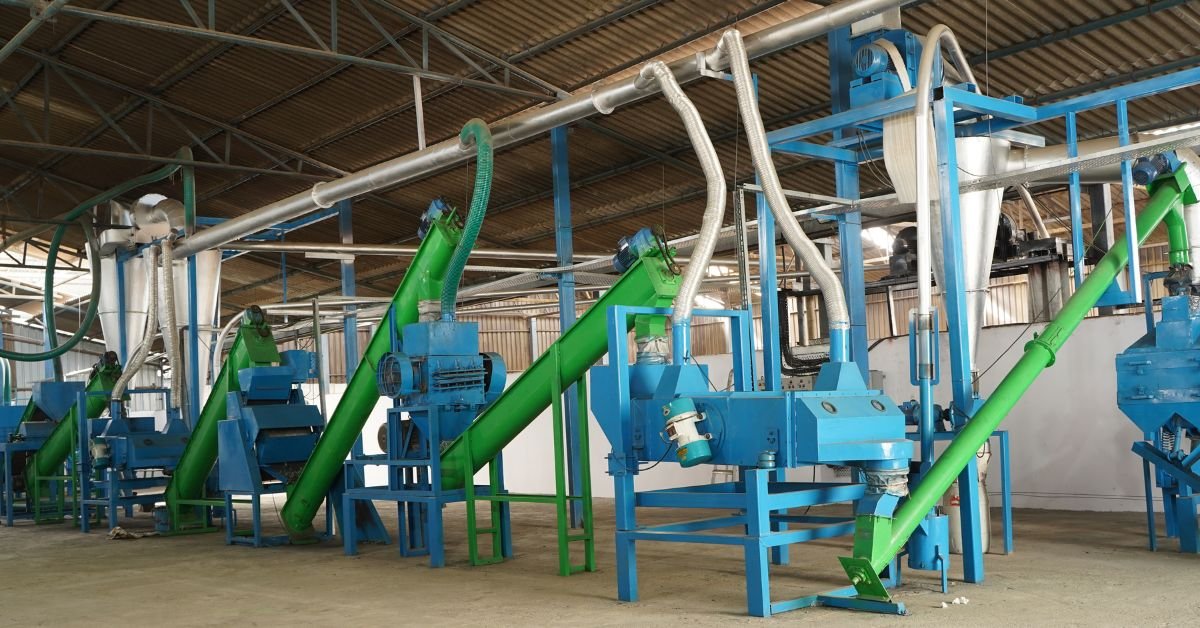
Every battery that arrives at Sikandrabad goes through the same journey. First it is fully discharged under controlled conditions, then dismantled on automated and semi-automated lines, then shredded and sorted into black mass — the concentrated powder of active materials, with less than 1% impurities. Secondary materials — aluminium, copper, steel and plastics — are recovered along the way.
The refining itself is hydrometallurgy: a low-temperature, low-pressure chemical process that leaches the metals out of the black mass and purifies them into battery-grade salts. BatX says the process recovers lithium, cobalt, nickel and manganese at 97–99% efficiency, and it works across chemistries — NMC, LFP, LCO and mixed streams — through a single platform. The outputs are micronized lithium carbonate, cobalt sulphate, nickel sulphate and manganese carbonate, made to global specifications for cathode and cell manufacturers, at home and for export.
What makes the plant unusual is how much of it was built in-house. The company says its entire technology stack — collection, shredding, leaching and purification — was developed and patented in India, with support from the Technology Development Board, and the HUB-1 plant itself was designed and fabricated by its own team. Seven patents have been filed on the process, and two have been granted.
A second life before the refinery
Not every battery that reaches BatX goes straight to the shredder. Packs that still hold useful charge are refurbished for a second life — and the company has put that idea to work in one of the country’s most visible demonstrations. With MG Motor, BatX helped create India’s first off-grid solar-EV charging station, running on repurposed MG electric-car batteries. It is also developing precursor cathode active material — pCAM — from recycled minerals, so recovered metals can go straight back into making new cathodes.
More Read

Why it matters now
India’s electric-vehicle fleet is growing fast, and its gigafactories are coming online — which means the mountain of spent batteries is about to get much bigger, just as the world competes for the metals inside them. China today dominates lithium processing, and every tonne BatX recovers is a tonne India does not have to import or dig up. The company already handles recycling, recovery and repurposing of high-voltage batteries for VinFast India’s manufacturing and after-sales operations, and through Rocklink, a joint venture, it has moved into rare-earth magnet recycling at the same Sikandrabad site.
The people and the backing
BatX was founded in 2020 by Utkarsh Singh and Vikrant Singh, who were named to Forbes 30 Under 30 Asia in 2023. The company won a CNBC-TV18 India Business Leader Award in 2024, and in July 2026 it raised Rs 105 crore in a Series A round led by IvyCap Ventures, with participation from Zephyr Peacock, the Mankind Pharma Family Office, the Excel Industries Family Office and JITO — money earmarked for expanding recycling and refining capacity and building a domestic supply chain for critical minerals.
What BatX is building points at a different kind of mining for India: no new pits, no new imports — just the metals already circulating through the country’s cars, phones and factories, recovered, refined and sent back to work. The mine never runs out, because the country keeps charging it.
Keep reading: From Coconut Shells to Better Batteries: Inside Cancrie, the Jaipur Startup Turning Farm Waste Into Nanocarbon · The Ink That Prints Living Tissue: Inside Scire Science, the Kochi Startup Behind India’s First Indigenous Bioink · More Chemicals, Materials & Life Sciences stories
Like stories like this? Add Exceptional Technology as a preferred source on Google to see more of our reporting in your search results and Discover feed.