A single gram of DNA can hold around 215 petabytes of data, researchers estimate — every film ever made and every photo ever taken, tucked into a speck you could balance on a fingertip. The catch has always been the cost of writing to it. In January 2024, a 22-year-old BITS Pilani graduate named Anagha Rajesh decided to fix that from Bengaluru, founding BioCompute to turn DNA into the hardest-working storage medium on the planet.
Two years later, the company says it has done what no Indian lab had done before: built an end-to-end DNA data storage prototype in India, written data into DNA and read it back, served its first paying customer, and raised more than &rupee;5 crore to take the technology to its next stage — a chip that writes, reads and stores data in bacterial DNA.
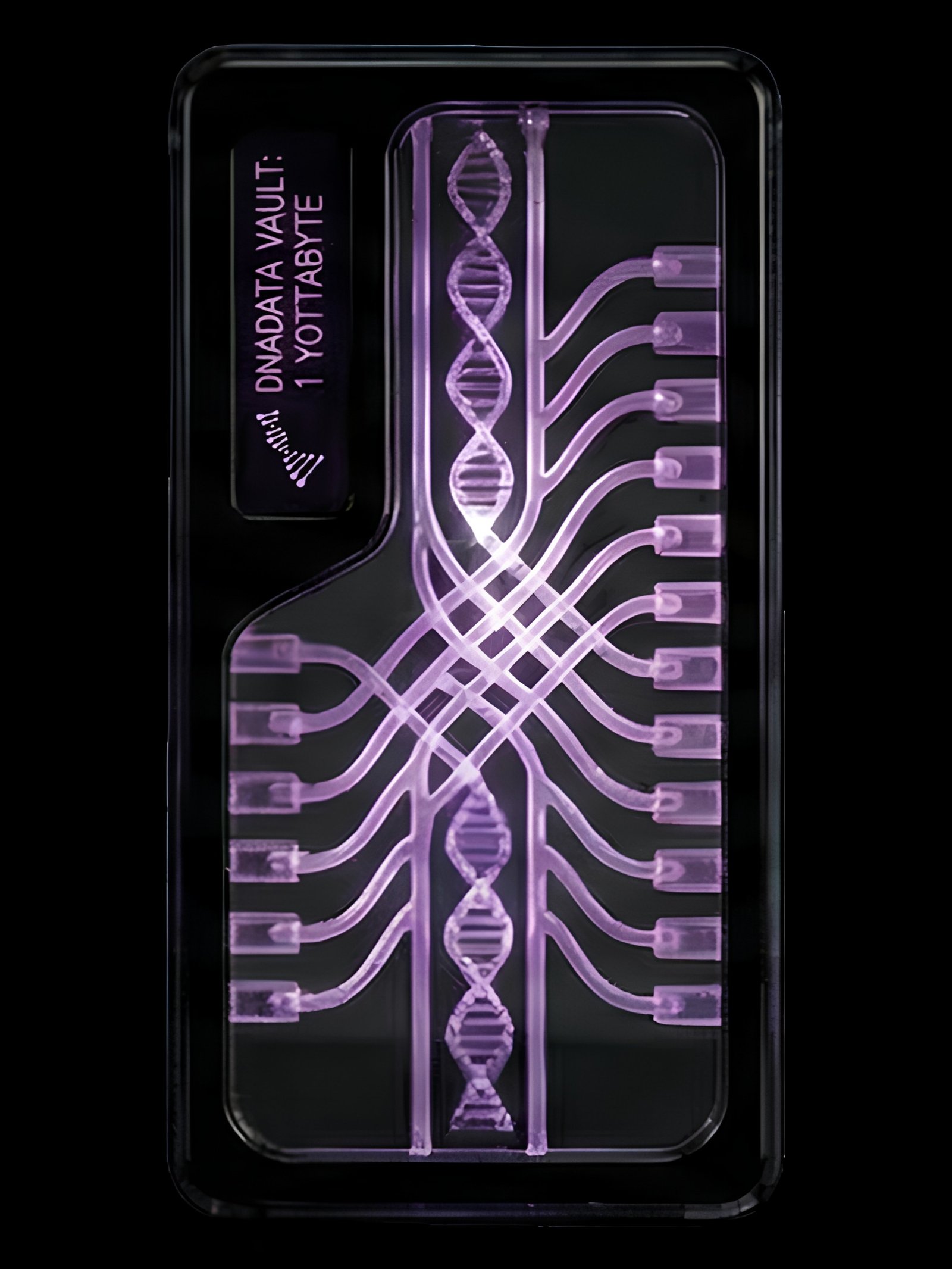
BioCompute’s DNA Data Vault chip render — the company’s vision for a microfluidics chip that writes, reads and stores data in bacterial DNA. (Official render: BioCompute)
The trick: stop manufacturing DNA
DNA storage has always had a dazzling promise and a stubborn problem. DNA is far denser and far more durable than the tape and disks that hold the world’s archived data, and it needs no power at all to keep holding it. But writing data into DNA has traditionally meant synthesising brand-new strands for every file — a slow, expensive chemical manufacturing step that kept the whole idea in the lab.
BioCompute’s answer is to stop manufacturing DNA altogether. Instead of synthesising new strands, the company writes data by marking reusable DNA templates, using an enzymatic process to edit information onto DNA that already exists. “We are not trying to make DNA cheaper to manufacture. We are eliminating the need to manufacture it,” Rajesh said. The company says it has already demonstrated a write cost of $1 per megabyte, with a longer-term goal of $1 per terabyte.
More Read

The timing is hard to beat. Data centres already consume enormous amounts of energy and water, and the rise of AI is multiplying the data the world needs to keep. DNA offers a way to store archives that must survive for decades — film collections, scientific datasets, financial records — in a fraction of the space and with none of the power draw.
From a home lab to a working prototype
BioCompute’s story was built experiment by experiment in Bengaluru. Rajesh founded the company in January 2024, began incubation at the city’s Centre for Cellular and Molecular Platforms (C-CAMP) that July, and ran a home laboratory before opening her own workspace in Koramangala in July 2025. In April 2025, the company says, it hit its key milestone: data successfully written into DNA and retrieved using an Oxford Nanopore sequencer.
By January 2026, BioCompute had served its first paying customer. The Economic Times reported in June 2026 that the company had raised more than &rupee;5 crore, with backers including WTFund, gradCapital and 1517 Fund, alongside Emergent Ventures, and the company lists MeitY among its supporters. It also won a &rupee;31.4 lakh Big Pi grant at SusCrunch 2024.
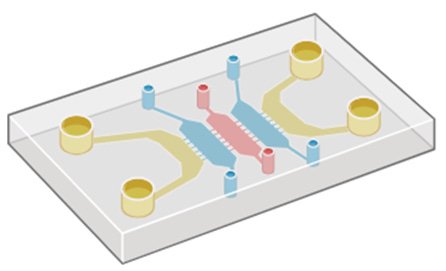
BioCompute’s microfluidics chip illustration — micrometre-scale channels to write, read and store data in bacterial DNA. (Official illustration: BioCompute)
Encode, write, store, read
BioCompute describes its system in four stages. First, encrypted digital files are converted into a representation compatible with DNA. Then an enzymatic process edits the information onto existing DNA templates. The encoded material is preserved in sealed containers, and a proposed solid-state nanopore system recovers the electrical signals and reconstructs the digital information.
The company says its target markets include long-term storage for cloud providers, financial institutions, media businesses, researchers and public-sector organisations, and it has already run early paid pilots with creative studios. Its website now invites applications for early-access pilots.
The next chapter is a chip
BioCompute is now assembling the V1 of its DNA-storage chip in San Francisco, where the company is incubated at UC Berkeley’s Bakar Labs. The prototype, the team and the thousands of experiments behind it were all built in Bengaluru — the first lab in India to chase DNA data storage at this scale, the company says.
The molecule that has stored the code of life for four billion years is ready for a second career: storing ours.
Keep reading: No Power, No Chemicals, No Operator: Inside ECOSTP’s Sewage Plant Inspired by a Cow’s Stomach · Mind Over Machine: Inside Nexstem’s Instinct, the Bengaluru Headset That Turns Thought Into Command · More Chemicals, Materials & Life Sciences stories
Like stories like this? Add Exceptional Technology as a preferred source on Google to see more of our reporting in your search results and Discover feed.