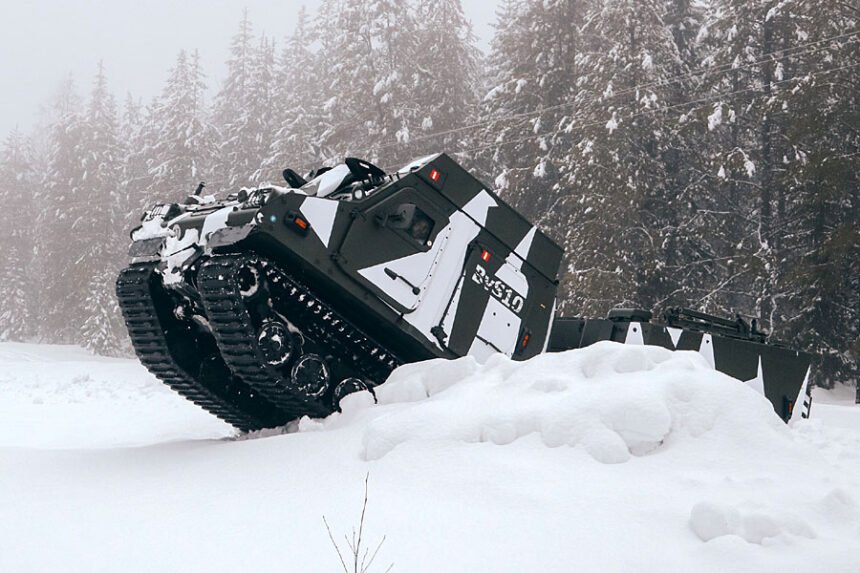
Picture a single vehicle that can climb through deep snow at 18,000 feet in Ladakh, where the temperature falls to minus 55 degrees, and then patrol marshland, desert and the Great Rann of Kutch, where it can reach 55 degrees. That is the job India has just started building for: on 28 October 2026, Larsen & Toubro (L&T) and BAE Systems commenced production of the BvS10 Sindhu articulated all-terrain vehicle for the Indian Army at L&T’s Armoured Systems Complex in Hazira, Surat.
The initial order covers 18 troop-carrying vehicles, scheduled for deployment in Ladakh and the Kutch region. It is a strikingly focused buy: not a vehicle for one kind of terrain, but one built to keep troops moving where ordinary wheeled and tracked vehicles struggle — high-altitude snow, salt flats, marshes and desert, all in the same fleet.
Two vehicles joined together, built to go anywhere
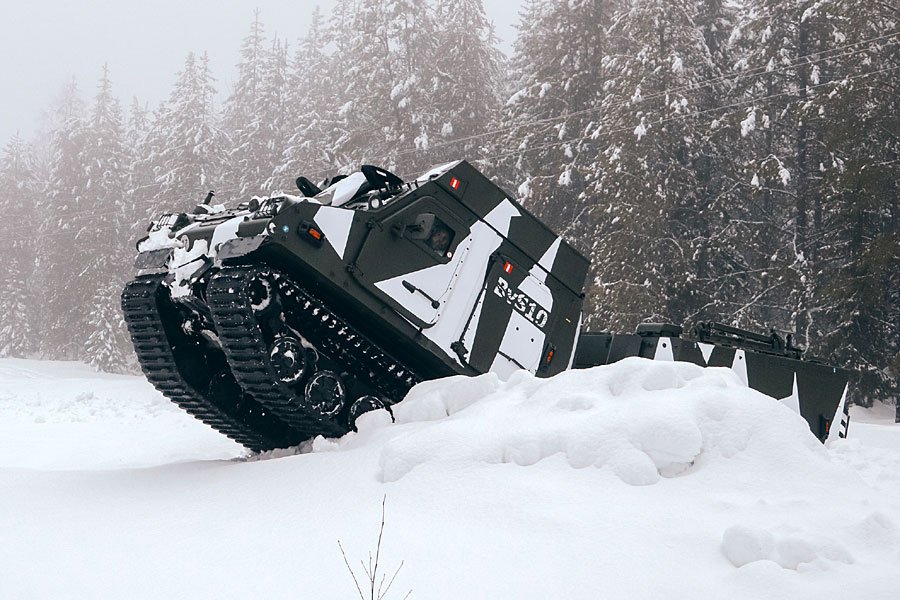
The secret of the BvS10 is in its shape. It is an articulated vehicle: two tracked cabins joined by a steering joint, so the front and rear sections can twist and flex over ground that would stop a rigid vehicle. That articulation, combined with low ground pressure from its tracks, is what lets it cross snow, ice, rock, sand, mud and swamps, climb steep mountain slopes, and even swim across flooded areas and coastal waters.
The design is also deliberately modular. The same platform can be configured for troop transport, command and control, medical evacuation, repair and recovery, logistics, situational awareness and mounted weapon systems. The Indian Army’s first 18 are troop carriers, but the platform underneath them is a whole family of missions in one vehicle.
From a 2023 partnership to a Made-in-India production line
The Sindhu story did not start with this production launch. In September 2023, BAE Systems and L&T signed an agreement to bring the BvS10 to India, with L&T as the prime bidder and BAE Systems Hägglunds, the Swedish manufacturer of the BvS10 family, providing support. They upgraded the vehicle for the specific requirements of the Indian Armed Forces, and that new variant took the name BvS10-Sindhu.
On 19 November 2025, the Indian Army signed the licensed manufacturing contract with L&T. Under it, L&T indigenously produces the BvS10 Sindhu at Hazira, with technical and design support from BAE Systems Hägglunds, and the contract includes a comprehensive integrated logistics support package covering initial deployment, maintenance and life-cycle sustainment. Reporting on the programme puts indigenous content at more than 60 per cent, with deliveries expected within two years of the contract.
More Read

Arun Ramchandani, Senior Vice-President and Head of L&T Precision Engineering, described the production launch as the start of a long-term partnership with BAE Systems. “Since we signed this agreement in 2023, we’ve come a long way. We’ve won a program together, and it did take a lot of belief and trust in each other to reach this far,” he said. “Today marks the journey of production of the BvS10 Sindhu. It’s a marvel of engineering, and we are proud to be associated with BAE Hägglunds, the developer and creator of this wonderful platform.”
A proven platform, now tailored for India
What makes the Sindhu programme so satisfying is that India is not betting on an unproven idea. The BvS10 is already in service in Austria, France, the Netherlands, Sweden and the United Kingdom, among others, and its unarmoured sister vehicle, Beowulf, won the US Army’s Cold Weather All-Terrain Vehicle competition. The Sindhu takes that proven, world-leading mobility and adapts it for India’s own extremes — high altitude, desert, marshland and amphibious operations — after a demanding series of trials in both sea-level and high-altitude conditions.
As BAE Systems Hägglunds managing director Tommy Gustafsson-Rask put it at the contract signing, the BvS10’s mobility, flexibility and performance in extreme climatic conditions were the critical attributes highlighted by the Indian Army. The licensing programme, he said, embodies the company’s commitment to local manufacturing and technology transfer under the Make in India initiative.
That is the larger story here. A vehicle that once had to be imported for the world’s harshest jobs is now being built in Gujarat, with Indian manufacturing, Indian support and a growing share of Indian content — ready to carry troops across snow in Ladakh and salt flats in Kutch alike. From minus 55 to plus 55, the BvS10 Sindhu is India building its own way through its hardest terrain.
Sources & further reading
- L&T: BAE Systems and Larsen & Toubro team up to bring BvS10 to India (September 2023)
- The Economic Times (ANI): L&T and BAE Systems start production of BvS10 Sindhu ATVs (28 October 2026)
- News9: L&T, BAE Systems begin production of BvS10 Sindhu for Indian Army
- NewKerala (IANS): L&T begins production of BvS10 Sindhu ATVs for Indian Army
Keep reading: First of Its Class, Built by a Private Yard: Inside INS Samarthak, L&T’s 106-Metre Multi-Purpose Warship · ASHVA 4×4: The Indian ATV Tested at 15,000 ft in Ladakh’s Thin Air · More Aerospace & Defense stories
Like stories like this? Add Exceptional Technology as a preferred source on Google to see more of our reporting in your search results and Discover feed.