


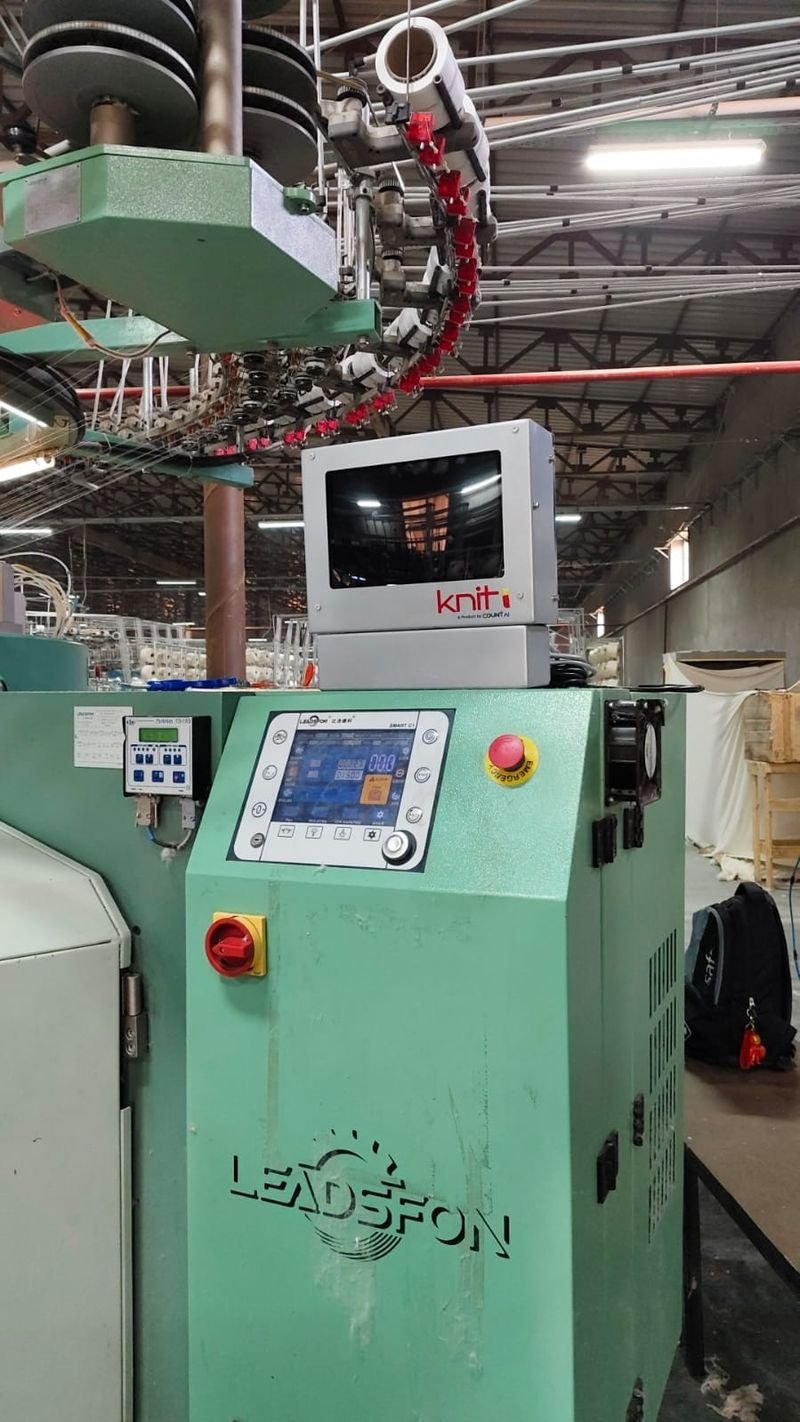
A circular knitting machine spins at more than 30 revolutions a minute, turning yarn into hundreds of kilograms of fabric a day. Somewhere in that blur, a needle bends, a yarn snaps, a drop of oil lands — and metres of defective fabric are born before anyone notices. In Coimbatore, a team of engineers decided the machine itself should be the one watching. Their answer is Knit-I, an AI inspector that sees every centimetre of fabric as it is knitted, spots a defect in 20 milliseconds, and stops the machine before the waste piles up.
The 20-millisecond inspector
Knit-I is the flagship product of CountAI, a Coimbatore startup founded in 2022 by Harshavardhan Thirupathi and Venkataramanan Chockalingam. Thirupathi, an IIT Madras graduate who previously worked on medical imaging at Philips Healthcare and autonomous driving at Toyota, built the company around a simple idea: AI that works on the factory floor, not just in the lab. Knit-I retrofits onto any circular knitting machine — any make, model, diameter or gauge, with no modifications to the machine itself — and watches the fabric tube as it forms.
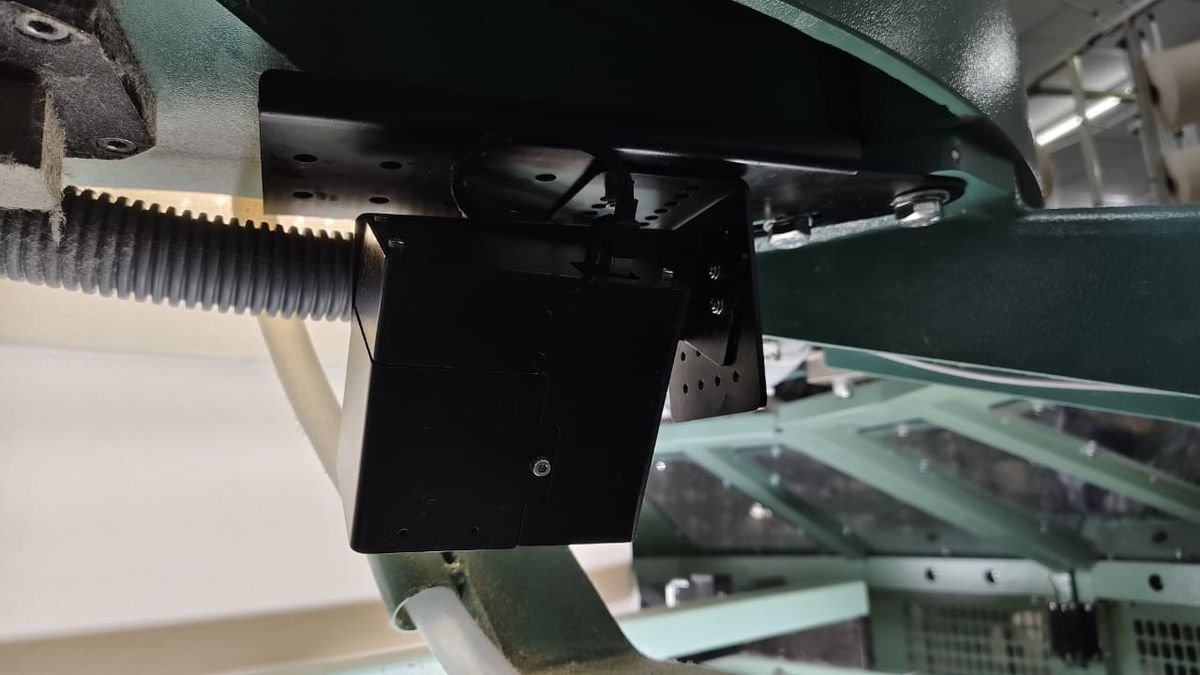
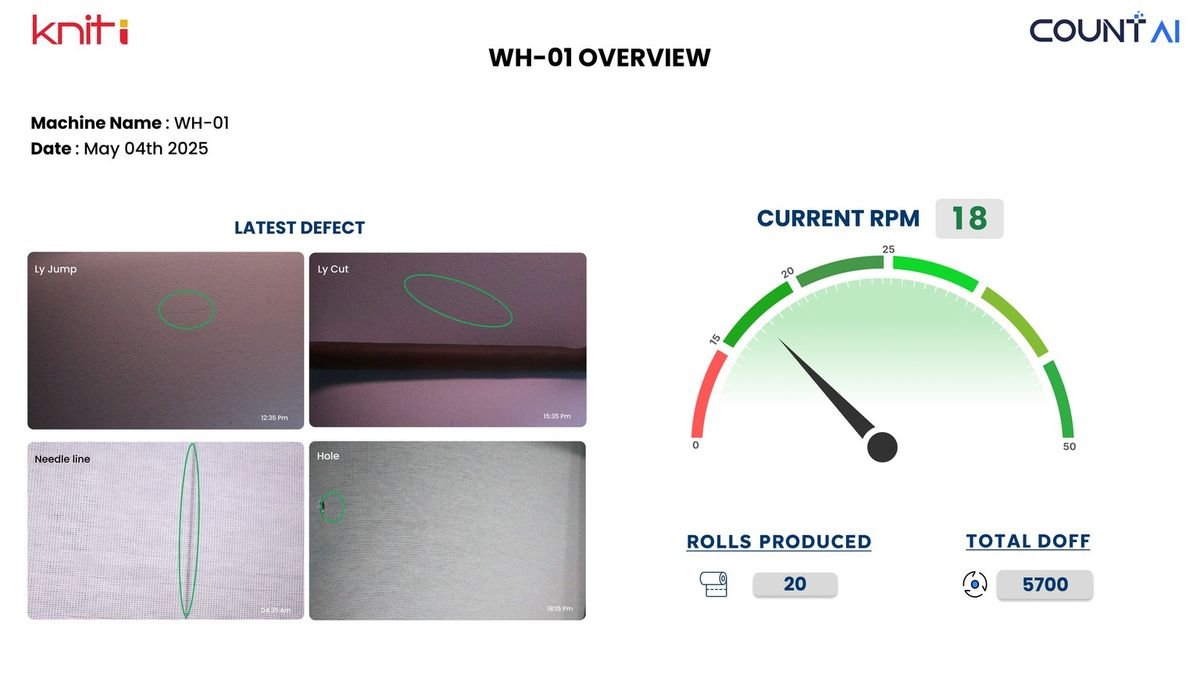
High-speed cameras mounted on the machine capture the fabric continuously, and edge-AI processors analyse each frame with deep-learning models trained on millions of fabric images. The system identifies and classifies more than 15 defect types in real time — holes, needle lines, lycra misses and breaks, oil stains, barre, contamination, drop stitches — across more than 150 fabric types, from cotton and polyester to elastane blends and melange. When it finds a defect, it sends an instant halt signal to the machine. Production stops at the source, instead of the fault being discovered days later in dyeing, cutting or garment assembly, where the company says fixing it costs 10 to 50 times more.
Built for the factory floor, not the demo room
CountAI designs its own cameras, AI motherboards and software in-house, and the engineering shows in the numbers the company shares. The system processes more than 100 frames a second, and the team cut the power draw of its computing and camera setup from about 700 watts in an early prototype to about 10 watts. Every roll gets an automated inspection report, so a mill has complete, digital traceability from yarn to finished fabric — something manual inspection, with one operator watching two or three machines, could never deliver.
More Read

The results on real knitting floors are what turned a clever product into a business. At Aarti International, a vertically integrated textile company, the company says Knit-I eliminated about 80% of defect-related losses across more than 62 machines. At Best Color in Uzbekistan, knitting waste fell from 1.5% to 0.2% over 90 days, with a payback period of under six months. Across its customers, CountAI says most factories recover the investment within 6 to 12 months, saving more than ₹3.9 lakh per machine per year. Today Knit-I runs in more than 30 factories across seven countries — India, Bangladesh, Sri Lanka, Türkiye, Uzbekistan, Peru and Indonesia — with more than 5,000 cameras deployed, and customers including KPR, Indorama, Nitin Spinners, Sudiva Spinners, Hams, Jayjay, Zelal, Lan and Tosrifa Group.
An Intel award, and a bigger canvas
The work has drawn recognition from the chip world as well. In August 2026, CountAI won the Intel Edge AI Software Excellence Award at Intel India’s Industry Solution Builders Connect in Bengaluru, and Knit-I is an official Intel Edge AI Partner product, built on Intel processors with OpenVINO and featured in Intel’s Partner Showcase. CountAI was also selected for the Stanford Seed Transformation Program 2026.
On 17 November 2026, the company announced a ₹10 crore seed round led by Equirus InnovateX Fund — its first outside funding after four bootstrapped years building the installed base. The money goes into product development and taking the same idea beyond textiles: Knit-I and Knit Connect are in production today, with Knit Watch, Knit Brain and Knit AMR in pilot, and the platform extending to woven fabric, printed and dyed fabric, cut pieces, yarn cones and technical textiles. A 50-plus team in Coimbatore builds the software, the AI, the hardware and the field service behind it.
What comes next
CountAI’s ambition is to become the AI intelligence layer of the world’s factories, starting with textiles and expanding into every manufacturing vertical where defects, waste and inefficiency cost the planet. It is a quiet, practical kind of deep tech — no grand promises, just a camera, a chip and a model that never blinks, watching fabric the human eye could never keep up with. On knitting floors across seven countries, the machines are already stopping themselves the moment something goes wrong. That is what good industrial AI looks like: invisible, relentless, and measured in fabric saved rather than headlines.
Keep reading: Tiny Model, Serious Work: Inside KiteFishAI’s NanoI1, the 155-Million-Parameter AI Built for India’s Banks · One Chip, Every Heartbeat: Inside Sophrosyne Technologies’ Medical-Grade Biosensing SoC · More Industrial Automation & Technology stories
Like stories like this? Add Exceptional Technology as a preferred source on Google to see more of our reporting in your search results and Discover feed.









