


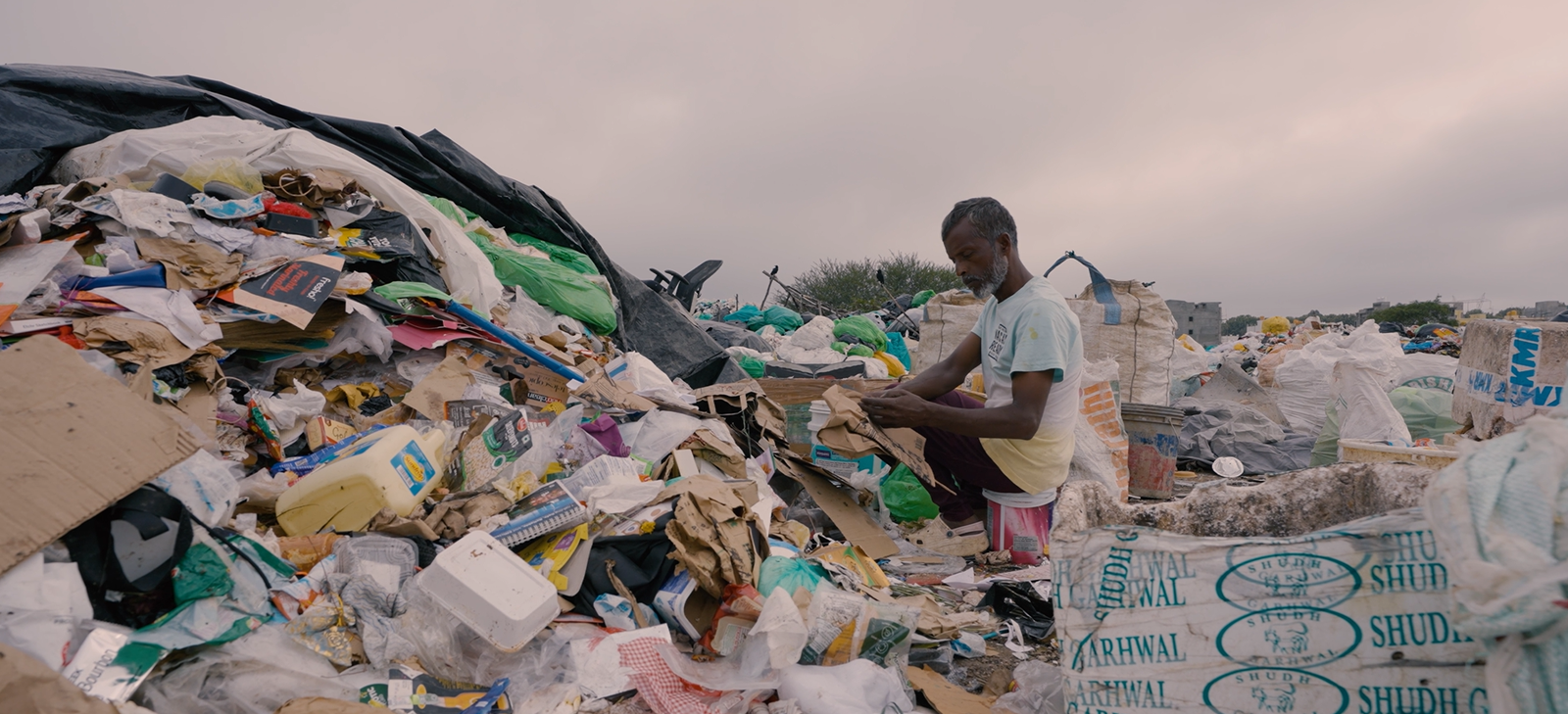
India makes more bricks than almost any country on Earth, and pays for every one of them with topsoil, coal and smoke. In Udaipur, two young civil engineers looked at the other side of the same picture — the plastic piling up in landfills and the rubble left behind by demolished buildings — and asked a simple question: what if the waste became the brick?

The answer is Wricks, from Angirus, a circular-economy startup founded in 2020 by civil engineers Kunjpreet Kaur Arora and Lokesh Puri Goswami. The company’s patented process takes non-recyclable plastic, construction and demolition debris and industrial by-products like marble slurry, and presses them into high-performance bricks and paver blocks — with no kiln firing, no water curing and no plaster needed. The bricks are market-ready within a day of production, and the company says they can be recycled into new bricks all over again after a building is demolished.
Waste in, brick out
The idea began as a research project while Arora and Goswami were studying at Rajasthan Technical University in Udaipur. Arora had been looking for a use for the single-use plastic littering her home city; Goswami was studying marble slurry, the fine waste powder left behind by Rajasthan’s stone industry. Together they worked out a way to melt low-value plastic waste and bind it with inert mineral waste into a solid, structural material — plastic makes up roughly a quarter to a third of the mix, and gives the finished brick its waterproofing.
Angirus builds its own machinery for the job, including a rotary dryer system that mixes the waste composites before pressing. The range now covers Wricks Solid bricks for structural and load-bearing walls, Wricks Cavity bricks, paving tiles and paver blocks for footpaths and walkways — all made from 100% recycled content, the company says.
Stronger than the clay it replaces
More Read

The numbers are what turn a good environmental story into a building material contractors actually want. The company says Wricks are twice as strong as standard clay bricks, 90% more waterproof, 76% better at thermal insulation and 20% lighter. Laboratory testing by accredited facilities puts their compressive strength at 16 to 20 megapascals, against 10 to 12 megapascals for Class A clay bricks — and because the bricks are damp-proof, walls built with them need no plaster coat.

The scale is growing fast. The company says more than 400,000 Wricks units have already been deployed across India, in projects from Srinagar to Chennai, and that production so far has diverted more than 2,000 tonnes of waste from landfills and avoided more than 300 tonnes of carbon emissions. The bricks are priced at around Rs 15 to 20 per block, in line with conventional bricks — so choosing the recycled option costs a builder nothing extra.
Two engineers, one stubborn idea
Angirus began as a student project and has collected recognition at every step since. The team took second place globally at the TiE University Global Pitch Competition, winning the Best Sustainability Startup prize as well. Arora was named to the Forbes 30 Under 30 Asia list for social impact in 2025, the company has been recognised by the World Economic Forum’s UpLink platform and MIT Solve’s Global Climate Challenge, and it has drawn support from IIMA Ventures, Social Alpha, the H&M Foundation and grants from IIT Madras and the Ministry of Housing and Urban Affairs.
Where it goes next
Angirus started in Udaipur and now also operates from Bengaluru, and the timing could hardly be better: India’s construction boom needs billions of bricks a year, and every one that comes from a landfill instead of a kiln is a small win twice over — less waste buried, less smoke in the sky. A brick that is stronger, lighter, waterproof and cheaper to build with, made entirely from things India was throwing away, is the kind of quiet engineering that changes an industry from the inside out.
Keep reading: The Factory That Reconfigures Itself: Inside Leumas, the Bengaluru Startup Renting Out Robot Factories · The Driverless Robot Hauling a Tonne Across India’s Building Sites: Inside Flo Mobility’s MMR Gen 5 · More Manufacturing & Engineering stories
Like stories like this? Add Exceptional Technology as a preferred source on Google to see more of our reporting in your search results and Discover feed.









