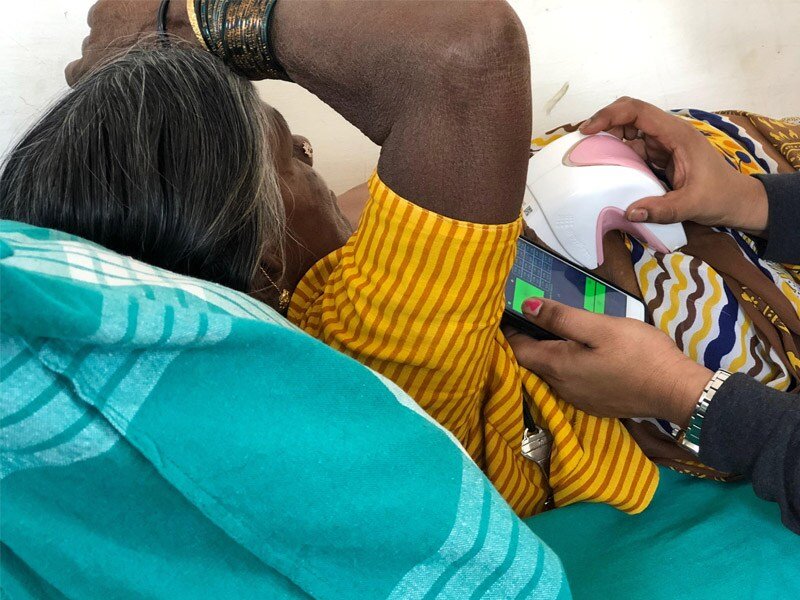
In India, breast cancer is often found too late — partly because barely anyone gets screened. Fewer than 1% of Indian women aged 30–49 have ever been screened, per national health survey data. Mammography machines cost crores, need dedicated rooms and trained radiologists, and don’t reach villages. A Bengaluru startup’s answer fits in a hand: NIRAMAI’s Thermalytix, a portable camera that screens for breast cancer risk in about 15 minutes with AI-analysed thermal imaging — no touch, no radiation, results reviewed by radiologists. It is a screening and triage tool, not a diagnosis, and that distinction is the whole story.
How it works
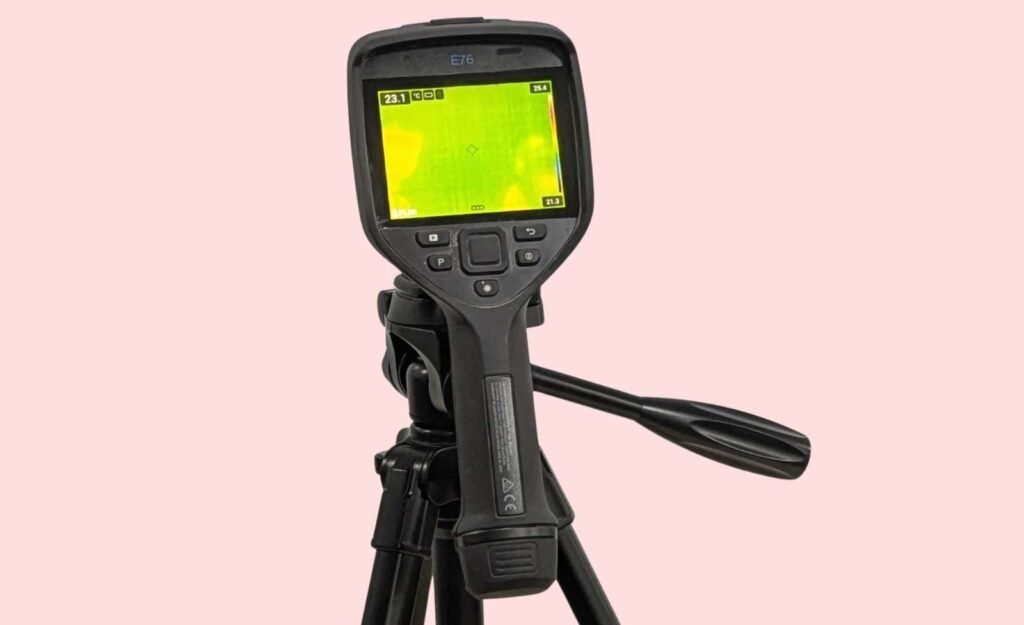
The test is disarmingly simple: seated before the thermal camera, the patient has five thermal images captured; AI analyses some 400,000 temperature points and produces a risk score for radiologist review. Thermal patterns can reveal blood-flow changes associated with abnormal tissue — heat signatures that may indicate abnormalities, not a cancer diagnosis. A session takes 10–15 minutes, costs about ₹100 at rural camps (₹1,500 in cities, per the company), and a privacy partition shields the patient throughout.
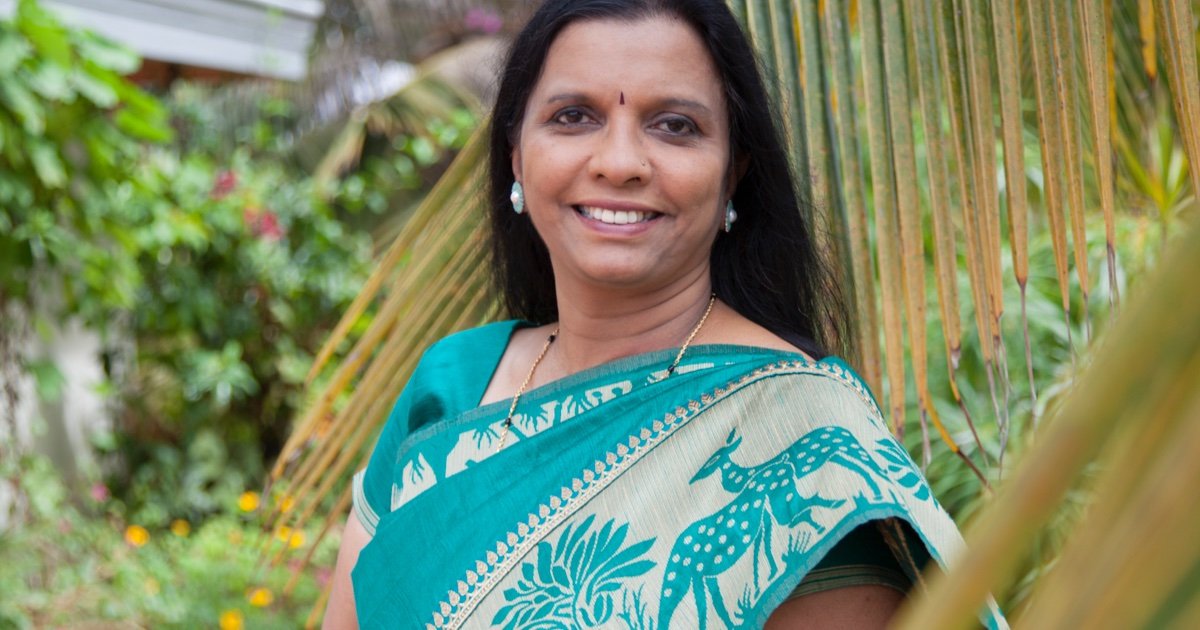
The origin story is personal. Founder and CEO Dr. Geetha Manjunath, formerly with Xerox Research, started NIRAMAI in 2016 with Nidhi Mathur after her cousin died at 42 following a late diagnosis. The first trials ran at Kasturba Medical College on 72 cancer patients and at BMS Hospital in Bengaluru. The name says the method: Non-Invasive Risk Assessment with Machine Intelligence.
The evidence — and its limits
On paper, the credentials are formidable: 41 granted patents (16 US, 15 India, 2 each across Canada, Singapore, Japan, Europe and China, per the company), a European CE mark, and US FDA 510(k) clearance in March 2022 for the SMILE-100 system. The honest caveat matters enormously: the FDA clearance is for adjunctive, telethermographic use — explicitly not a mammography alternative. Studies are published in peer-reviewed journals (BMJ Open, JCO Global Oncology, Frontiers), and the company reports a UK NHS Accelerating FemTech evaluation for dense-breast use.
The deployment numbers are the strongest part of the case. A February 2026 Health Innovation Network (UK) case study reports 400,000+ women screened across 250+ Indian locations, with 2,000+ cancers detected, across 22 countries. The Punjab programme, published in npj Digital Medicine, is unusually well documented: June 2022–December 2023 saw 15,069 women screened across 183 sites in 23 districts, 3.1% recall, 27 cancers histopathology-confirmed. Note the careful language: cancers *detected*, not lives saved — the same careful-evidence approach Noccarc took with its ventilator certifications.
An AI-generated risk score from thermal patterns — a triage tool that routes the right women to imaging, not a replacement for mammography.
Screening, not diagnosis
Getting this distinction wrong is a health-misinformation risk. Thermalytix does not diagnose breast cancer; it stratifies risk — a high score means “get imaged,” with mammography or ultrasound following, read by radiologists. The company, the FDA’s adjunctive clearance and the peer-reviewed literature all agree. Used correctly, the value is about the funnel: where screening uptake is under 1%, a ₹100 portable test that finds the women needing scarce mammography slots is transformative triage — frugal medtech in the same spirit as Lenek’s 3.5-kg X-ray for village TB screening.
The scale story continues to grow. The company site cites 500,000+ women screened across 10,000+ camps in 22+ countries; social media claims 650,000 — treat the higher figure as the company’s latest. The “25% better sensitivity than mammography in dense breasts” figure comes from the company’s own published trials: peer-reviewed, but company-run, so attribute it.
Key takeaway
The takeaway: Thermalytix’s achievement isn’t replacing mammography — it’s making the first step of screening cheap, portable and dignified enough to reach women who would otherwise never be screened. The evidence supports triage at scale; the caveats are part of the story.
What comes next
The questions ahead are about depth, not reach: can trials show thermal triage shifts stage-at-diagnosis? Will more regulators follow the FDA’s adjunctive pathway? Can screening camps become sustained programmes? With 41 patents, peer-reviewed evidence and hundreds of thousands screened, NIRAMAI has earned its place — provided the marketing never outruns the medicine.
Is Thermalytix a replacement for mammography?
No. NIRAMAI’s US FDA 510(k) clearance (March 2022) is for adjunctive, telethermographic use: a screening and triage tool, not a mammography alternative. A high risk score means follow-up imaging is needed; it does not diagnose cancer.
How does the Thermalytix test work?
The patient sits before a thermal camera capturing five thermal images; AI analyses some 400,000 temperature points and produces a risk score for radiologist review. The test takes 10–15 minutes, involves no touch or radiation, and costs about ₹100 at rural camps (₹1,500 in cities, per the company).
What evidence supports it?
NIRAMAI holds 41 granted patents and has published in peer-reviewed journals. A Health Innovation Network case study reports 400,000+ screened with 2,000+ cancers detected; a Punjab programme in npj Digital Medicine documented 15,069 screened, 27 cancers confirmed.
Who founded NIRAMAI?
Dr. Geetha Manjunath (Founder & CEO, ex-Xerox Research) and Nidhi Mathur founded the Bengaluru company in 2016, after Manjunath’s cousin died at 42 from late-diagnosed breast cancer. NIRAMAI = Non-Invasive Risk Assessment with Machine Intelligence.
More Read
Sources & further reading
- NIRAMAI — official Thermalytix page — Patents, FDA clearance, CE mark, screening statistics and company background
- Health Innovation Network: NIRAMAI case study — February 2026 case study: 400,000+ screened, 2,000+ cancers detected across 250+ India locations
- npj Digital Medicine: Punjab screening programme — Peer-reviewed documentation of the 15,069-woman Punjab programme, 27 cancers confirmed