India’s first astronaut to fly on an Indian rocket, from Indian soil, will not be a person at all. She will be a robot — calm, watchful, endlessly patient — sitting in the commander’s seat, working the switches, watching the cabin, and talking to mission control in Hindi and English. Her name is Vyommitra, and ISRO says she is the friend from space who will fly first so that Indian astronauts can fly safely after her.
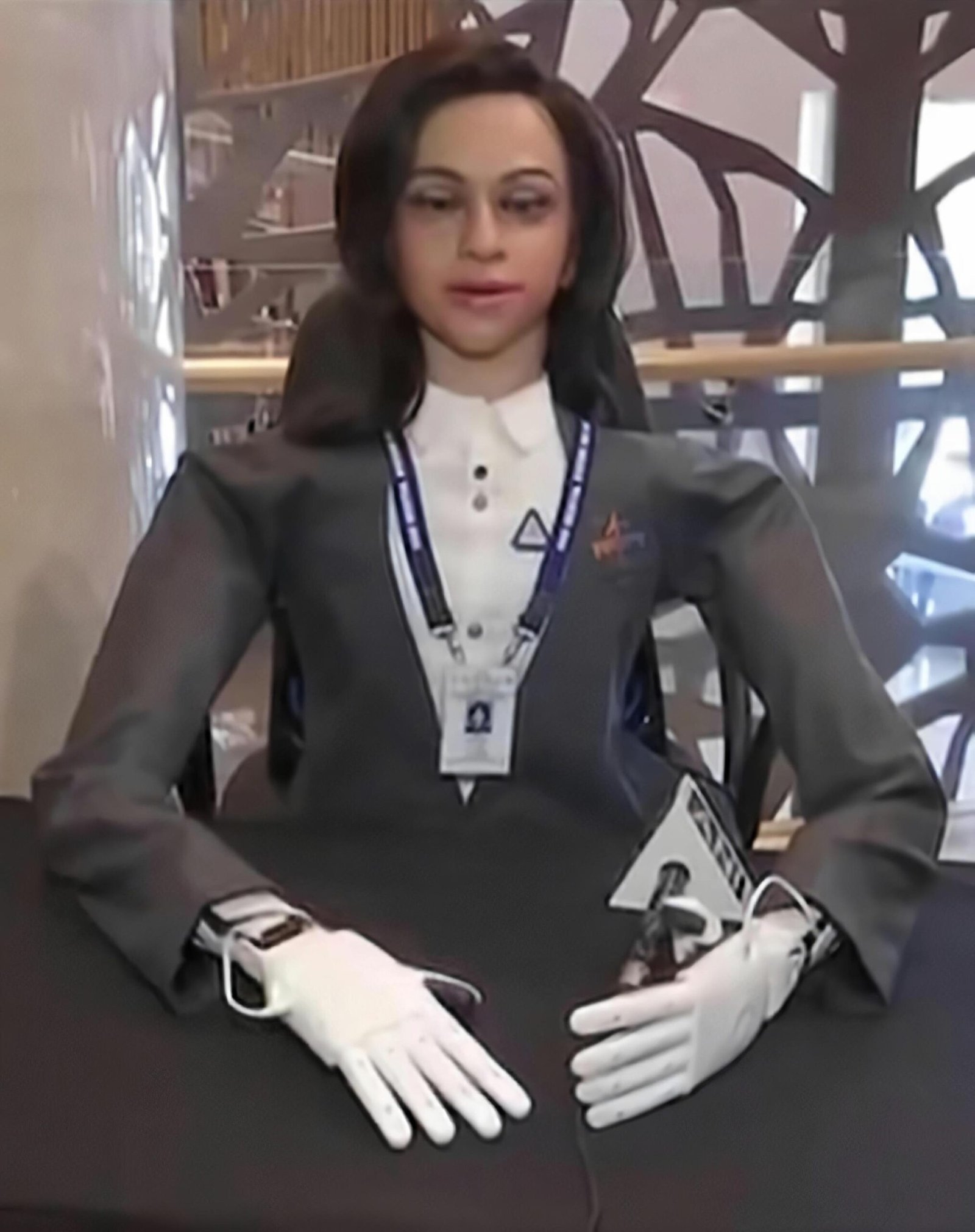
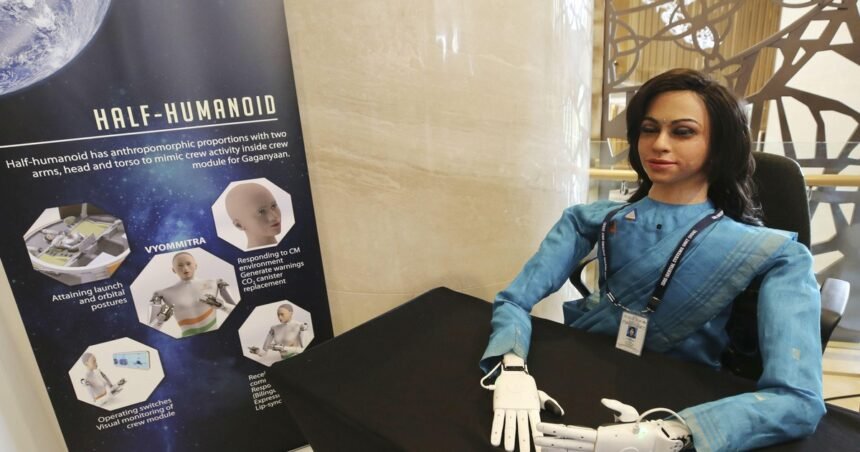
Vyommitra’s name comes from Sanskrit: Vyoma, meaning space, and Mitra, meaning friend. She is a half-humanoid — a head, a torso and two arms, with no legs — because her job is done sitting down, strapped into a crew module seat, exactly where an astronaut will one day sit. ISRO unveiled her in Bengaluru on 22 January 2020, and from that day she has been the public face of India’s human spaceflight dream: a robot built to do, in orbit, everything a human crew member would do, so that every system can be proven before a human life depends on it.
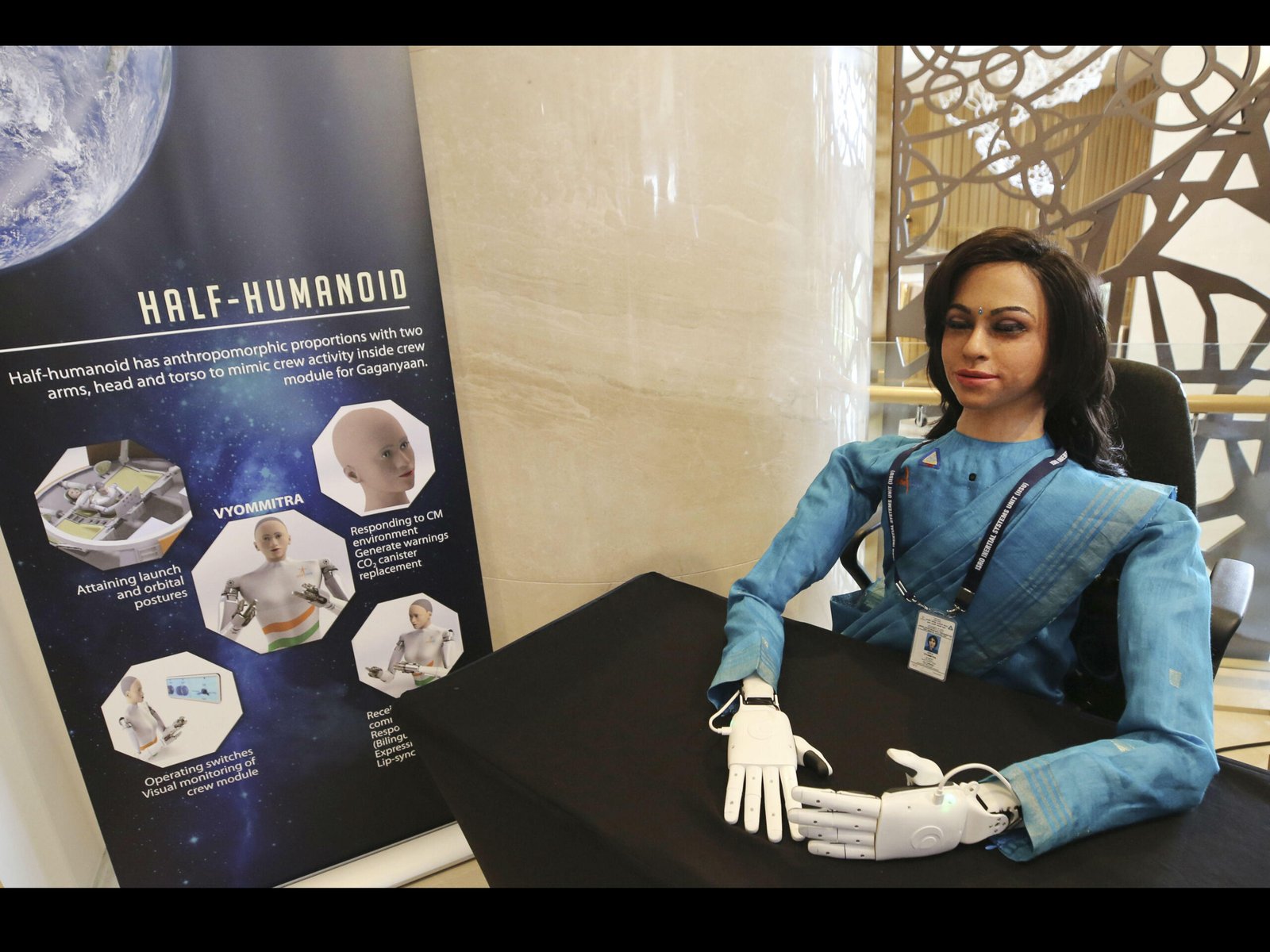
What Vyommitra does on a flight is a beautiful piece of engineering theatre with a deadly serious purpose. She attains launch and orbital postures, operates switches and panels, monitors the crew module, responds to the environment around her, and generates warnings when something needs attention. She can replace carbon dioxide canisters, receive voice commands, and answer back with lip movements synchronised to her speech, in two languages. Every reading she takes, every switch she throws, every word she exchanges with the ground becomes data that tells ISRO whether the cabin is truly ready for people.
That is why her first flight matters so much. The uncrewed Gaganyaan-1 mission, G1, will fly without astronauts, and Vyommitra will ride in their place. The mission will launch on the human-rated LVM3, HLVM3, from Sriharikota, carrying the orbital module into low Earth orbit. On board, Vyommitra will live through the launch, the orbit and the return exactly as a crew would — testing the life support and environmental control systems, the cabin conditions, and the spacecraft’s behaviour from liftoff to splashdown, and reporting it all home.
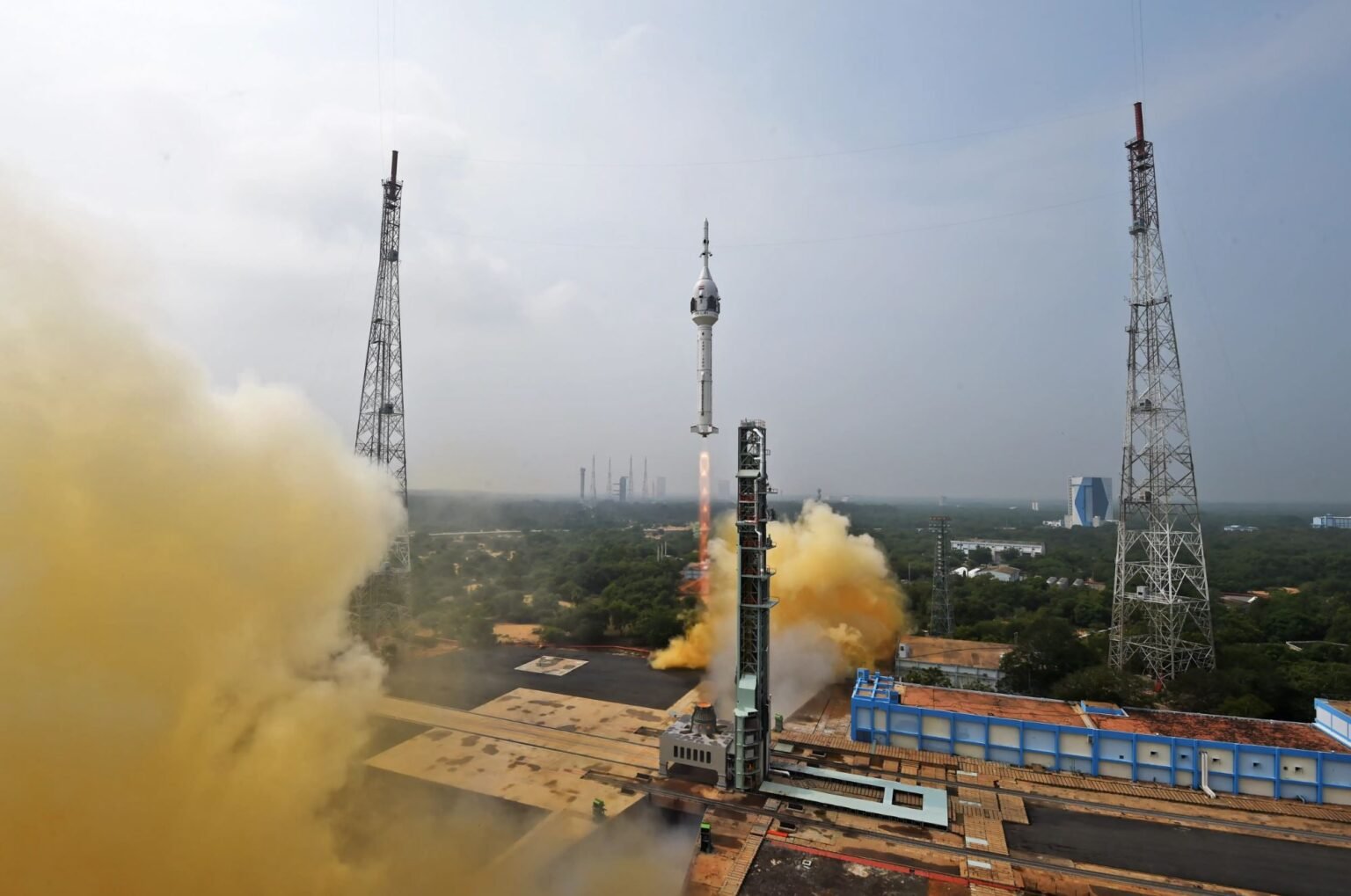
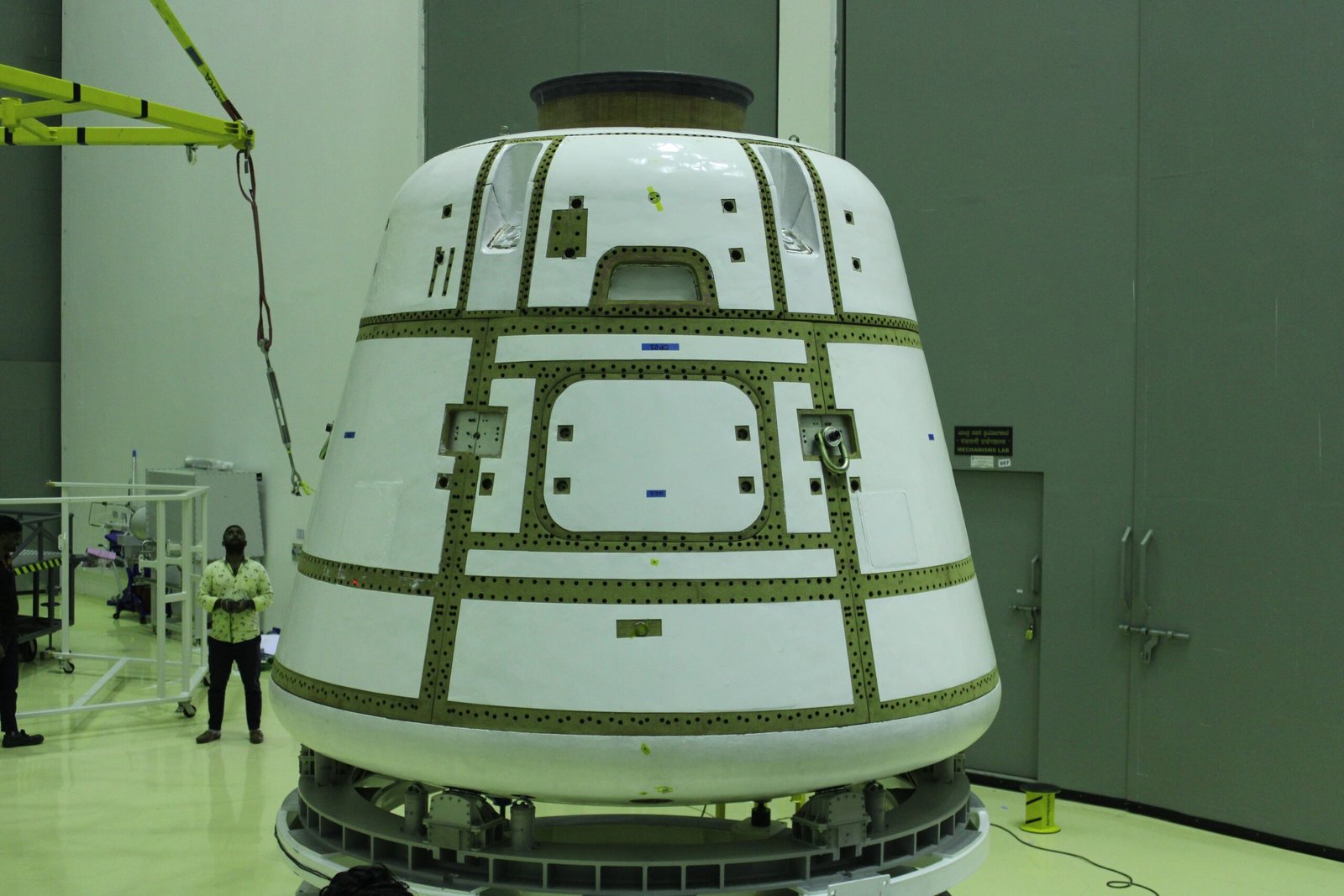
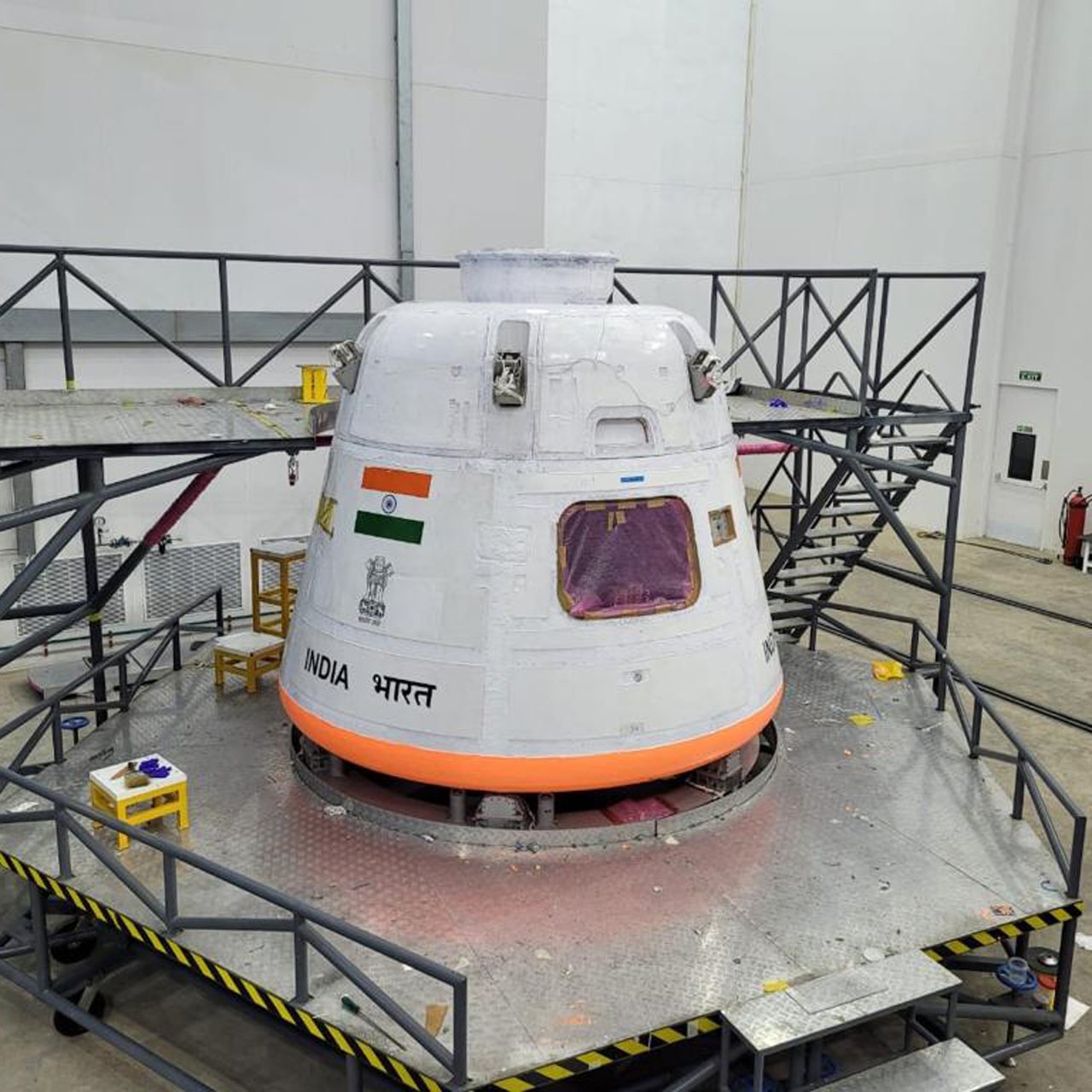
The spacecraft she will ride in is itself a triumph of Indian engineering. ISRO says the Gaganyaan project will demonstrate human spaceflight capability by launching a crew of three members to an orbit of 400 kilometres for a three-day mission, and bringing them back safely to Earth by landing in Indian sea waters. The orbital module has two parts: the crew module, a pressurised, Earth-like home in space with a double-walled construction, life support, avionics and a thermal protection system for the fiery return; and the service module, which provides power, propulsion and support while the spacecraft is in orbit.
The rocket underneath it is just as carefully rethought. LVM3, ISRO’s proven heavy-lift launcher, has been reconfigured in every system to meet human-rating requirements and renamed Human Rated LVM3. It has solid, liquid and cryogenic stages, and it carries a crew escape system powered by quick-acting, high burn-rate solid motors — a system designed to pull the crew module and its occupants to a safe distance in an emergency, whether on the launch pad or during ascent.
More Read

None of this is being rushed to the pad on hope. ISRO has spent years proving each link in the chain, one spectacular test at a time. In October 2023 the TV-D1 test vehicle flight proved the crew escape system in the air, separating the crew module at about 17 kilometres during an ascent abort and bringing it home under parachutes to the Bay of Bengal, where a dedicated Indian Navy vessel and diving team recovered it. A second integrated air drop test validated the parachute deceleration system, and in October 2026 ISRO completed crew module and service module separation tests at the Vikram Sarabhai Space Centre in Thiruvananthapuram, along with apex cover separation and crew module uprighting tests — every one of them a rehearsal for the moment a real crew comes home.
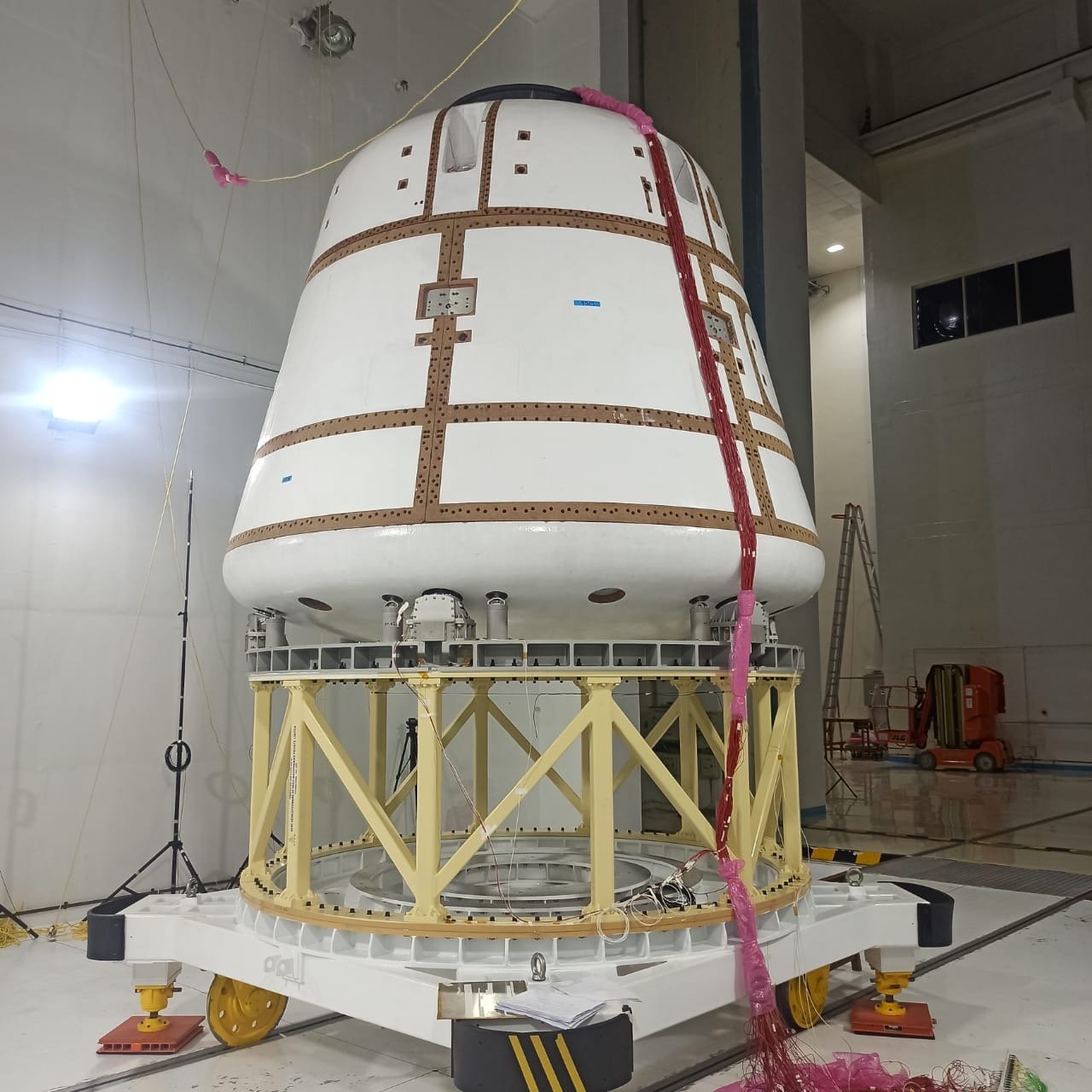
The timing is what makes this story feel so alive right now. In late October 2026, ISRO Chairman V. Narayanan said the first uncrewed Gaganyaan test flight would take place in two months, carrying the half-humanoid Vyommitra into low Earth orbit. ISRO has given a window for G1, not a single date, and the crewed mission that follows it is targeted for 2027. The programme is the foundation for everything that comes after: a sustained Indian human presence in orbit, and, in ISRO’s longer vision, an Indian space station and a crewed landing on the Moon.
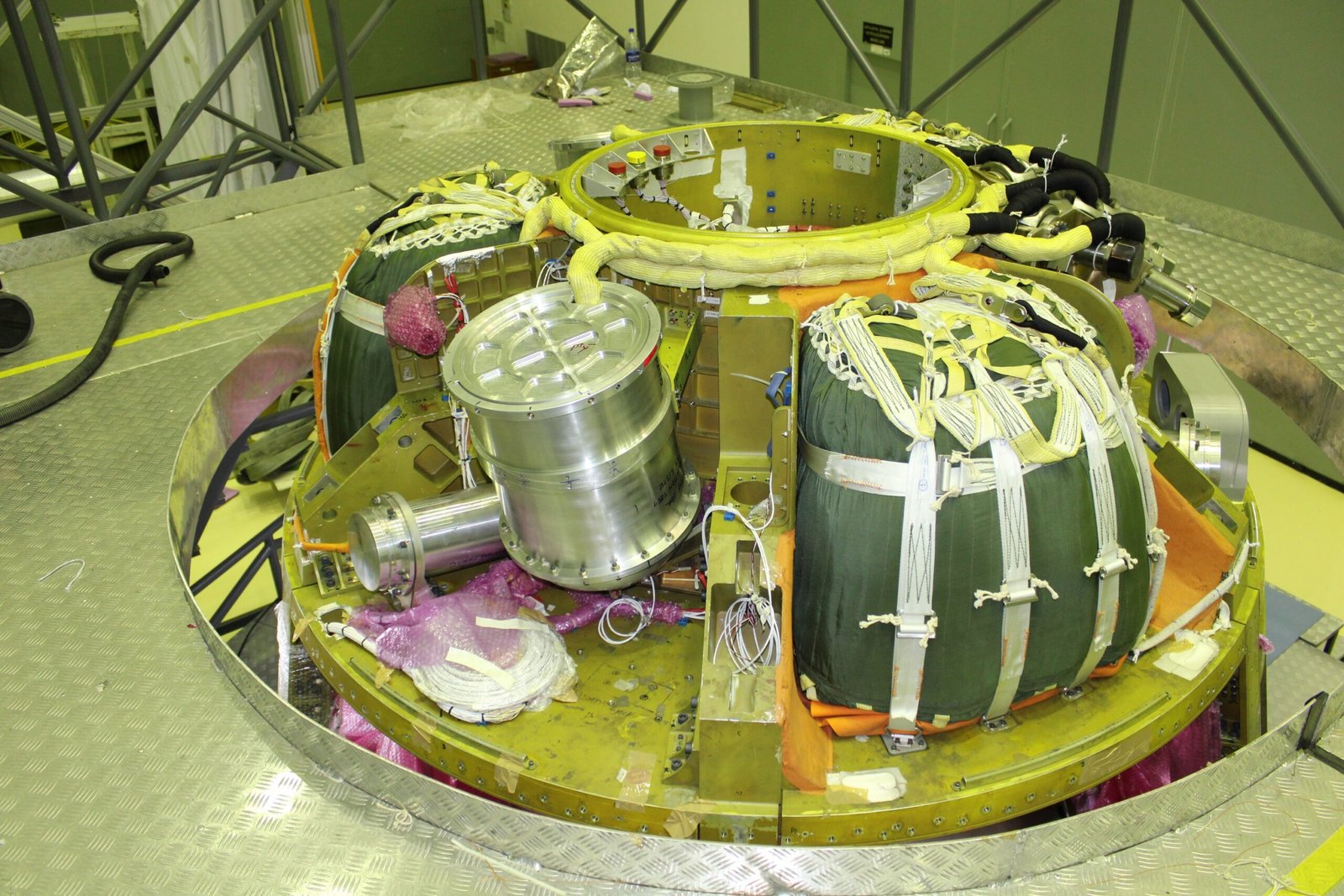
There is something deeply moving about the order of it all. Before India sends its sons and daughters into orbit, it sends a friend — a robot who speaks their languages, works their switches, watches their cabin, and comes home with the answers. Vyommitra will never look out of the window in wonder, but the data she brings back will be the reason the first Indian astronauts who do can look out of it in safety. The friend from space flies first, so that India can fly next.
Keep reading: The Flying Truck That Needs No Runway: Inside BluJ Aerospace, the Hyderabad Startup Building India’s Heavy-Lift eVTOL Platform · Break the Surface: Inside Aspera Industries’ Eureka, the Autonomous Seaplane Turning Water Into Runways · More Aerospace & Defense stories
Like stories like this? Add Exceptional Technology as a preferred source on Google to see more of our reporting in your search results and Discover feed.