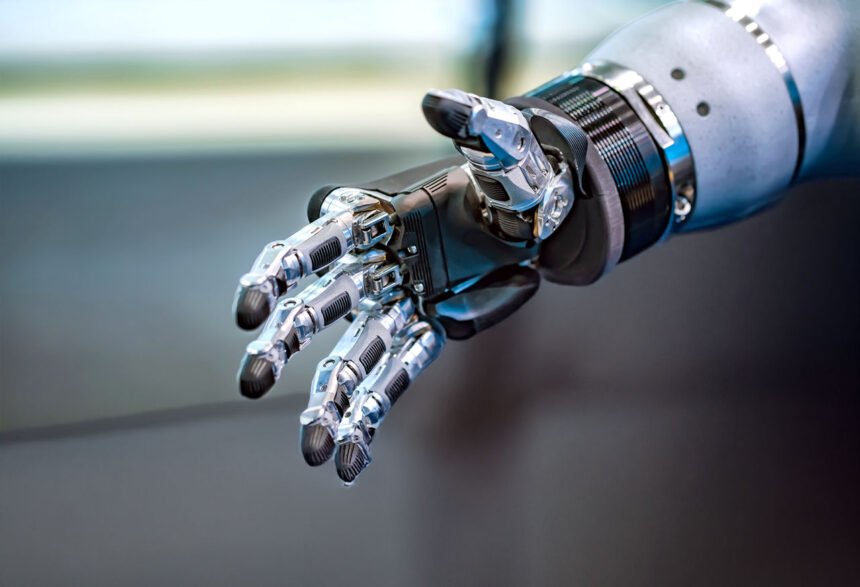
Every humanoid robot demo that goes viral has the same dirty secret: the hands don’t work. The robot walks, waves, maybe carries a box — but ask it to pick up a screwdriver, fold a cloth, or plug in a cable, and the illusion collapses. A two-month-old Bengaluru startup called xSpecies AI thinks the hand is the whole problem. Its product, DexteraX, is a five-fingered dexterous robot hand with roughly 15 degrees of freedom, built for the kind of manipulation humanoids will need if they are ever going to be useful. The company is extremely early — incorporated in August 2025 — so everything here comes from the company’s own materials and a single video breakdown. Read it as a thesis being built, not a product being shipped.
Why start with the hand
The strategic bet is easy to state: dexterous manipulation is the bottleneck for humanoid robots. A humanoid that cannot reliably pick things up is, as the company’s framing goes, of limited use — mobility is largely solved, manipulation is not. Rather than building a full humanoid and discovering the hands don’t work, xSpecies is starting from the hardest part. It is a manipulation-first route to humanoids, and it is arguably the more honest engineering order.
The founder fits the thesis. Srikanth Vidapanakal was previously AI Director at Ola Electric and trained in robotics at Stanford. The company was incorporated on 4 August 2025 in Bengaluru, per MCA records.
How DexteraX works
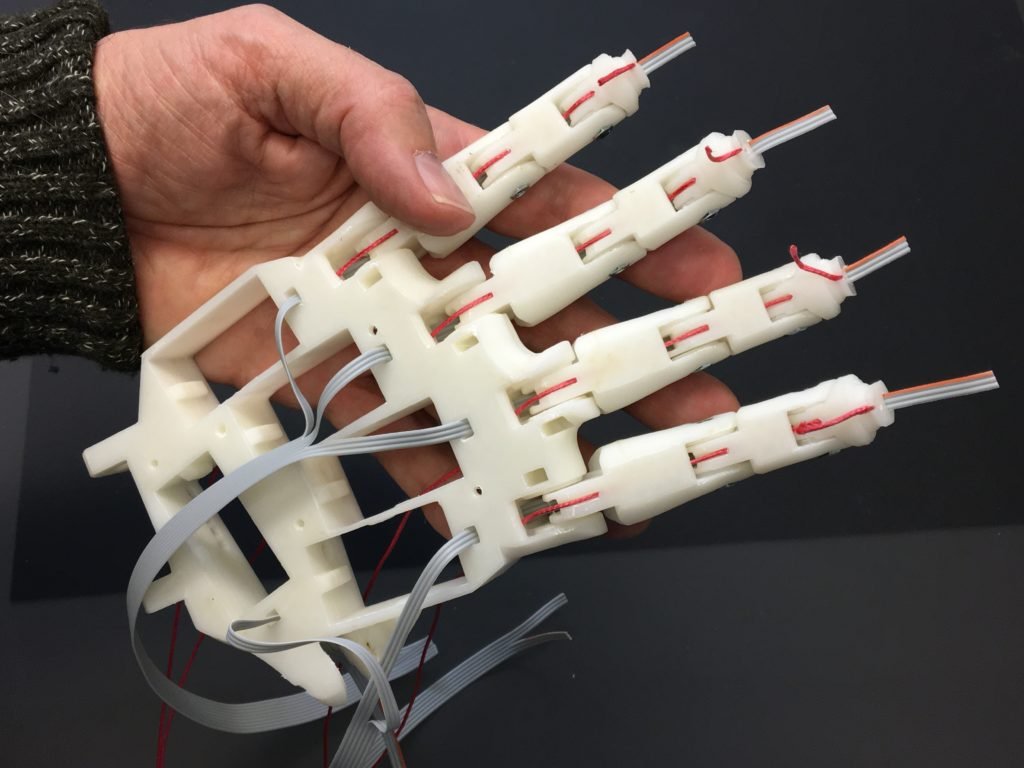
DexteraX is a five-fingered hand with about 15 degrees of freedom, using a cable/tendon-driven architecture: the motors sit in the forearm and pull tendons that articulate the fingers, much like human anatomy. It is underactuated — a single motor can drive two joints on a finger — which keeps the hand compact while preserving dexterity. Sensing includes tactile, force, and joint-angle feedback, feeding what the company describes as precise object interaction and adaptive control: pinch, tripod, power and lateral grasps, plus in-hand repositioning of objects.
The hand is only half the system. AIWare is the company’s robotics-intelligence platform — its own brand name for a “physical AI” stack combining reinforcement learning, imitation learning, vision-language-action models, sim-to-real training, teleoperation and force feedback. In plain terms: the hand learns manipulation skills from human demonstrations and transfers them to the real world.
HANDY — and what does not exist yet
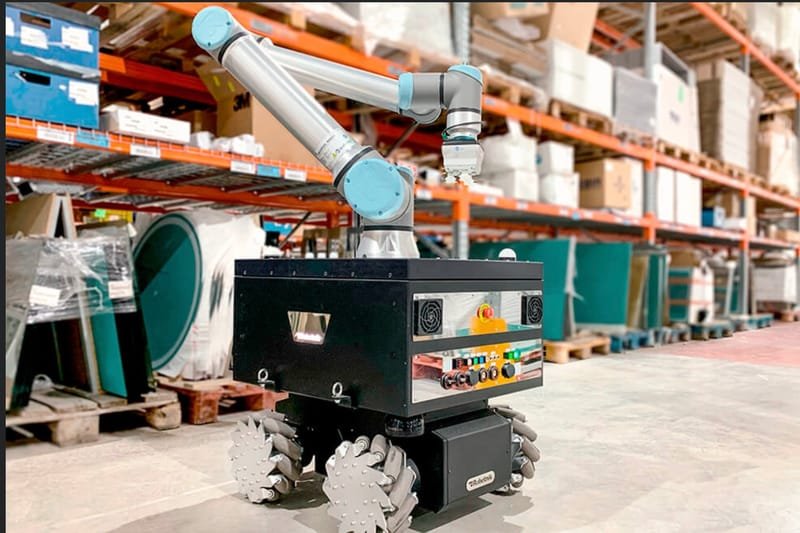
The company is also developing HANDY, a wheeled manipulator: 15 kg payload, 190 cm reach, two 7-DoF arms, designed to accept either the dexterous hand or a parallel-jaw gripper. It is positioned for logistics, retail and electronics — the commercially pragmatic entry point, since warehouses will pay for manipulation long before homes do. But “in development” is doing heavy lifting in that sentence. There is no full humanoid. The demonstrated artifact is the hand; the general-purpose humanoid is a roadmap item. Any telling of this story that implies a walking, working humanoid exists today would be fiction.
xSpecies is two months old and building the hardest part first — a 15-DoF tendon-driven hand — on the thesis that manipulation, not mobility, is what humanoids are missing.
How seriously to take a two-month-old company
Let’s be direct about the evidence base. The technical detail available comes from the company’s own website and essentially one video breakdown. There are no funding announcements, no independent reviews, no peer validation. That is normal for a two-month-old startup — but every spec here is company-stated.
What makes it worth watching anyway is the combination: a founder who ran AI at Ola Electric, a thesis (manipulation-first) that the robotics field broadly agrees with, and early hardware that at least exists on video. Most humanoid startups start with the body and treat hands as accessories. Starting with the hand is the contrarian, possibly correct, order. India’s robotics moment is broader — labourers are already training the robots that may one day use hands like these.
Key takeaway
The takeaway: DexteraX is an interesting hand from a very young company — 15 degrees of freedom, tendon-driven, built for AI-taught manipulation. Everything beyond the hand itself (HANDY, humanoids) is roadmap. Watch whether the manipulation demos graduate from video to independent testing. Robot-run manufacturing is already here — xLogic’s dark factory runs with minimal humans.
The dexterity race
xSpecies is not alone in thinking hands are the bottleneck. Tesla’s Optimus, Figure AI, and a dozen others are all iterating on dexterous manipulators. The tendon-driven route xSpecies has chosen is biomimetic and compact, but tendons stretch, fray, and need maintenance — the classic trade-off.
More Read

What is DexteraX?
DexteraX is a five-fingered dexterous robot hand developed by xSpecies AI, with about 15 degrees of freedom and a tendon-driven design (motors in the forearm pulling cables). It includes tactile, force and joint-angle sensing for AI-powered manipulation.
Who founded xSpecies AI?
Srikanth Vidapanakal, previously AI Director at Ola Electric and trained in robotics and autonomous systems at Stanford. The company, XSPECIES AI LABS PRIVATE LIMITED, was incorporated in Bengaluru on 4 August 2025.
Does xSpecies have a full humanoid robot?
No. The demonstrated product is the DexteraX hand. HANDY, a wheeled manipulator with two arms, is in development, and a general-purpose humanoid is a longer-term roadmap item.
What is AIWare?
AIWare is xSpecies’ own brand name for its robotics-intelligence platform, combining reinforcement learning, imitation learning, vision-language-action models, sim-to-real training and teleoperation. It is the company’s description of its stack, not a published or peer-reviewed system.
Why focus on the hand instead of the whole robot?
The company’s thesis is that dexterous manipulation — reliably picking things up — is the bottleneck for useful humanoids, while mobility is largely solved. Building the hand first tackles the hardest problem before the rest of the body.
Sources & further reading
- xSpecies AI official site — Company description of DexteraX, AIWare and target environments
- Startup Voice coverage — Third-party short on the Scaler-lab build and founder background
- MCA incorporation records — XSPECIES AI LABS PRIVATE LIMITED, incorporated 4 Aug 2025 (via PlanetExim)