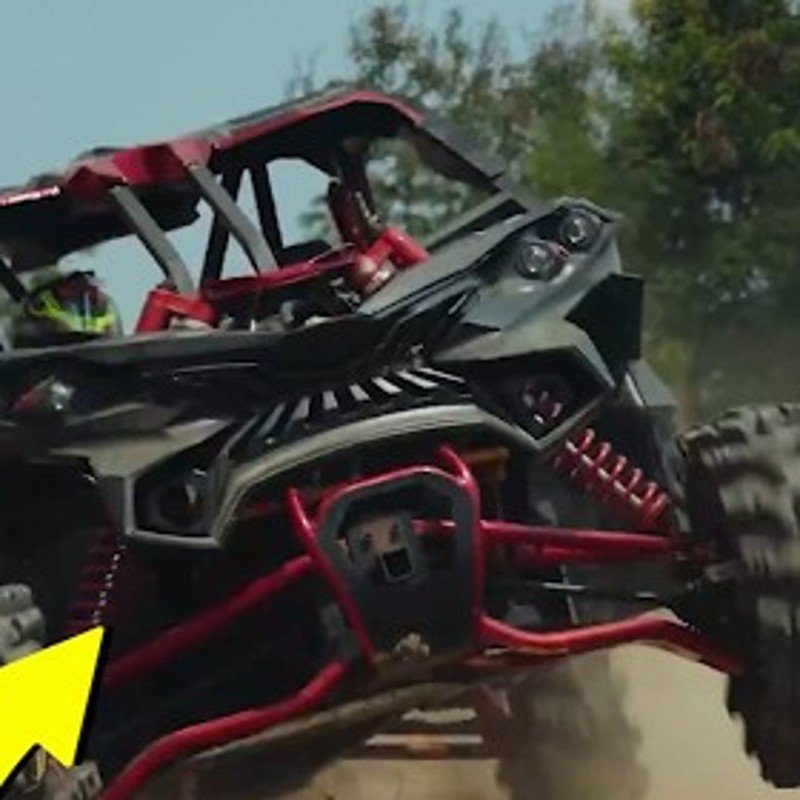
At 4,500 metres in Ladakh — where the air holds barely half its sea-level oxygen and gradients hit 60% — a Bengaluru-built ATV ran more than 500 kilometres across mixed terrain with zero mechanical failures, according to Indian Defence News. The vehicle is the ASHVA 4×4 from A-THON Allterrain, a 2022-founded startup. In 2026 it became the only Indigenously Designed, Developed and Manufactured (IIDM) vehicle platform at the Indian Army’s Exercise Kharga Shakti. This is a story about a real machine with real test miles — and about the precise distance between Army trials and Army orders.
A-THON Allterrain Pvt Ltd was founded in 2022 by Aditya Hegade, Sandeep Ramakrishnappa, and Harshit Modi. Ramakrishnappa’s link to Deccan Hydraulics — a two-decade-old auto-components maker — is relevant context: this is not a software team discovering hardware, but a team with manufacturing DNA attempting a ground-up vehicle.
The machine: 976cc, 381mm clearance, 65° slopes
The ASHVA 4×4 is a two-seater 4WD ATV on a space-frame chassis. The best-documented specification set — used consistently here and attributed — is a 976cc liquid-cooled V-twin in two tunes (71 HP / 85 Nm and 85 HP / 101 Nm), a 2-step CVT, on-demand 2WD/4WD with locking differentials, 381mm of ground clearance, 65° slope-climbing ability, 45° side-slope tolerance, 31-inch tyres, and double-wishbone front suspension. Payload is 600 kg per DriveSpark’s reporting — the figure this post uses, attributed, since sources also cite 400 and 800 kg.
Two specification caveats from the research. Some coverage describes a “1,000cc turbocharged” engine (IDN) versus the 976cc V-twin most sources report; this post uses the better-documented 976cc figure. And a Team-BHP forum commenter alleged the vehicle is assembled from SKD kits with few Indian parts — an unverified forum allegation, but one that means “fully indigenous” must remain the company’s claim rather than this post’s assertion.
Ladakh: 15,000 ft documented, 20,000 ft claimed
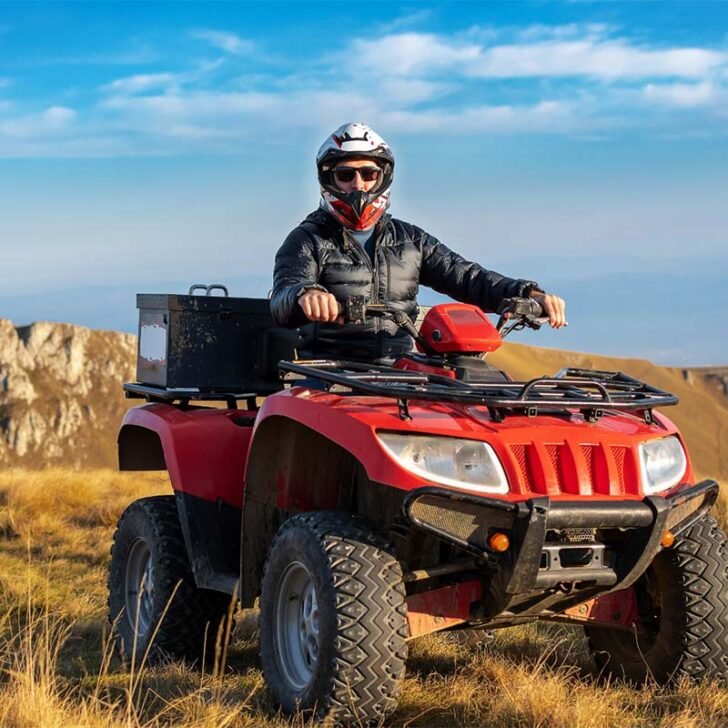
The altitude numbers need the same care as the specs. The company’s social channels and a 2022-era Startuppedia piece cite “defence-grade validation above 20,000+ feet.” But the detailed instrumented trial report from Indian Defence News (February 2026) documents 4,500 metres — roughly 15,000 feet — with 60% gradients under payload, sub-zero temperatures, an adaptive ECU for thin air, and a claimed 18 km/l. This post leads with the documented 15,000-ft figure and notes the 20,000-ft number as the company’s own claim.
What the trials demonstrated is genuinely impressive regardless of the exact altitude: an adaptive ECU coping with thin-air combustion, a CVT surviving sustained high-gradient work, and a chassis taking 500 km of Ladakh punishment without a mechanical failure. High-altitude vehicle validation is one of the hardest test regimes in the industry — engines lose a third of their power, lubricants misbehave, and electronics fail. Zero failures across 500 km is a serious data point.
500 kilometres of Ladakh. Zero mechanical failures. The only indigenous vehicle at an Army exercise — and still not inducted.
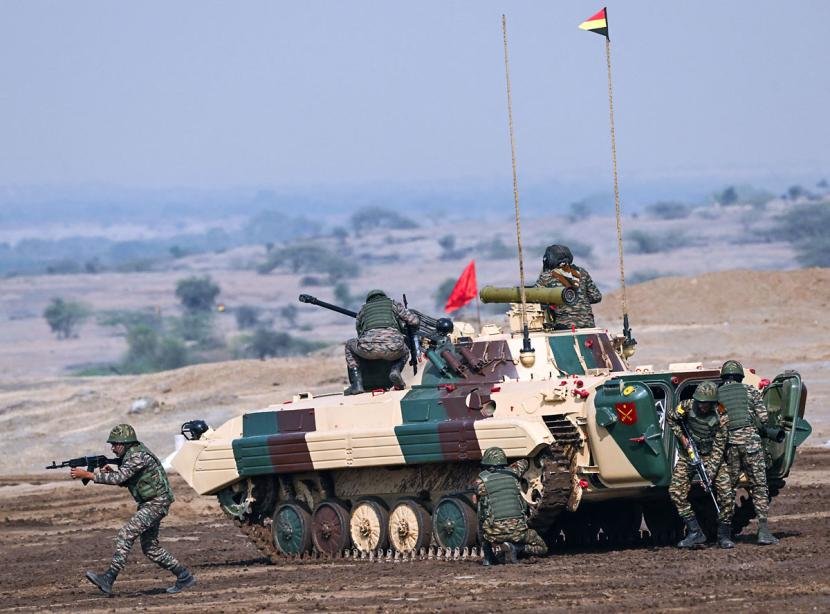
Exercise Kharga Shakti 2026 deserves precise framing. The ASHVA 4×4 was the only IIDM vehicle platform at the exercise and was used for troop and equipment movement — with drone-integrated variants on display, including a tethered drone and a fixed-wing VTOL pairing. That is meaningful institutional exposure. It is not induction, and it is not an order. Army exercise participation and Army procurement are separated by trials — the same gap Pravaig’s VEER is navigating with its electric tactical vehicle for the forces — the same gap Pravaig’s VEER is navigating with its electric tactical vehicle for the forces, staff requirements, and budgets — and this post does not blur that line.
The product roadmap extends beyond the 4×4. An ASHVA 6×6 (4,210mm long, 1,150 kg dry, 800 kg payload) exists, alongside a 6×6 Farm Utility Vehicle concept for agriculture — and farm machines are electrifying fast: Bullwork’s BEAST 9696 E is India’s electric-tractor answer.
for agriculture — and farm machines are electrifying fast: Bullwork’s BEAST 9696 E is India’s electric-tractor answer.
for agriculture. V1/V2/V3 variants are planned, with V3 adding autonomous features. Positioning spans farm utility, defence, and adventure.
Key takeaway
The takeaway: the ASHVA 4×4 has genuine high-altitude test miles and unique Army-exercise exposure. But “20,000 ft” is the company’s claim (15,000 ft documented), “indigenous” is contested, and exercise participation is not induction.
What to watch: whether the Army relationship progresses from exercise exposure to trial requirements to an actual order — the conversion that has eluded many Indian defence-vehicle startups. The machine has proven it can survive Ladakh. The business now has to prove it can survive procurement.
More Read
Sources & further reading
Sources & further reading
- Indian Defence News — Ladakh trial report (Feb 2026) — 500-km trial details
- DriveSpark — ASHVA specifications — Payload and spec reporting
- A-THON Allterrain — company channels — Product and exercise updates
Frequently Asked Questions
What is the ASHVA 4×4?
A two-seater 4WD all-terrain vehicle from Bengaluru’s A-THON Allterrain — 976cc V-twin (attributed spec), 381mm clearance, 65° slope climbing, 600 kg payload (attributed).
Did it really test at 20,000 feet in Ladakh?
The company’s channels claim 20,000+ ft, but the documented instrumented trial reported by Indian Defence News was at 4,500m (~15,000 ft) — 500+ km with zero mechanical failures. This post leads with the documented figure.
Has the Indian Army inducted the ASHVA?
No. It was the only indigenously designed vehicle platform at Exercise Kharga Shakti 2026, used for troop/equipment movement — meaningful exposure, but exercise participation is not induction or an order.
Is it fully indigenous?
The company presents it as indigenously designed and manufactured. A forum allegation of SKD-kit assembly is unverified, so “indigenous” remains the company’s claim in this post.
What variants exist?
The ASHVA 4×4, an ASHVA 6×6, a 6×6 Farm Utility concept for agriculture, and planned V1/V2/V3 variants with V3 adding autonomous features. Drone-integrated variants were shown at the Army exercise.