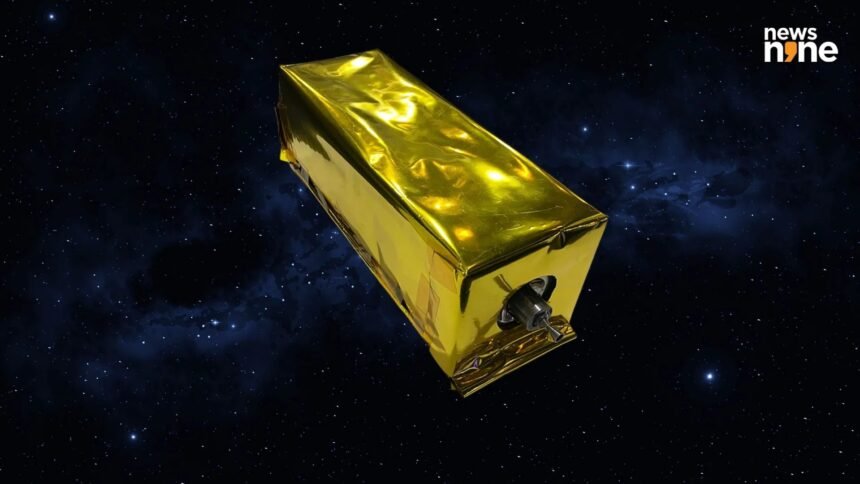
Every satellite that needs to nudge its orbit, dodge debris, or deorbit at end of life has historically relied on hydrazine — a propellant so toxic that fuelling a spacecraft requires hazmat suits, sealed clean rooms, and evacuation protocols. A Mumbai startup says that era is ending. Manastu Space has developed MS289, a green propellant based on hydrogen peroxide, and in December 2024 it proved the chemistry in orbit aboard ISRO’s PSLV-C60 POEM-4 platform, logging more than 700 seconds of cumulative firing.
Manastu Space was founded in 2017 by IIT Bombay alumni Tushar Jadhav (CEO) and Ashtesh Kumar (CTO). The company spent its early years on the unglamorous work of propellant chemistry and catalyst development before building thruster hardware around it. That patience paid off: MS289 is now one of a small handful of green propellants worldwide to have demonstrated in-space operation, and the company claims technology readiness level 8, with TRL-9 targeted.
What MS289 is — and why hydrazine’s days are numbered
MS289 is a proprietary blend of hydrogen peroxide with alcohol and specialised additives, decomposed through a proprietary high-temperature catalyst. Where hydrazine breaks down into toxic byproducts, MS289 decomposes into steam and carbon dioxide — non-toxic and non-carcinogenic, according to the company. That changes the economics of satellite fuelling: no hazmat protocols, simpler ground handling, and faster launch integration.
The regulatory tailwind is real. The European Union and other jurisdictions have been moving to restrict or ban hydrazine for space applications, which has created a genuine market opening for non-toxic alternatives. Manastu is not alone in chasing it — Bellatrix Aerospace, a separate Indian company, demonstrated its own green propulsion on PSLV-C58 — private Indian spaceflight is stacking up: Agnikul’s 3D-printed Agnite engine and Serendipity’s orbital pharma plans are part of the same wave — private Indian spaceflight is stacking up: Agnikul’s 3D-printed Agnite engine and Serendipity’s orbital pharma plans are part of the same wave — private Indian spaceflight is stacking up: Agnikul’s 3D-printed Agnite engine and Serendipity’s orbital pharma plans are part of the same wave — private Indian spaceflight is stacking up: Agnikul’s 3D-printed Agnite engine and Serendipity’s orbital pharma plans are part of the same wave — but MS289’s POEM-4 test puts Manastu among the few with orbital firing data.
Two headline figures about MS289 circulate online, and they need careful handling because they come from different eras. In a 2020 founder interview, the company described the propellant as “40 times less toxic” than hydrazine (and “25% more efficient”). Separately, a 2025 article reported the company’s claim of “60% lower operational costs” (and “50% higher performance”). These are company claims from their respective periods — not a single current verified specification — and this post treats them as such.
The POEM-4 test: 700 seconds that mattered
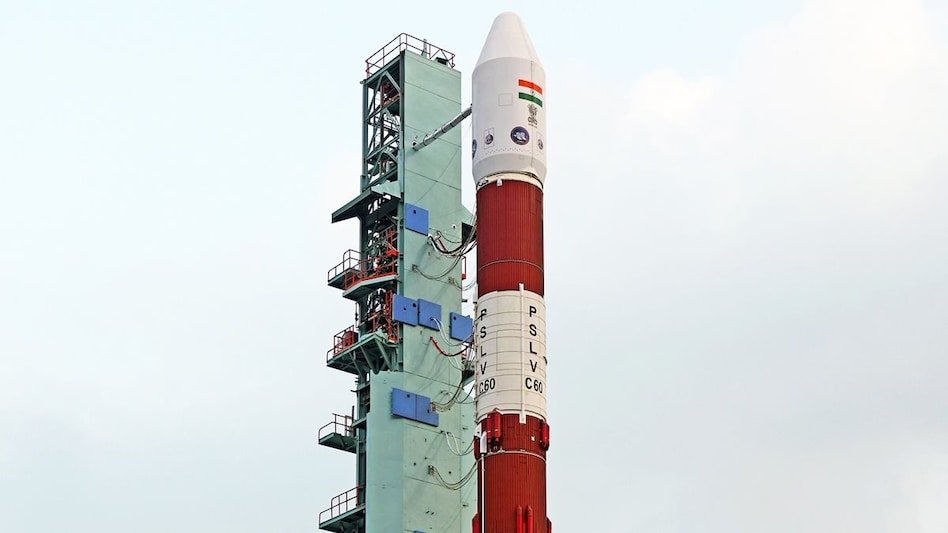
The space test flew on ISRO’s PSLV-C60 mission on 30 December 2024, using the POEM-4 orbital platform — the spent fourth stage repurposed as an in-orbit testbed. Manastu’s Vyom 2U thruster fired for the first time on 31 December 2024 with a 30-second burn that tilted the 1,408-kg platform by 24 degrees. Over the campaign, the system accumulated more than 700 seconds of firing, including a 360-second continuous burn and over 20 restarts, per the company.
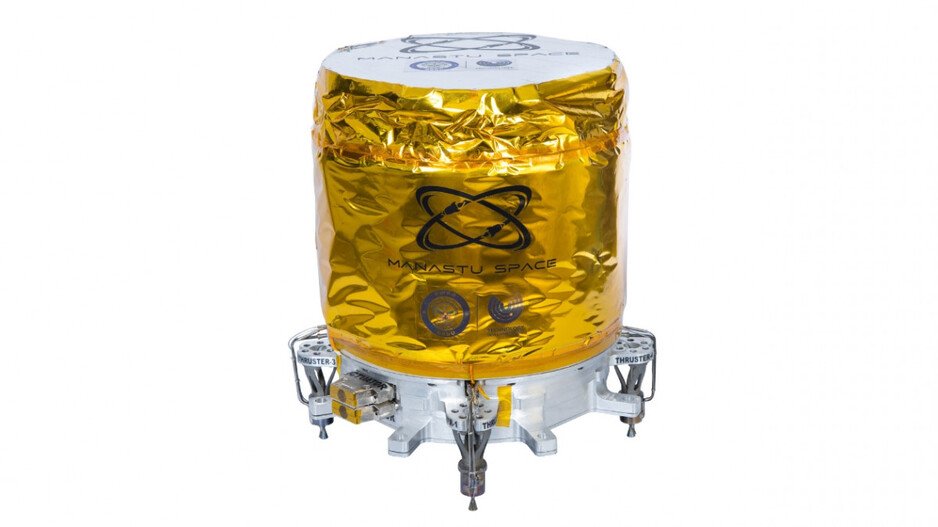
Vyom 2U is a 1-newton green monopropellant system designed for satellites in the 50–100 kg class. The product line extends upward: iBooster (4N, for 100–500 kg satellites), Sharanga (precision control for CubeSats), and GP-LAM (300N, aimed at upper stages and orbital transfer vehicles). The modular, plug-and-play positioning is deliberate — satellite makers can integrate green propulsion without redesigning their buses.
Institutional recognition followed. In December 2024, Manastu handed over a green propulsion system to DRDO at a ceremony attended by Defence Minister Rajnath Singh and the DRDO chief. The company also reports contracts with DRDO, the French startup Latitude, and iDEX, and says it is expanding into the US, European, and Asian markets. Beyond propulsion, Manastu is building debris-avoidance and in-orbit servicing capabilities — refuelling and deorbiting — which would make it a full-stack orbital logistics player rather than a thruster vendor.
A Mumbai startup put a non-toxic propellant through 700 seconds of orbital firing — and handed the hardware to DRDO in the same month.
The funding picture is modest by spacetech standards. The company raised $3 million pre-Series A in 2023 led by Capital 2B, followed by a $3 million extended Series A in August 2025 led by Capital-A. Tracxn puts total funding at roughly $6.7 million, with backers including the Indian Angel Network and Shell.
Key takeaway
The takeaway: MS289 is one of few green propellants with demonstrated orbital firing. The “40x less toxic” and “60% cheaper” figures are company claims from 2020 and 2025 respectively — impressive, but from different eras and not a single verified spec.
What to watch: whether the TRL-9 milestone lands, whether the Latitude and iDEX contracts convert into flight orders, and whether the EU’s hydrazine restrictions create the demand surge green-propulsion startups are counting on. Manastu has done the hardest part — proving the chemistry works in space. The next hardest part is selling it at scale.
More Read

Sources & further reading
Sources & further reading
- Manastu Space — official site — Company product and mission pages
- ISRO PSLV-C60 / POEM-4 mission coverage — Launch and platform details
- Indian Defence News on MS289 orbital test — Test campaign reporting
Frequently Asked Questions
What is MS289?
MS289 is Manastu Space’s proprietary green propellant — a hydrogen-peroxide-based blend with alcohol and additives, decomposed via a proprietary catalyst into steam and CO₂. The company presents it as a non-toxic alternative to hydrazine.
Has MS289 actually been tested in space?
Yes. It flew on ISRO’s PSLV-C60 POEM-4 platform in December 2024, logging 700+ seconds of cumulative firing including a 360-second continuous burn and 20+ restarts, per the company.
Is MS289 really 40x less toxic and 60% cheaper than hydrazine?
Those are company claims from different periods — “40x less toxic” from a 2020 founder interview, “60% lower operational costs” from a 2025 article. They should be read as attributed claims, not a single verified specification.
Who funds Manastu Space?
Roughly $6.7 million total per Tracxn, including a $3M pre-Series A (2023) and $3M extended Series A (Aug 2025), with investors including Capital 2B, Capital-A, Indian Angel Network, and Shell.
What comes after Vyom 2U?
The iBooster (4N), Sharanga (CubeSat precision), and GP-LAM (300N for upper stages), plus debris-avoidance and in-orbit servicing — refuelling and deorbiting. In-orbit infrastructure is becoming an Indian specialty — Astrobase’s mission software attacks the same orbital economy from the software side.
In-orbit infrastructure is becoming an Indian specialty — Astrobase’s mission software attacks the same orbital economy from the software side.
In-orbit infrastructure is becoming an Indian specialty — Astrobase’s mission software attacks the same orbital economy from the software side.
In-orbit infrastructure is becoming an Indian specialty — Astrobase’s mission software attacks the same orbital economy from the software side.