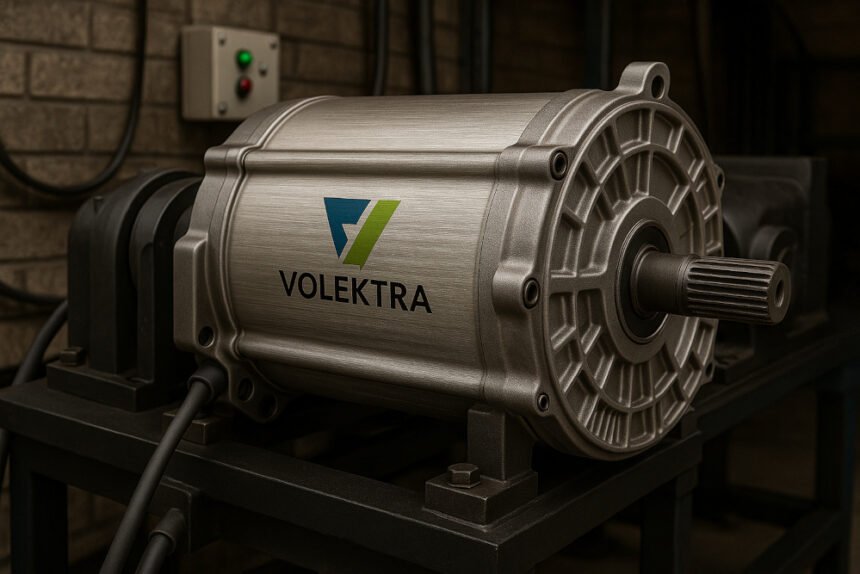
One of the electric vehicle industry’s deepest vulnerabilities is a lump of metal barely the size of a fist. Almost every EV on the road today uses a permanent-magnet synchronous motor, and those magnets depend on rare earths — materials whose supply is concentrated, expensive and geopolitically fraught. A Bengaluru startup founded only in September 2025 says it has engineered its way around the problem entirely: Vimag Labs’ Virtual Magnet Synchronous Motor creates its magnetic field with software and copper coils instead of permanent magnets, and on October 13, 2026, the company announced it has moved from laboratory to factory floor.
Vimag Labs today announced that its first manufacturing facility, at Met City in Jhajjar, Haryana, has commenced operations. The 10,000 sq ft plant — expandable to about 20,000 sq ft — manufactures and assembles motor and control systems built around the company’s proprietary magnet-free technology, supported by testing infrastructure, clean-room assembly zones and digitally connected, Industry 4.0 production lines. According to the company, the first production batch has already been completed and exported to international customers.
A motor that invents its own magnets
The company’s core invention, the Virtual Magnet Synchronous Motor (VMSM), replaces the fixed rare-earth magnets embedded in a conventional motor’s rotor with a tightly integrated hardware-and-software stack. Copper windings in the rotor are energised wirelessly through a patented inductive power-transfer system — what the company calls rotating transformer excitation — so there are no brushes and no slip rings. Proprietary control algorithms then shape and adjust the magnetic field in real time, effectively creating what Vimag describes as a software-defined magnet.
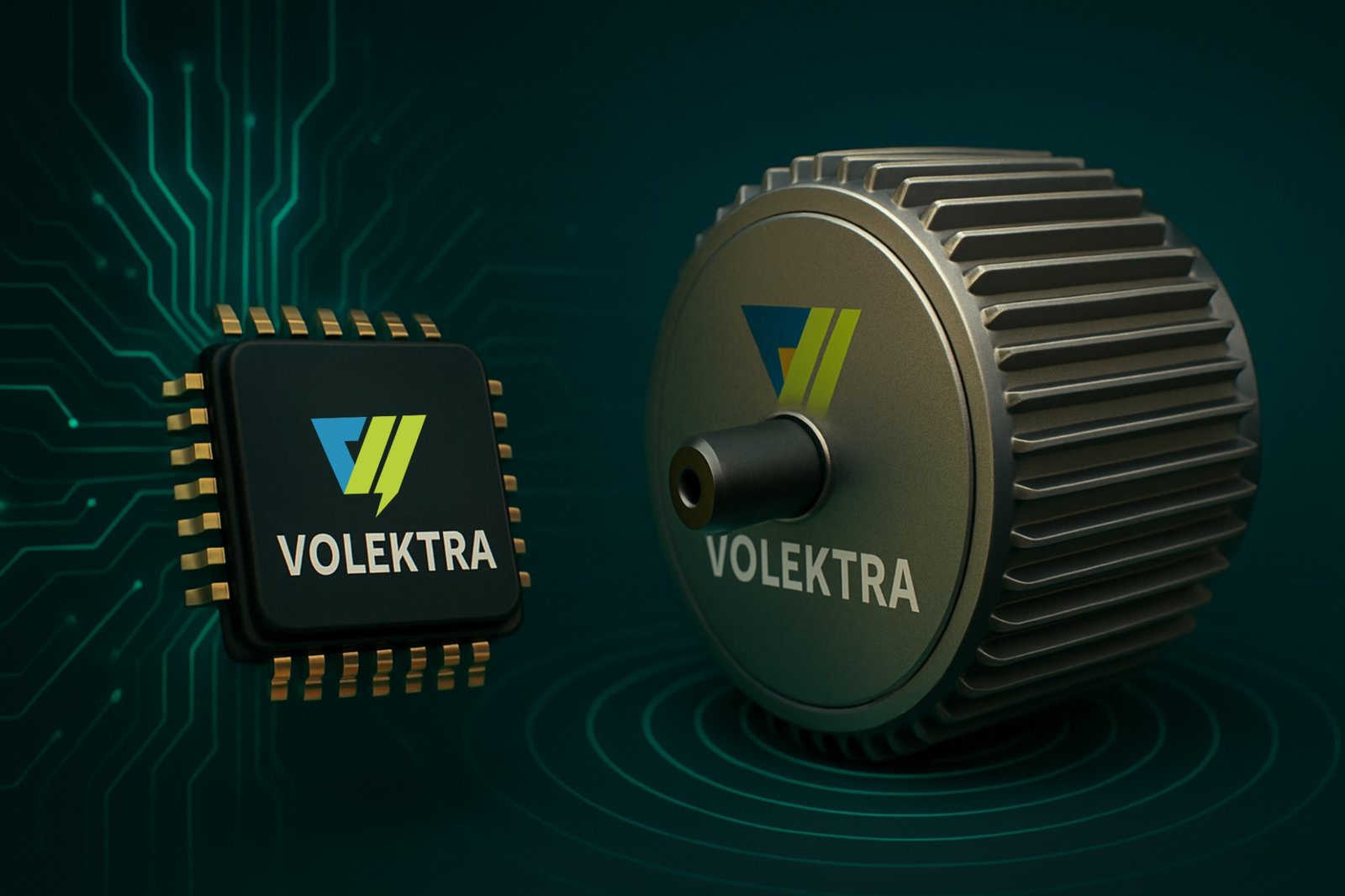
The engineering bar is real: the company says it holds five granted Indian patents on the platform, has ten more applications in the pipeline, and has invested more than 87,600 engineering hours in development, building its own design and validation tools when no commercial software could model the architecture. Its 6 kW continuous prototype is reported to deliver 10 kW peak with 48–58 Nm of torque, targeting efficiency comparable to conventional permanent-magnet motors. Because the magnetic behaviour is software-controlled, the company says performance can be tuned for different duty cycles and even improved over the air — an unusual capability for a motor.
From validation to volume
The Jhajjar plant marks Vimag’s transition from technology development and pilot production to industrialisation. The first phase focuses on process validation and serial production of mid-power motor and control systems, with high-power variants rated at 570 kW (764 bhp) and above planned as customer programmes mature. The company says it will scale capacity to up to 10,000 motor and control systems per month as volumes build, and is already evaluating additional manufacturing locations in India.
It is the starting point of a phased manufacturing build-out in India, with the company planning around &rupee;50 crore of investment to be deployed progressively as customer programmes and product volumes grow. The technology is already undergoing real-world vehicle testing at Technology Readiness Level 7, the company says, with pilot programmes running with two-wheeler and passenger-vehicle manufacturers and a manufacturing memorandum of understanding signed with Jendamark to support scale-up.
More Read
Why this matters
The supply-chain argument behind Vimag is stark. The company’s own stated purpose is to replace material constraints with engineering intelligence: reduce exposure to constrained rare-earth magnet supply chains while keeping PMSM-class performance, lower the system cost potential by swapping high-cost permanent-magnet content for scalable electronics and common materials, and strengthen indigenous motor IP that can be localised and exported globally.
Vimag Labs was founded in September 2025 by Manish Seth and Dr. Piyush Desai. In January 2026 it raised $5 million in a Series A round led by Accel, with participation from Chakra Growth Fund and Thinkuvate, to commercialise the VMSM platform and expand engineering and manufacturing capabilities. The startup operates its motors under the Volektra brand and has development and operations teams in Germany, the US and Poland alongside its Bengaluru headquarters, targeting two- and three-wheelers first and expanding into light and heavy commercial vehicles, industrial systems, robotics, defence and cooling.