For millions of Indians, the hardest part of any journey is not the road. It is the first step: getting into the car itself. According to Census 2011, India is home to over 2.68 crore persons with disabilities, alongside a rapidly growing elderly population, and for many of them climbing into a passenger seat means being lifted, twisted and manoeuvred — an everyday indignity that keeps families indoors. In Bengaluru, a pair of engineers decided that a car seat should come to the passenger, not the other way around.
The company is TRUE Assistive Technology, founded by Naina Padaki and Anand Kutre, and its flagship invention — the patented TurnPlus — turns an ordinary car seat into one that rotates 90 degrees out of the door, so a senior citizen or a person with paralysis, Parkinson’s disease, multiple sclerosis or a spinal injury can simply sit down and be glided back into the cabin.
The idea began, unexpectedly, in 2013, when Toyota approached the two engineers — then working in software and automotive engineering — to design a swivel seat for the Corolla Altis. The prototype was showcased at an auto show, but it failed to gain traction because it was too expensive for the Indian market. So Naina and Anand did what few corporate engineers do: they walked away, bootstrapped a venture on income from consulting assignments, and spent four years re-engineering the mechanism until it could be built, installed and serviced affordably in India. The company was formally established as TRUE Assistive Technology in 2022.
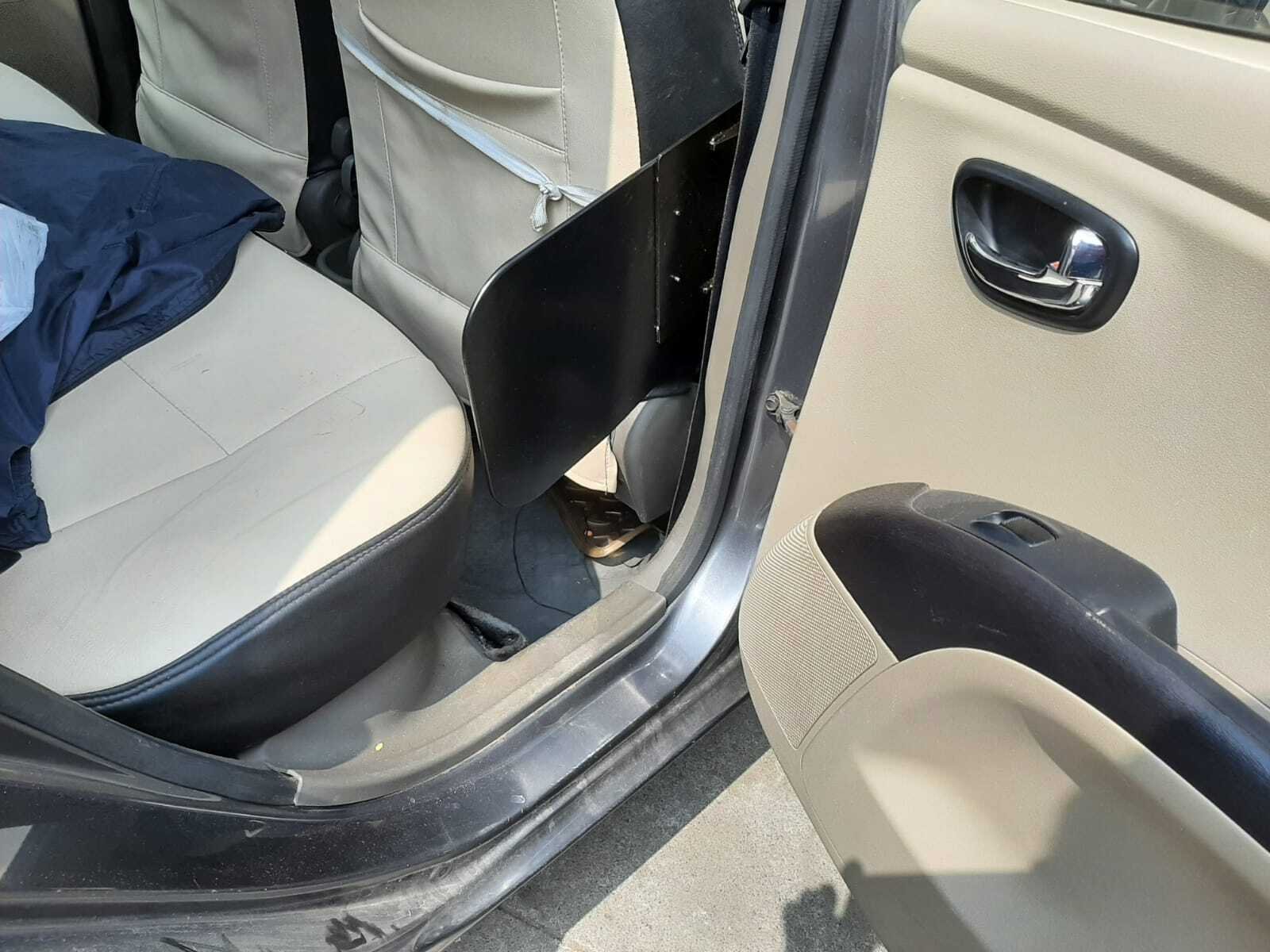
What makes TurnPlus elegant is how little it asks of the car. The original seat is removed, the swivel mechanism is installed in its place, and the very same seat is reinstalled on top — no structural modification, no rewiring of airbags or seat-belt anchors, and no change to the vehicle’s warranty, insurance or resale value. The company says the mechanism is compatible with around 85 per cent of Indian car models, can be fitted at the customer’s doorstep in under five hours, and can later be removed entirely, restoring the seat to its original condition. A manual variant works with a simple lever and needs no power or maintenance; an electric version swivels at the touch of a remote or a phone app.
Because the device carries people, the founders engineered it like an automotive component, not a gadget. The company lists an exacting test regime: 20G front and rear crash tests, seat-belt anchorage testing, 20 per cent overload testing, an operating range from −40°C to +60°C, and 8,000 open–close cycles plus 8,000 wet and dry salt-water cycles for corrosion endurance.
TurnPlus is the flagship, but the portfolio now spans the whole journey. RamPlus portable ramps unfold to carry wheelchairs over steps and thresholds at homes, clinics and public buildings; TransPlus transfer boards and HoistPlus systems help caregivers move people safely between wheelchairs, beds and vehicles; and for those who need more extensive support, the company undertakes end-to-end wheelchair-accessible vehicle conversions with hydraulic lifts and roof-height adjustments.
More Read
The engineering has won the industry’s attention. In December 2023 Hyundai Mobis — the parts arm of Hyundai — partnered with the Bengaluru startup to offer TurnPlus as an official accessory orderable at Hyundai showrooms, a first-of-its-kind collaboration in the Indian market. The company also works with Maruti Suzuki, and has joined Namma Yatri and EnAble India in equipping Purple Rides vehicles with TurnPlus seats to make app-based travel accessible. The company says it has enabled mobility for over 1,000 users across India.
Perhaps the most telling detail is the founders’ design rule, stated by Anand Kutre: nothing jugaad. If a device is going to carry someone’s parent across India, he reasoned, it has to be as reliable as the vehicle itself. That discipline — automotive-grade testing, OEM partnerships, doorstep installation — is turning a problem most of the industry looked past into a genuinely Indian engineering success. For families like the Sampaths of Bengaluru, whose teenage daughter has spinal muscular atrophy, the payoff is already measured in road trips: “We shouldn’t confine them to a single room,” her mother says. Sometimes, restoring independence begins with a seat that turns to meet you.
Keep reading: The Surgeon’s Arm, 4,000 Miles Long: Inside SSi Mantra 3, India’s Homegrown Surgical Robot · The Scanner That Will See Inside Millions: Inside Panacea Medical Technologies, the Bengaluru Company Building India’s Own 32-Slice CT Scanner · More Chemicals, Materials & Life Sciences stories
Like stories like this? Add Exceptional Technology as a preferred source on Google to see more of our reporting in your search results and Discover feed.