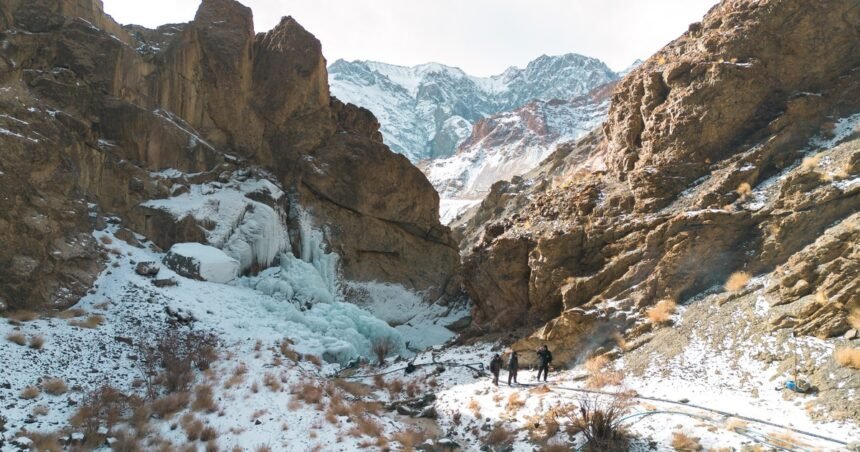
In Ladakh, water arrives at exactly the wrong time of year. Winter brings it in abundance, locked up in snow and ice, while spring — when farmers must sow the wheat, mustard, potatoes and green peas that feed their families all year — brings the anxious wait for meltwater that may no longer come. Glaciers are retreating, snowfall has grown erratic, and in a high-altitude cold desert where more than 90% of villages depend on glacial meltwater, a dry spring can decide a whole year.
The company is Acres of Ice, a Leh-based startup founded in 2023 by Suryanarayanan Balasubramanian and Basit Afzal, and its answer is beautifully simple: build the glacier yourself, and automate it. Its Automated Ice Reservoirs (AIR) harvest winter runoff, freeze it into towering ice formations through the cold months, and release it gradually in spring — just when the fields need irrigation most.
The nightmare the automation solves
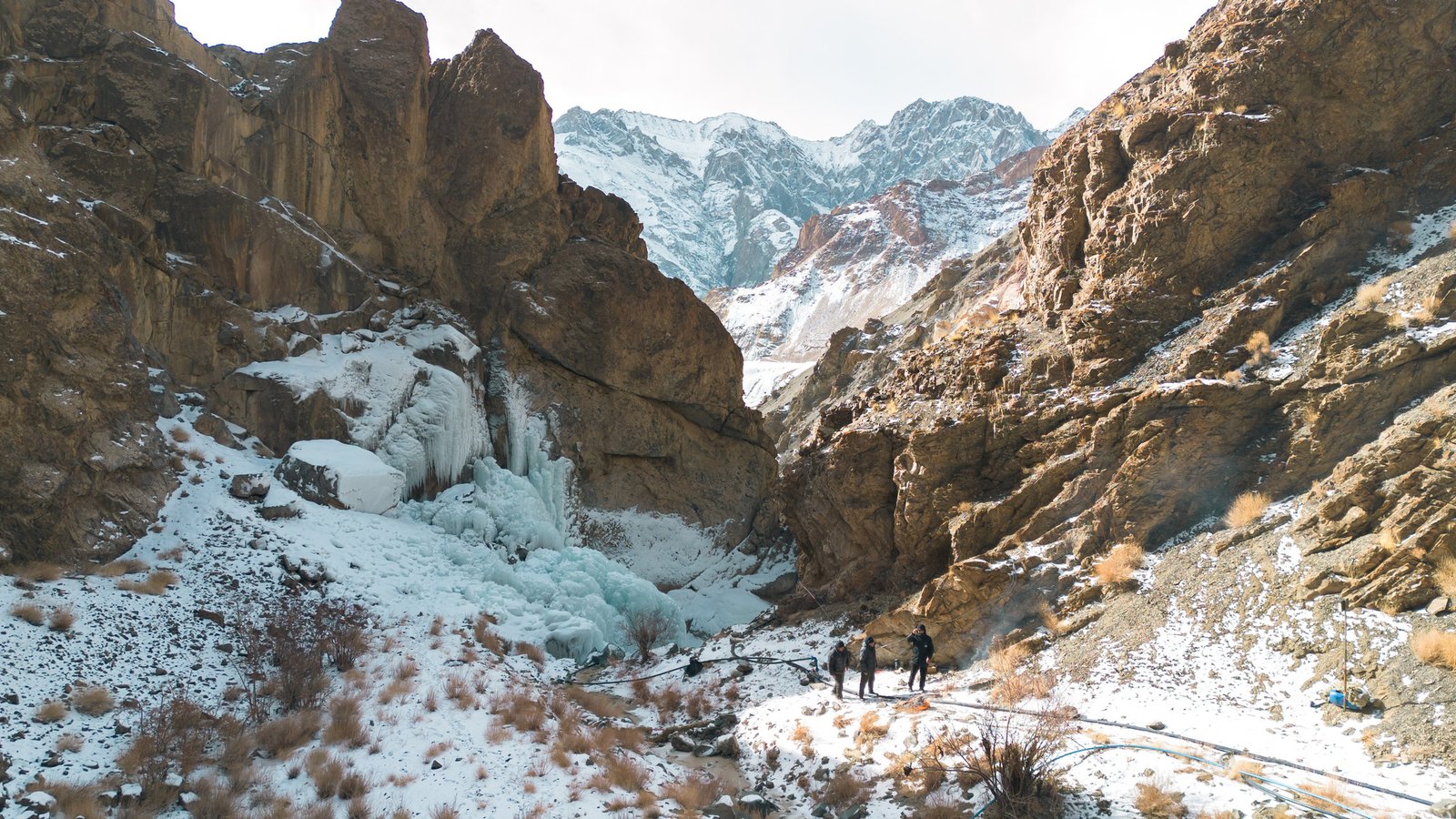
Ladakh’s farmers have built artificial ice reservoirs — ice stupas — for over a decade: piping water down from higher altitudes in winter and spraying it into freezing air so it builds into a cone of ice that melts in spring. The idea worked, but keeping it working was, in the company’s words, a winter-long vigil. When temperatures plunged below minus 20 degrees, water inside the pipes would freeze and crack them, and teams of farmers would camp near the water source through the night, clearing blockages with boiling water in the coldest hours.
Acres of Ice’s breakthrough was to take the human out of that loop. Each AIR is a gravity-fed system: water from a spring or glacial source runs through pipelines to a vertical nozzle — a fountain — and a weatherproof control unit, powered by solar panels and a battery, decides exactly when to spray. Sensors linked to a weather station watch air temperature, wind, humidity and the temperature of water inside the pipes, and a printed circuit board switches mechanised valves between spray mode and drain mode. When conditions are right, the fountain releases short bursts of mist that freeze solid before the next burst; when a freeze threatens the pipes, the system drains itself first. Villagers keep a manual override, and the whole system can be watched and controlled remotely from the company’s dashboard.
From one village to twelve
The first AIR was built in Igoo village, at 4,200 metres above sea level, and the company says water availability for irrigation there increased by over 30 percent. The remote monitoring software has cut monitoring visits from every other day to just twice a month, and each reservoir can now store over 4 million litres of water — compared with around 1 million litres for a traditional reservoir.
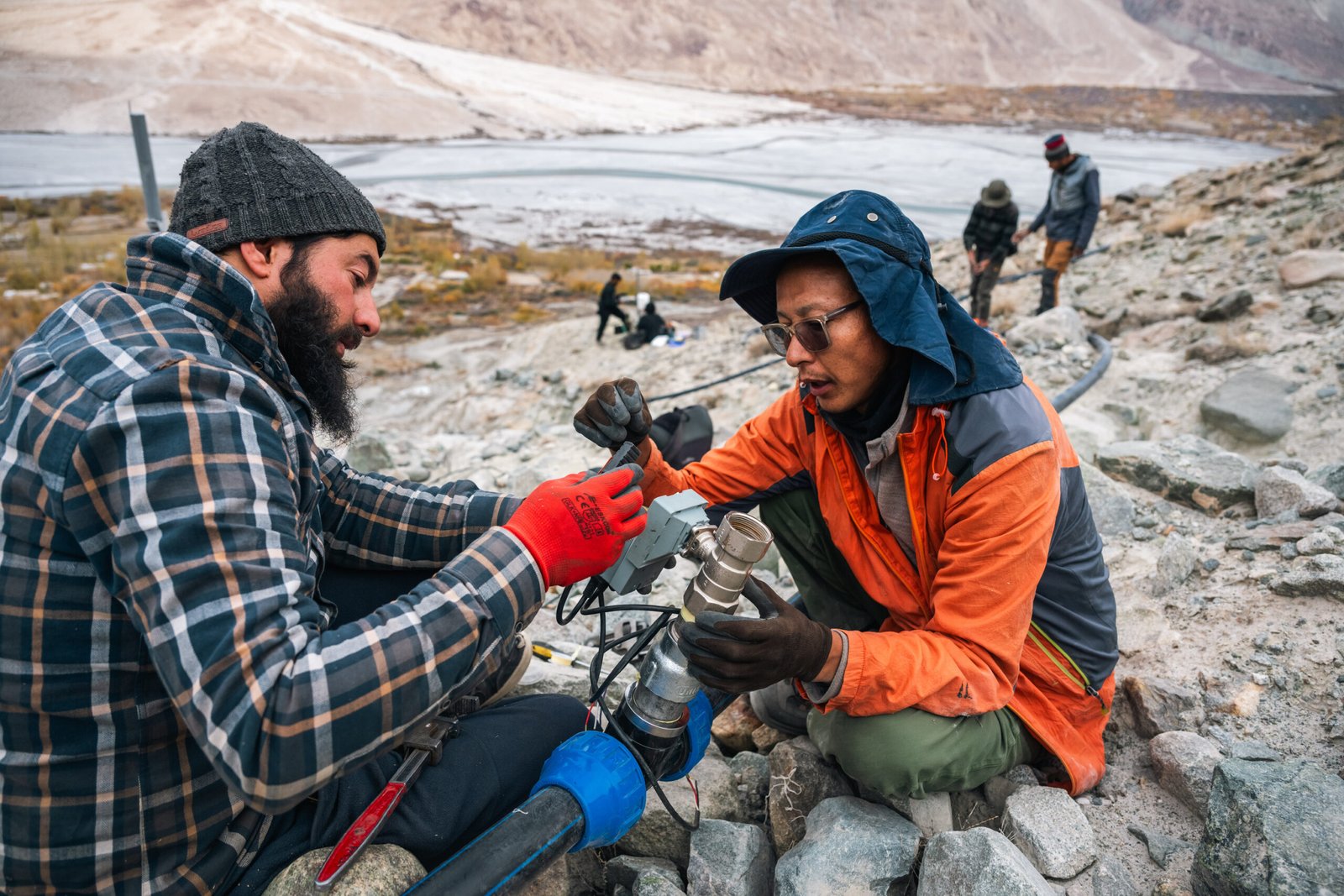
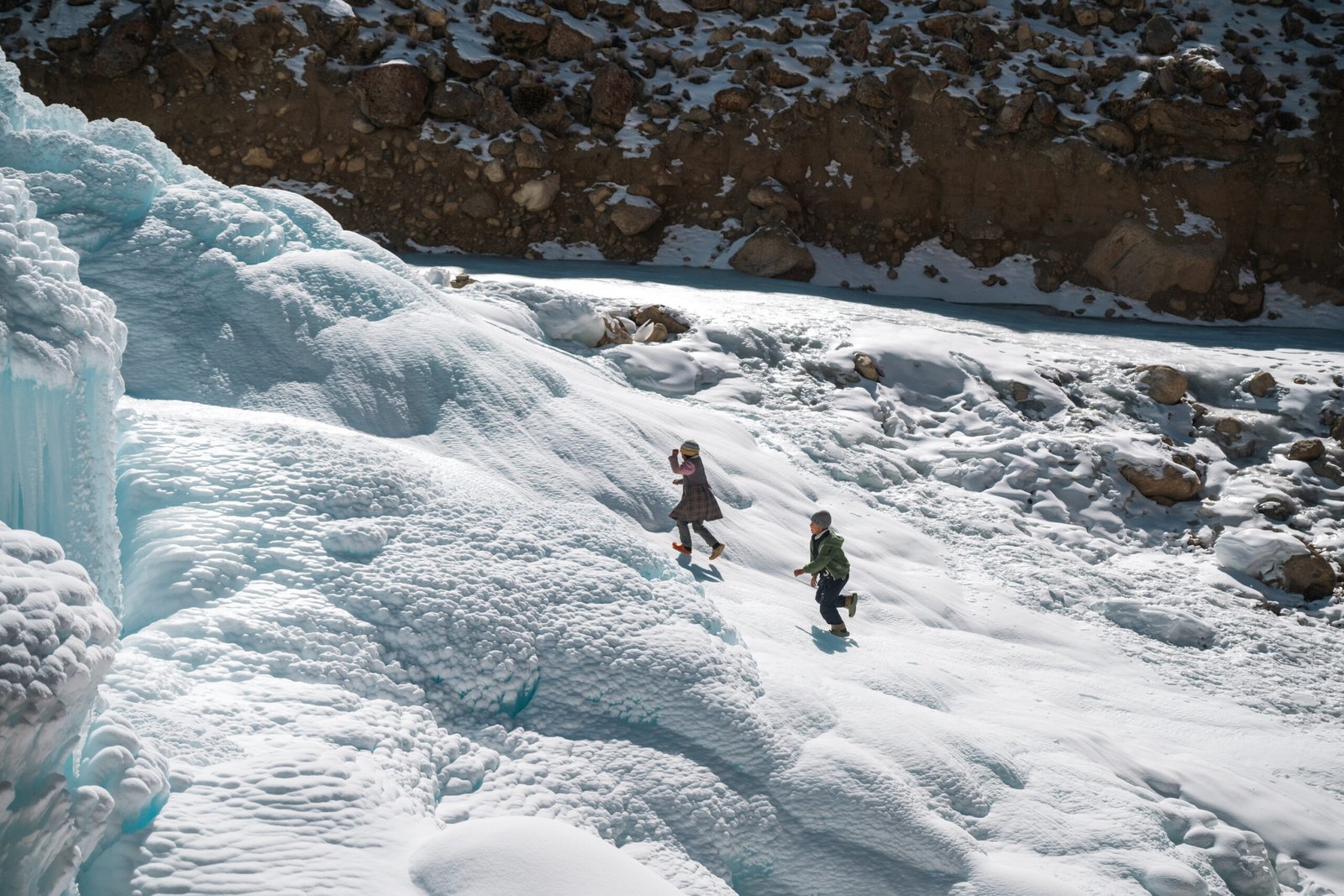
The numbers from the 2024–25 season tell the scale of the change: 18.4 million litres of water stored across seven sites in Ladakh, at a cost the company puts at ₹0.28 per litre — up to 80 times lower than a cement tank. Twelve AIR sites are now active across twelve villages, maintained by thirteen trained local operators, and in Ursi, the company reports, 88 percent of households say water is now more accessible when they need it most. The reservoirs are built with local materials and shaped by local knowledge, and trained village water committees now manage them day to day.
More Read

Water, precisely delivered
Storing the water is only half the system. Acres of Ice’s Smart Micro-Irrigation delivers it directly to the roots of crops, combining drip irrigation with low-tech automation designed for frozen pipelines, rugged terrain and sparse water sources. The company says the systems achieve 60–70 percent water savings compared with flood irrigation and 70–80 percent labour reduction — a combination that lets high-altitude farmers grow higher-value, water-efficient crops on land that once depended entirely on the timing of a glacier’s melt.
The work has already earned international recognition: Acres of Ice won the adaptation prize at the inaugural Mountain Future Awards in Rome in December 2024, and the company is now preparing kits — custom-designed controllers, valves and fountains, with a manual for choosing pipeline layouts and water sources — so the same approach can reach more villages across the Hindu Kush Himalayas, the Andes and the Alps, where the company estimates 14 million people face similar water challenges.
“Winning the Mountain Future Award provides much-needed limelight, not just on us, but also on the communities struggling against climate change,” says co-founder Suryanarayanan Balasubramanian. From a village in Ladakh, a small team has turned winter itself into a reservoir — and given mountain farmers something no glacier could promise: water, on time, every spring.
Keep reading: When in Doubt, Ask Again: Inside KissanAI’s Dhenu Vision, the AI Reading India’s Crops Leaf by Leaf · Brewed, Not Farmed: Inside Arboreal Bioinnovations, the Indian Company Fermenting Tomorrow’s Food Ingredients · More Food Processing & Agri-Tech stories
Like stories like this? Add Exceptional Technology as a preferred source on Google to see more of our reporting in your search results and Discover feed.