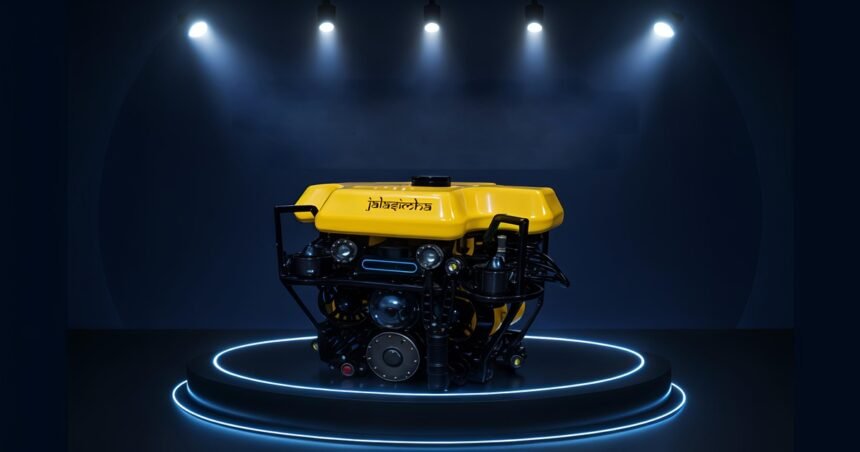
Three hundred metres below the surface, there is no sunlight, no GPS signal and no room for a human diver to work safely for long. That is exactly where Coratia Technologies sends its robots. The Rourkela startup builds underwater robots that inspect ship hulls, dams, pipelines and seabeds — and its flagship machine, Jalasimha, now serves the Indian Navy under a ₹66 crore contract.
The news this week gives that story its next chapter: on 29 October 2026, Coratia announced an ₹18 crore bridge round led by MGF Kavachh, fresh capital the company says will go into executing its Navy contract, advancing its research and scaling up manufacturing and deployment. It follows a ₹17 crore pre-Series A round in 2025 from MGF Kavachh, Piper and SIDBI, taking the company’s disclosed funding to ₹35 crore.
A robot built for water you cannot see through
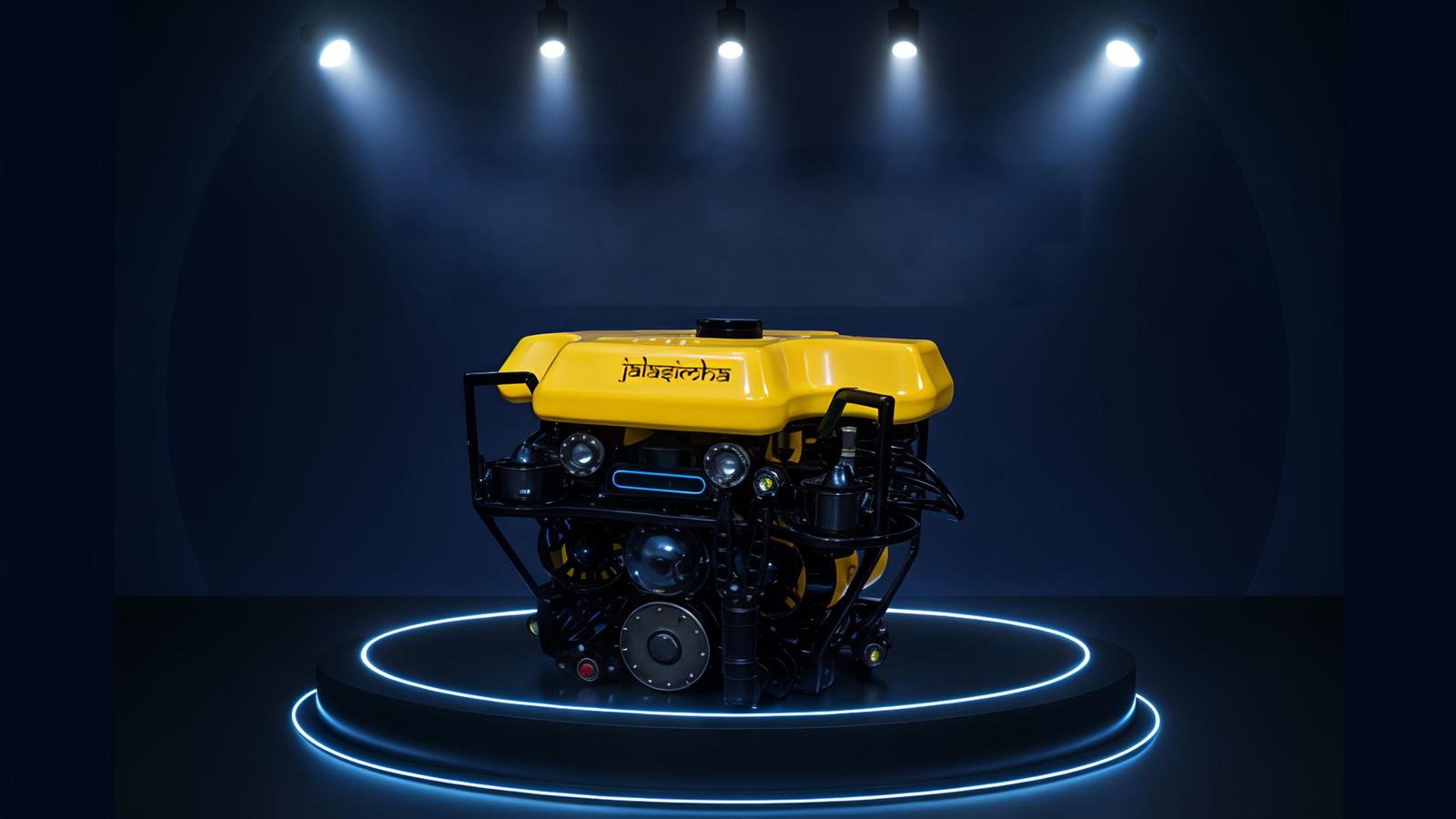
Indian waters are unforgiving to machines. The company points out that high turbidity, silt, low visibility and changing currents are the norm, not the exception — conditions that defeat cameras alone and make navigation a genuine engineering problem. Jalasimha is built around that reality. Since satellite navigation cannot reach underwater, the vehicle carries its own positioning stack, combining GPS at the surface with USBL and DVL navigation below, so an inspection produces a precise, returnable record rather than just a video.
Its sensor suite reads like a survey ship shrunk into a single vehicle: a stereovision system for high-resolution three-dimensional imaging, multibeam sonar for mapping the seabed and submerged structures, leak-detection probes and AI-based analytics that turn raw readings into inspection findings. A dexterous robotic arm handles intricate manipulation underwater, from maintenance tasks to salvage work, while non-destructive testing equipment — including a thickness gauge and laser scaler — measures metal corrosion, thickness and defects without cutting anything open.
From a college project to the Navy’s fleet
Coratia began where many of India’s best engineering stories begin: a student team. Co-founders Debendra Pradhan and Biswajit Swain met at the National Institute of Technology Rourkela, where their underwater robotics team competed nationally and internationally and got a first-hand look at how far behind India was in the field. After stints in corporate jobs in India and abroad, the two returned to the idea full time and founded Coratia in 2021, incubated at NIT Rourkela.
The breakthrough came through the Ministry of Defence’s iDEX programme, where Coratia won the iDEX-DISC-7 challenge in 2022. That win led to the landmark contract signed in September 2025: the Indian Navy’s first large-scale induction of India-built underwater remotely operated vehicles. Under the ₹66 crore agreement, Coratia supplies three platforms — Jalasimha for naval inspection and surveillance, Jaladuta for cleaning and inspection, and Navya, an autonomous surface vessel — covering ship-hull cleaning, minor salvage operations and inspection of submerged infrastructure, with sonar mapping and AI-driven analytics throughout.
More Read

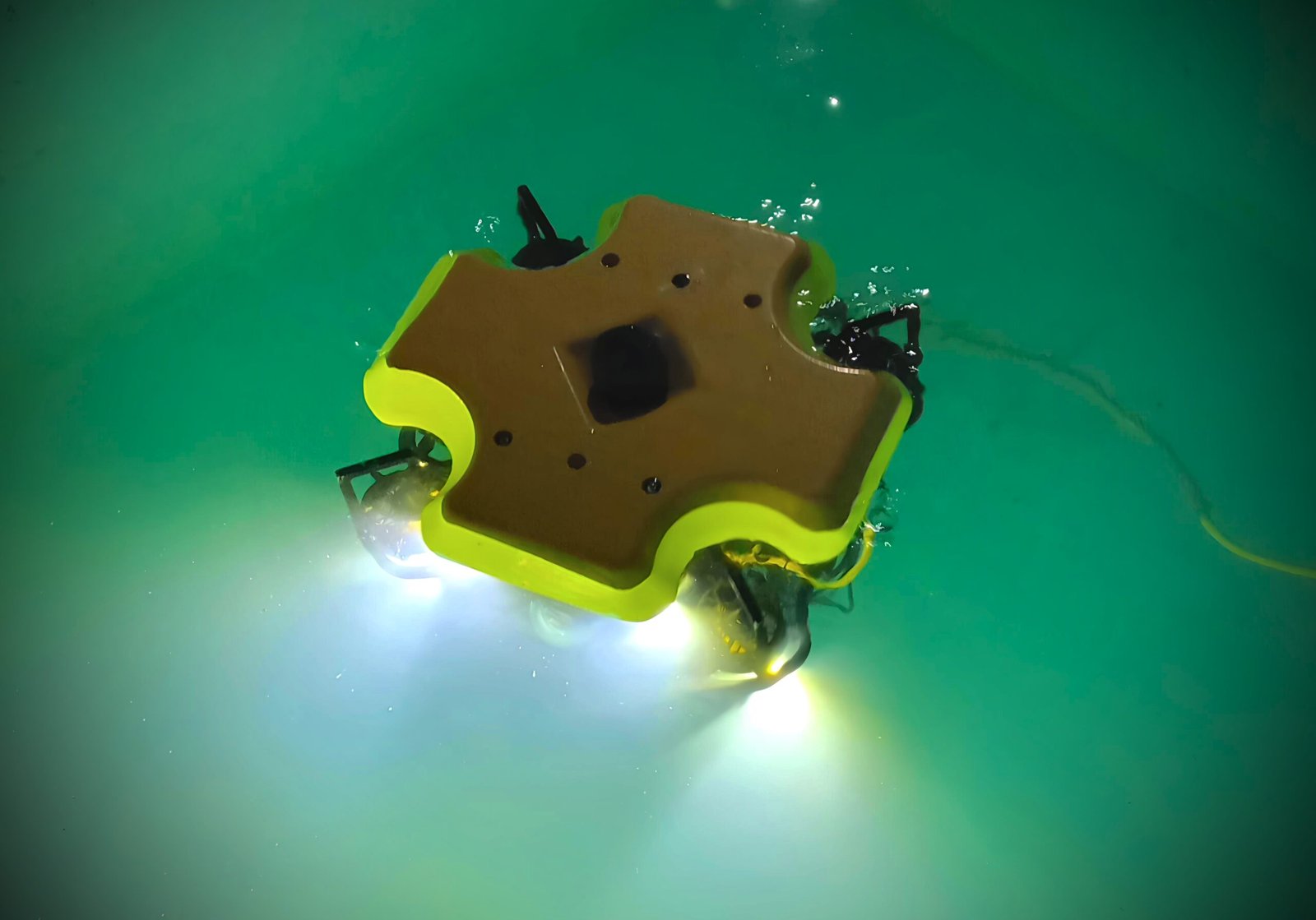
The company says Jalasimha has reached Technology Readiness Level 9, the highest level of operational readiness, after testing in open seas and inland waters, including pressure-chamber and open-sea trials in the Bay of Bengal. Along the way Coratia has collected a shelf of national honours, from the Boeing BUILD 3.0 win and NASSCOM Emerge 50 to a Shark Tank India appearance — but the Navy contract is the validation that matters most, turning a campus project into mission-critical hardware.
Beyond the Navy: dams, bridges, pipelines and cables
The same robots that guard naval assets spend much of their working life on civilian infrastructure. Coratia’s clients and partners include Indian Oil, Indian Railways, Tata Steel, Hindalco, the Steel Authority of India, Neelachal Ispat and Jindal Steel and Power, alongside NIT Rourkela — organisations with dams, reservoirs, ports, bridges, pipelines and offshore assets that all need regular eyes underwater.
The fleet is built for that range. Jaladuta, the company’s first model, cleans ship hulls of biofouling and debris and inspects submerged civil structures down to 150 metres. Oceanaus is a compact, modular vehicle for precision inspection in tough conditions, and Navya, the autonomous surface vessel, carries out hydrographic surveys, environmental monitoring and bathymetry of riverbeds, lakebeds and coastal waters. For Coratia, defence and infrastructure are two sides of the same engineering coin: the same autonomy, sensing and navigation that keep a warship’s hull safe also keep a dam wall, a bridge pier and a subsea cable honestly inspected.
What the new funding builds
With the bridge round closed, Coratia says its focus sharpens on three things: delivering on the Navy programme, pushing its core capabilities in autonomy, sensing, navigation, underwater perception and intervention, and building the manufacturing and deployment capacity to serve defence and critical infrastructure at scale. The company describes its direction simply — miniaturising the technology while making its systems smarter, more capable and easier to deploy wherever the water is deep, dark or dangerous.
That is the quiet promise at the heart of Coratia’s work: India no longer has to send divers into dangerous water, or import the robots that go in their place. From a lab at NIT Rourkela to the decks of the Indian Navy, a homegrown machine now does the diving — and it is only getting started.
Keep reading: A Robot for the Lake: Inside SCRUB Robotics, the Bengaluru Students Building Autonomous Lake Cleaner · Where Divers Can’t Go: Inside Planys, the Chennai Startup Sending Robots Beneath the Waves · More Shipbuilding & Maritime stories
Like stories like this? Add Exceptional Technology as a preferred source on Google to see more of our reporting in your search results and Discover feed.