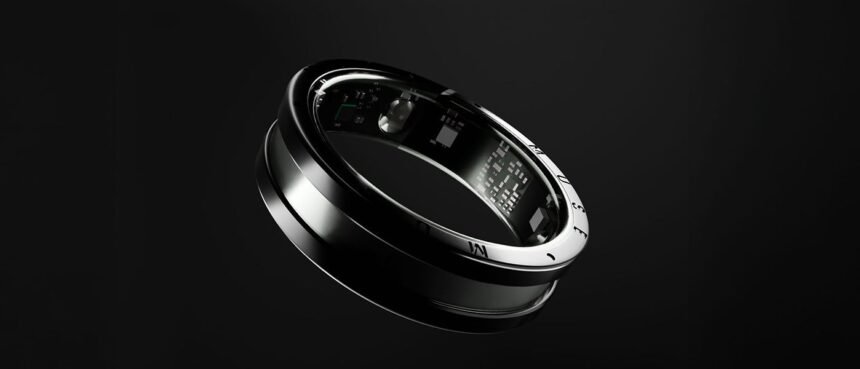
Imagine leaving the house with no wallet, no watch and no keys — and still paying for coffee, tracking your sleep and unlocking your car, all from a single ring on your finger. That is the everyday the Bengaluru team at Muse Wearables has been building towards, and its newest device brings it sharply into focus: Ring One Gen 2, the second generation of its smart ring, is shipping this October at a global launch price of $229, against a regular price of $349.
Ring One Gen 2 is a health tracker, a payment card and a digital key folded into one slim band. The company says it tracks sleep, exercise, mindfulness and overall wellness with research-grade accuracy, pays securely at any tap-to-pay terminal, and can even unlock a Tesla, open smart doors and sign you in without a password — all with a single tap, and with no subscription, ever.
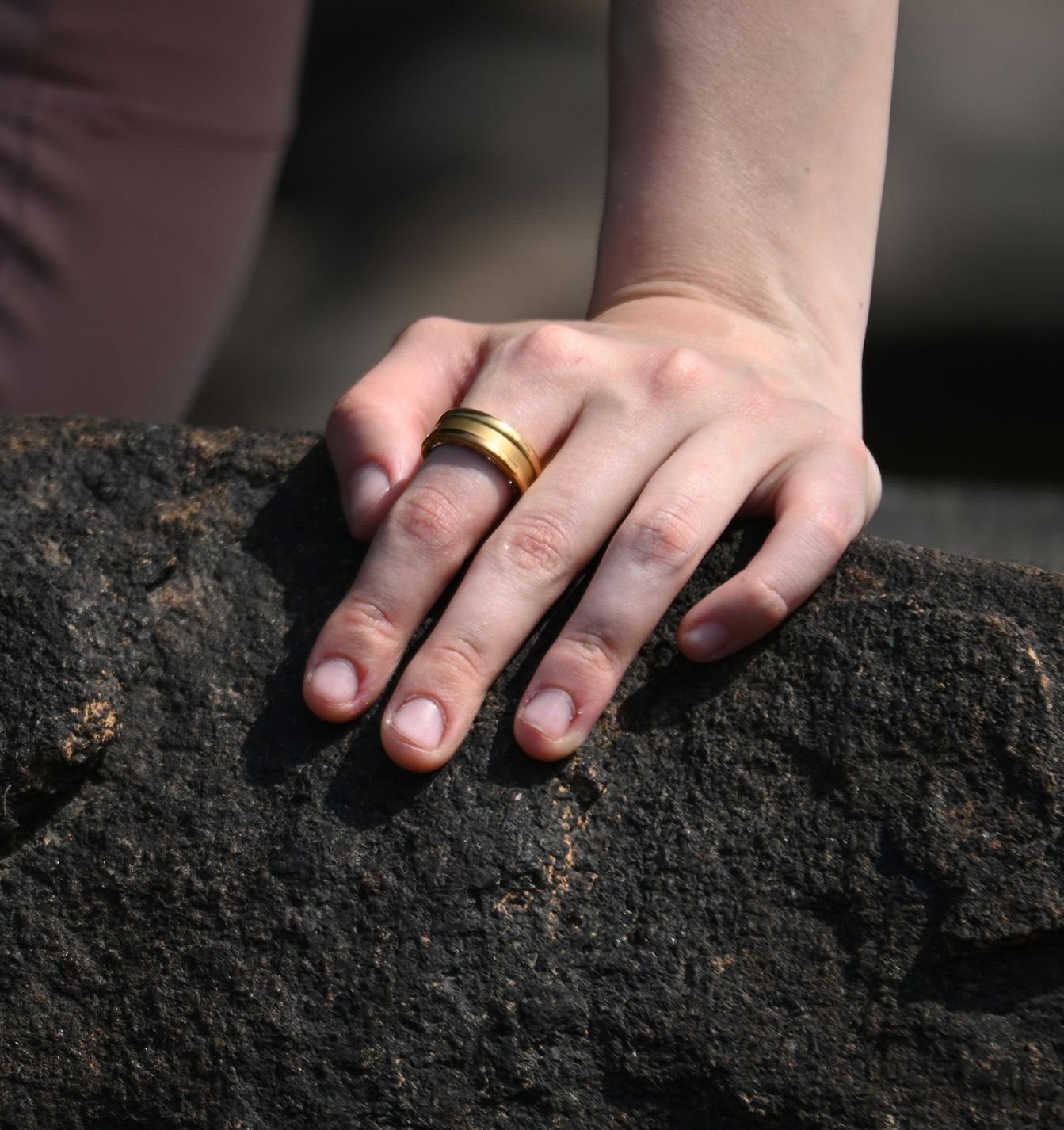 Muse Wearables’ Ring One Gen 2 in gold. (Image: Muse Wearables)
One antenna, two jobs — payments and charging
The cleverest piece of engineering in Ring One hides in plain sight. The ring uses a single NFC antenna to do two jobs: make payments and charge wirelessly. The company says it was the first in the world to combine wireless charging and NFC payments on one antenna, a trick that keeps the ring extremely compact. To pull it off, Muse Wearables worked with Panthronics, a unit of Renesas Electronics that specialises in NFC wireless charging, whose transmitter sends power from the charging case to the ring.
Payments run through Muse Wallet, the company’s deep-tech payment platform. Card details are converted into a secure digital token stored in a tamper-resistant Secure Element chip inside the ring — the same grade of hardware security used in bank cards and passports. Payments work only while the ring is being worn: take it off and transactions are instantly disabled, and if the ring is lost or stolen, the token stays inert and useless without its authenticated context.
The payment story reached a national milestone in October 2025, when Muse Wearables partnered with the National Payments Corporation of India (NPCI) to launch India’s first wearable payments ecosystem, powered by Muse Wallet and NPCI’s RuPay network. Users link a RuPay credit or debit card to the Muse Wallet app and then tap the ring on any NFC-enabled point-of-sale terminal — no phone, card or wallet required. The platform was already live in over 40 countries and supporting cards from nearly 600 banks through the Mastercard network, and the company says it aims to onboard all Indian issuers and bring wearable payments to millions of RuPay cardholders, including in Tier-2 and Tier-3 cities. “We are taking on foreign tech giants in the digital wallet ecosystem by creating a truly sovereign alternative for India,” said co-founder and chief executive K. L. N. Sai Prasanth.
More Read

Using it is deliberately tactile. The engineers call the interface the “turn wheel”: rotate the ring’s outer shell left to start a workout, and turn it right to enable payment mode — then a simple wave of the hand engages the terminal, with the company saying a payment completes in under four seconds.
Why the finger beats the wrist
Ring One exists because of a lesson Muse Wearables learned during the pandemic. Its first product, the Muse Hybrid Smart Watch, launched in 2019, and when COVID-19 arrived the company added blood-oxygen monitoring that hospitals used to spot silent drops in oxygen early. Watching hundreds of users, the team concluded that the wrist is not always the best place to read the body: watches rotate on the wrist, especially during sleep, while the finger’s arteries sit closer to the surface, surrounded by thinner, more uniform tissue, with a higher density of capillary action — all of which makes for a cleaner signal.
So the ring reads the body optically. Six LEDs — green, red and infrared — shine light into the finger’s arteries, and two photo-detectors with specially curved lenses capture the reflected light, whose properties shift with blood flow. A temperature sensor tracks changes through the day, while a 3D accelerometer and gyroscope capture movement across six axes, so readings stay accurate even during a workout. Together, the company says, Ring One tracks six vitals: heart rate, heart rate variability, blood oxygen, blood pressure, respiratory rate and temperature.
Gen 2 turns that stream of data into guidance. The ring now offers AI-powered insights that transform weeks of data into clear, actionable advice for everyday life, with AI Applets — intelligent mini-programs for goals from better sleep and faster recovery to fasting, metabolic health, weight loss and mental well-being. It also brings preventive-care features to the finger: sleep-apnea insights that surface patterns in weeks of sleep data, cuff-less blood-pressure tracking and vascular-health insights, nudging the wearer to act when vitals drift from their baseline.
Built like jewellery, engineered like a lab instrument
For something worn around the clock, Ring One is built to disappear. The band is made from Titanium grade 2 and ceramic zirconia, with a multi-layered coating and diamond polishing for a scratch-resistant finish, while the inner layer uses medical-grade epoxy for comfort against the skin. It is water resistant to 100 metres, so swimming and showering need no thought, and it comes in silver, black, gold and rose gold finishes, with a sizing kit included in every order so the fit is exactly right.
Battery life is designed around the same forget-about-it philosophy. The company says Ring One Gen 2 runs for six to seven days on a charge, and its charging case — with its own “Magic Glyph” interface — stretches that to a month, while also letting the wearer locate the ring even in the dark.
 Muse Wearables’ Ring One Gen 2 in silver. (Image: Muse Wearables)
From a COVID band to a global ring
Muse Wearables was founded in 2017 by Prathyusha Kamarajugadda, K. L. N. Sai Prasanth and Yathindra Ajay K. A., and incubated at the IIT Madras Incubation Cell in Chennai. From the hybrid smartwatch and the COVID-era Muse Cue band, the company has grown into a 200-person deep-tech team based in Bengaluru with operations in the USA and Europe, designing and manufacturing its wearables and payments technology in India.
Ring One Gen 2 is the sharpest expression yet of that journey: a device that began as a better way to read the body and has become a new way to move through the world — paying, tracking, unlocking and signing in, all from the finger, with nothing else in your pocket. For a country building its own digital-payments rails, it is a fitting showcase: world-class wearable engineering, designed and made in India, now shipping to the world.
Keep reading: One Door to Every AI Model: Inside CloudSEK’s KeyVigil, the Gateway Guarding India’s AI Agents · Built for Indian Dust: Inside Botloka, the Bengaluru Startup Teaching a Robot to Clean Indian Homes · More Industrial Automation & Technology stories
Like stories like this? Add Exceptional Technology as a preferred source on Google to see more of our reporting in your search results and Discover feed.