In September 2017, four Bengaluru founders looked at one of nature’s oldest machines and saw the answer to one of India’s most stubborn urban problems. A cow’s stomach breaks down tough plant matter with no power, no chemicals and no operator — just four chambers, time, and bacteria. Tharun Kumar, Simar Kohli Das, E Muralidharan and Praseed KK decided a sewage treatment plant could work the same way. The company they built, ECOSTP Technologies, has spent the years since proving it: its plants treat sewage with no electricity, no chemicals and no human intervention, and the company says it has now built more than 350 of them across 25 Indian states, the Maldives and Bangladesh.
The idea sounds almost too simple to work, and that is exactly the point. A conventional sewage plant is a loud, hungry machine — blowers, pumps, motors and exhaust fans, plus a trained operator keeping the biology balanced around the clock. ECOSTP’s answer was to copy the cow instead of the machine. The result is a plant with no moving parts at all, built underground, that needs attention only once in two years.
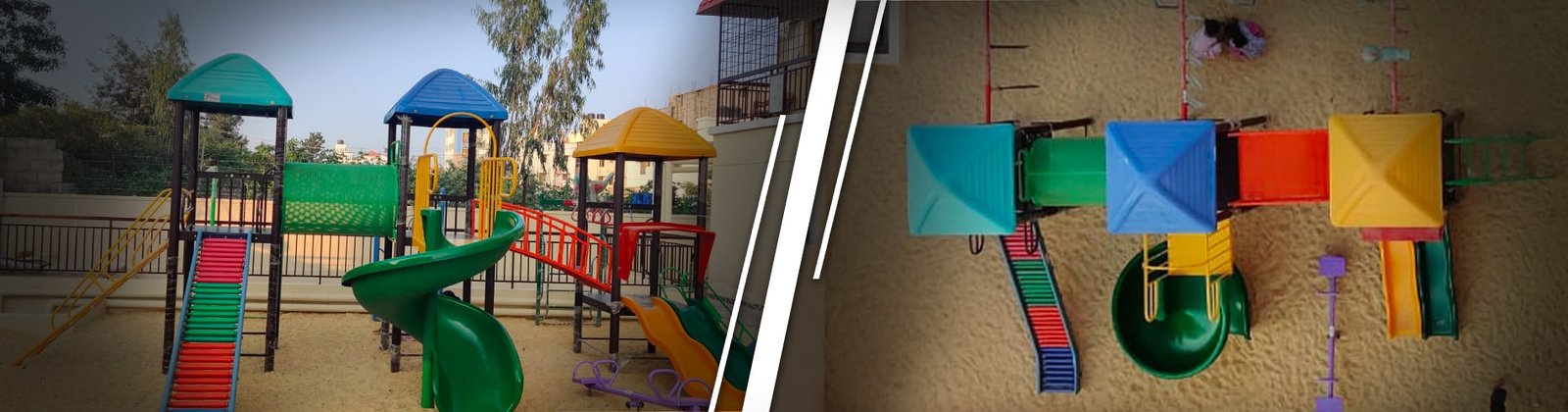
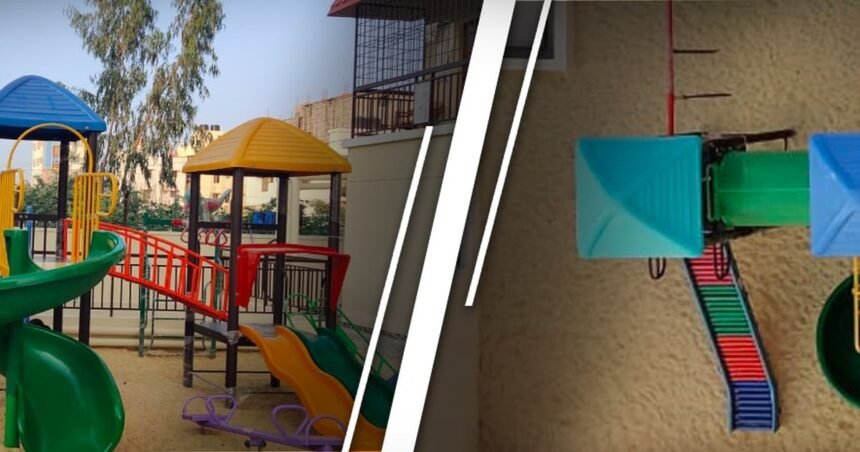
A children’s playground built directly above an ECOSTP plant — the treatment chambers run entirely underground. (Official photo: ECOSTP)
Four chambers, zero motors
Inside an ECOSTP, sewage flows by gravity through three anaerobic Rumen Digester Filter stages — a 12-step patented anaerobic filter system — and finishes in a Stage 4 Plant Bio Filter. The water stays in the system for 72 hours while anaerobic bacteria break the pollutants down, exactly as the microbes in a cow’s rumen do. Because the bacteria need no oxygen, there are no blowers, no air diffusers to clog, and no sludge to return every hour. There is no MLSS balancing for an operator to manage, because the company says the system manages itself.
The treated water meets pollution control board norms, the company says, and its clients have received consents for establishment and operation from their state boards. The plant is a civil structure of brick, concrete and PVC with no electromechanical parts, so the company says it lasts as long as the building above it — the only routine attention is desludging once in two years.
More Read

The plant you can build a playground on
Because the whole plant sits underground, the surface above it stays free. ECOSTP’s installations carry parking lots, driveways, gardens, children’s play areas and even tennis courts on top — the company calls it zero-space design. A plant needs about 2.6 square metres per KLD of capacity, and a typical installation takes around two months from work order to handover, the company says, at a civil cost of roughly &rupee;40,000 to &rupee;50,000 per KLD.
It also solves a problem that quietly kills conventional plants: they need at least 30% load to work, so a half-empty apartment block starves its own treatment system. ECOSTP’s natural system works from a single toilet upwards, the company says, with no minimum load at all.
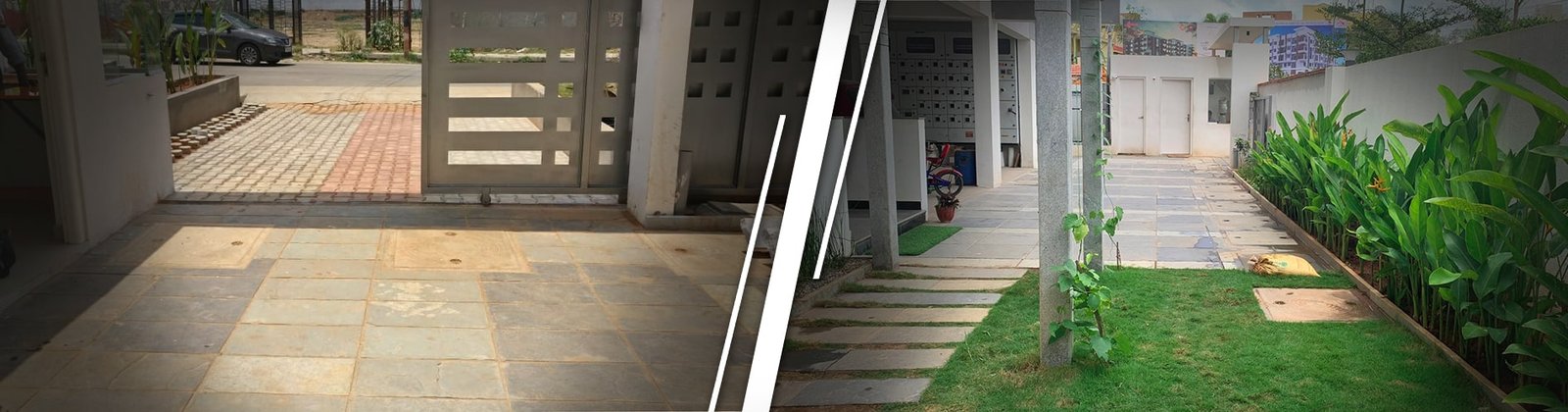
A driveway and garden above an ECOSTP installation — the plant occupies no usable space. (Official photo: ECOSTP)
350 installations and counting
The company says it has processed billions of litres of sewage since 2017, and its client list now spans developers, factories and institutions — Tata Steel, BHEL, Brigade, Adani, Essar, TVS, Titan, Decathlon, Woxsen University and IIT Jammu among them. At Tata Steel Downstream Products’ Tada facility, an ECOSTP has run for three years, producing what the company describes as crystal-clear treated water with no moving parts to maintain.
The awards keep coming
ECOSTP won the Circular Economy Innovator Award at the National Startup Awards 2026, and a &rupee;50 lakh prize at Titan’s Design Impact Awards 2026, where a test at Bengaluru’s Environmental Management & Policy Research Institute showed a 15% improvement in treatment efficiency. The company has also won two awards at the Economic Times Leaders of Tomorrow — one for health and wellness, and Startup Entrepreneur of the Year — and its technology is a Best Practice case study in the United Nations ESCAP SDG sustainability report and features in the AskNature biological strategies database.
The research continues: with IIT Jammu, ECOSTP is developing a phenol-eating bacteria strain to biodegrade chemical pollutants naturally, and with Sathyabama Institute of Science and Technology it is exploring turning digestate sludge into biochar and hydrochar. The cow’s stomach, it turns out, still has more to teach.
ECOSTP is a reminder that the best engineering is not always a bigger motor — sometimes it is a better imitation of nature. The next time you walk across a playground or a driveway in a Bengaluru apartment complex, there may be a cow’s stomach quietly at work underneath it.
Keep reading: Mind Over Machine: Inside Nexstem’s Instinct, the Bengaluru Headset That Turns Thought Into Command · Hands That Speak: Inside Glovatrix’s Fifth Sense, the Glove Giving Sign Language a Voice · More Chemicals, Materials & Life Sciences stories
Like stories like this? Add Exceptional Technology as a preferred source on Google to see more of our reporting in your search results and Discover feed.