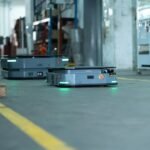
Every port, mine and factory yard in India runs on the same clock: twenty-four hours a day, seven days a week. The trucks that keep them moving do not. They stop for driver shifts, for rest, and for the simple fact that there are not enough drivers to go around — India is short of an estimated 2.2 million truck drivers, according to a World Bank estimate. RoshAi, a deep-tech startup from Kochi, has built its business on closing that gap — not by selling anyone a new truck, but by teaching the trucks they already own to drive themselves.
Retrofit, not replace
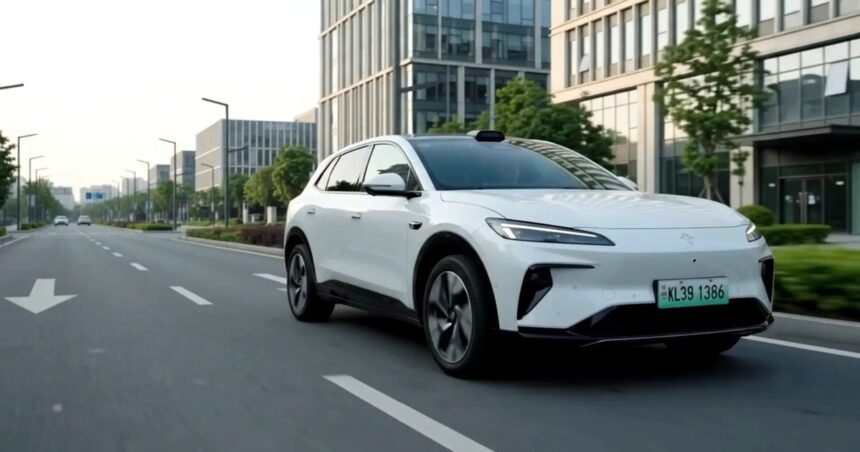
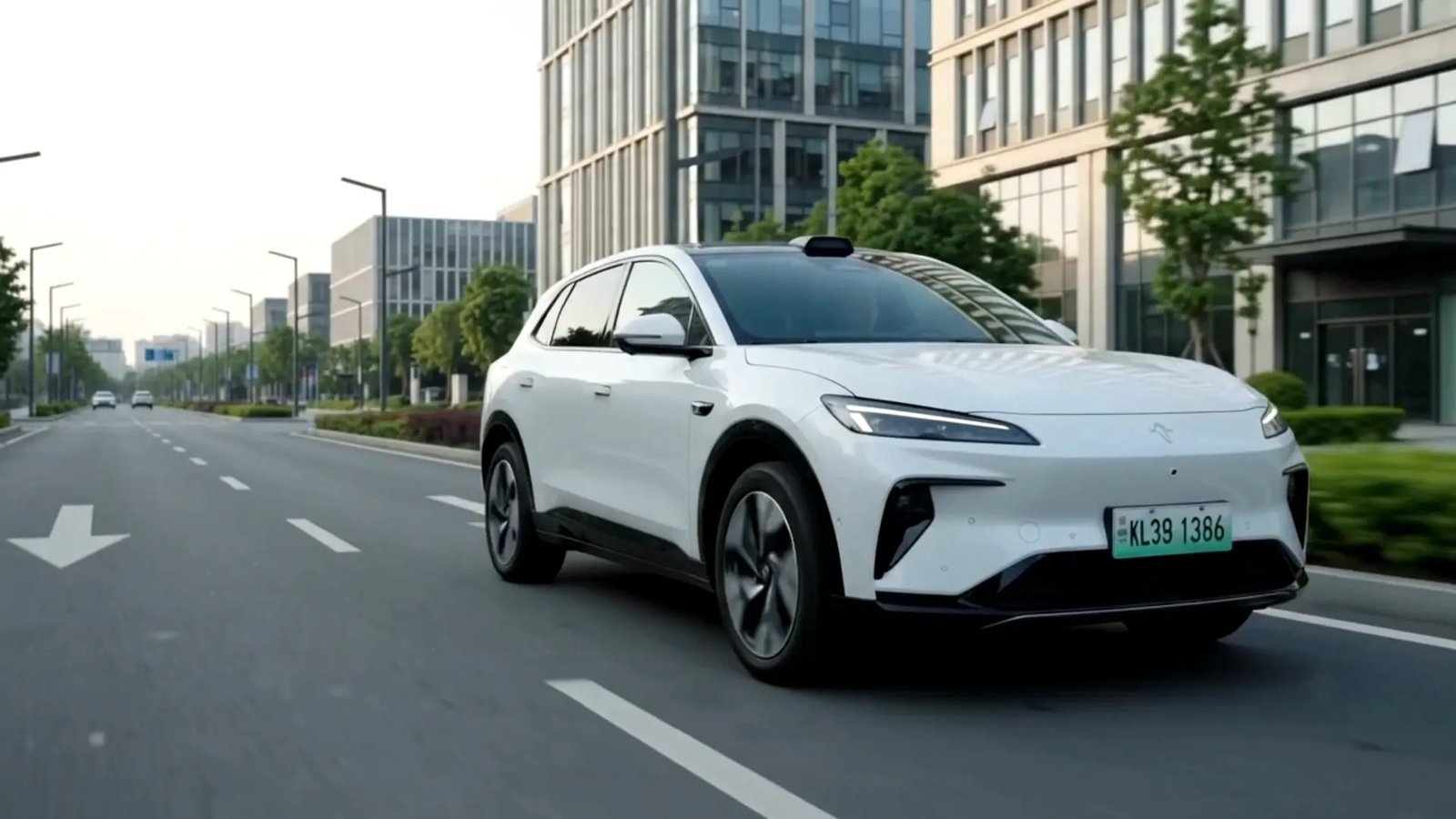
The pitch is simple, the company says: customers keep the vehicles they already have. RoshAi sells retrofit hardware that gives an existing vehicle drive-by-wire control, an autonomy software stack that drives it, and a cloud platform to manage the whole fleet. An operator can convert trucks it already owns, whether diesel or electric, instead of buying new ones. The company calls the model Android for autonomy: the software is licensed to original equipment manufacturers and fleet operators, while the hardware kits go onto vehicles already in service.
The stack — drive-by-wire, AutoOS, autonomy development tools and fleet orchestration — supports Level 4 autonomy, the company says, the level at which a vehicle handles its own driving within a defined area without a human fallback. And the defined areas are the point: ports, mines, airports and industrial yards, where routes repeat, the ground is enclosed, and nobody steps off a pavement into the truck’s path. RoshAi’s founder, Dr Roshy John, has pointed out the labour maths behind it: five trucks running around the clock need about fifteen drivers, and an operator subscribing to the autonomy stack avoids both the wage cost and the work of managing driver shifts.
A decade in the making
RoshAi was formally founded in 2021 by John, who had earlier been global head of robotics and cognitive systems at TCS, and Rajaram Moorthy, its CTO. But the work behind it goes back to 2010, when John narrowly escaped a fatal accident caused by a drowsy driver in Bengaluru — and decided to build the technology that could have prevented it.
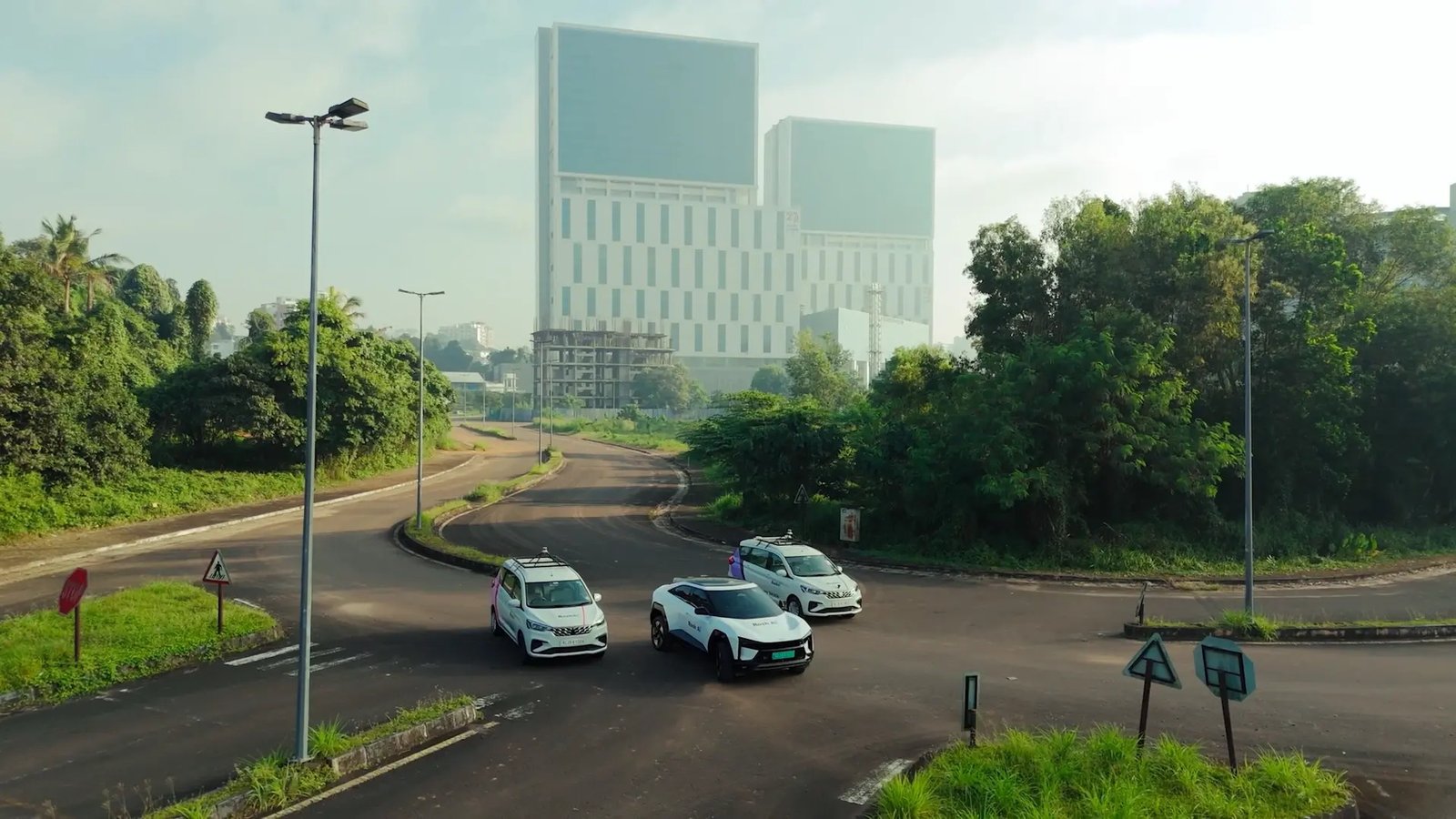
His early prototypes were built on his own cars. He retrofitted a Tata Nano and drove it around Kochi, where the cameras mounted on the roof drew enough attention that he asked the Kerala Police for somewhere private to test — and was given tracks inside the Infopark campus, where the company is now headquartered. A later prototype ran on a BMW 3 Series, and in 2018 the team demonstrated Level 3 autonomous capability publicly at the Kerala Police Cyber Security Conference. The company says its driverless Toyota Innova Crysta has reached 100 km/h, and that its systems have now been tested over 100,000 km without a safety incident.
Tested where it counts
The testing has turned into deployments. The company says its systems have been deployed on more than 1,000 autonomous vehicles across 50-plus industrial sites in six-plus countries, with more than 20 million km driven autonomously, and that it works with nine vehicle manufacturers. It has run more than 500 public demonstrations of its driverless vehicles, and it is now applying the same software beyond vehicles — to precision manufacturing, particularly in electronics, where the task is repetitive and not mobile.
More Read

Why it matters now
In April 2026 RoshAi raised ₹22 crore (about $2.4 million) in a round led by IAN Alpha Fund, part of the IAN Group, following an earlier seed round of about ₹15 crore backed by Caret Capital, Ev2 Ventures and ThinKuvate. The company says the money will go into the autonomy stack, perception systems and fleet software, scaling deployments beyond the pilot stage, and building a sales presence abroad — with the United States, Australia and Southeast Asia as target markets. On revenue, the company has said it generated ₹15 crore in operating revenue in FY26 and is aiming for ₹50 crore in the current financial year.
That matters because industrial autonomy is where driverless technology first pays for itself. Public roads, with their mixed traffic and faded lane markings, remain the hardest problem in autonomy; a port or a mine, with its fixed routes and controlled gates, is where the technology can already run all day, every day. RoshAi’s bet is that the fastest route to driverless is not a brand-new vehicle, but a kit that makes the ones already on the road drive themselves — and that the yards and mines of India are the proving ground for the rest of the world.
Keep reading: The Brains in the Dashboard: Inside OptM Solutions, the Bengaluru Company Building India’s Vehicle Electronics · The Motor in the Wheel: Inside Entuple E-Mobility, the Bengaluru Startup Building India’s EV Powertrains · More Automotive & Mobility stories
Like stories like this? Add Exceptional Technology as a preferred source on Google to see more of our reporting in your search results and Discover feed.