A ghost ship on the west coast
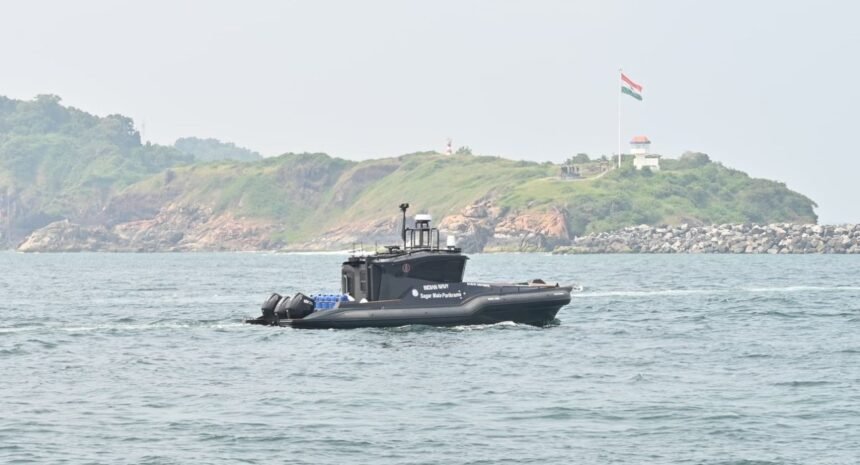
On 29 October 2024, the uncrewed vessel Matangi slipped out of Mumbai’s harbour and turned south. There was no crew on the bridge, no watchkeeper on deck. For roughly twelve days, it steered itself down India’s west coast to Thoothukudi in Tamil Nadu — a voyage of about 1,500 kilometres, conducted under the Indian Navy’s watch. It was, by the accounts that followed, the first time an Indian boat had completed a long-distance uncrewed voyage of that scale.
What made the run remarkable wasn’t just the distance. The vessel — named Matangi, after the goddess of wisdom — navigated using its onboard autonomous systems, the same kind of technology the company behind it wants to sell to navies and coast guards across the Indo-Pacific. This is the story of that boat, and of Sagar Defence Engineering, the Pune startup quietly building India’s crewless naval fleet.
A captain who left the bridge
Founded in 2015, Sagar Defence Engineering Private Limited began with an unusual founder for a robotics company: Captain Nikunj Parashar, a former Merchant Navy captain who had spent years at sea before deciding the future of maritime operations didn’t need people on the bridge at all. The company set up in Pune and started building what the industry calls uncrewed surface vessels (USVs) — boats that operate with varying degrees of autonomy, from remote control to full self-navigation.
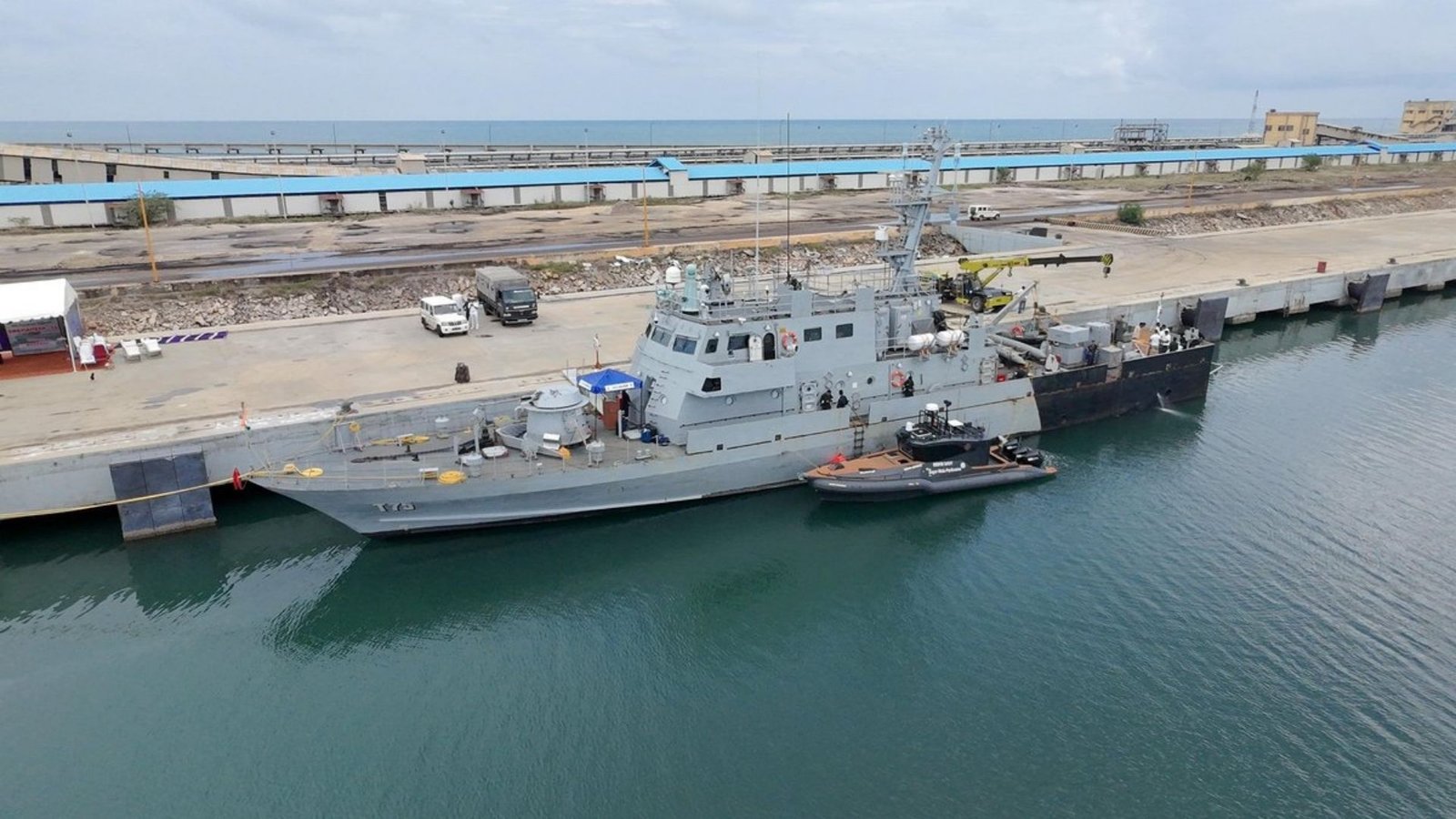
In November 2024, an Indian boat with no crew aboard completed a roughly 1,500-km voyage from Mumbai to Thoothukudi — under the Indian Navy’s watch.
The Navy’s twelve-boat bet
The voyage was a demonstration, but the business behind it is a contract. In November 2024, the Indian Navy signed an order with Sagar Defence Engineering for twelve autonomous weaponised swarm boats — part of the Navy’s push to induct uncrewed systems for surveillance, patrol, and distributed maritime operations. It was one of the first contracts of its kind for an Indian private company — a breakthrough comparable to Pranos Fusion’s private tokamak bid in fusion, another domain long reserved for state institutions.
The first two vessels were dispatched for operational trials, and the company’s order book has since grown to include work with the Indian Army and Indian Coast Guard as well. The Defence Ministry has publicly framed companies like Sagar Defence as the face of its indigenisation drive — private startups doing work that was historically the exclusive territory of state-owned shipyards.
These are not Matangi herself — the twelve ordered boats are smaller, weaponised swarm craft designed to operate in coordinated groups, overwhelming targets through numbers rather than size. But they share the same autonomy DNA: the navigation, collision-avoidance, and mission-planning software stack the company has been refining since 2015.
Licences, land, and a 400-acre bet
Hardware startups live or die on manufacturing, and Sagar Defence has been moving aggressively to secure its own. In early 2026, the company secured an industrial licence from the Department for Promotion of Industry and Internal Trade (DPIIT) for manufacturing defence equipment — a significant regulatory milestone that places it among a small set of licensed private defence manufacturers.
On 12 March 2026, the company announced a memorandum of understanding with the Andhra Pradesh Economic Development Board to establish a 400-acre defence manufacturing facility in the state — a bet on scale that signals ambitions well beyond a dozen boats. The facility is expected to house production of uncrewed surface vessels, aerial drones, and related autonomous systems.
Internationally, Sagar Defence has partnered with the US-based HavocAI to collaborate on autonomous maritime systems, and it has been part of Indian defence delegations showcasing indigenous uncrewed technology abroad. The company has also been recognised in startup rankings and defence-innovation challenges, including iDEX-linked programmes.
Key takeaway
The arc in one line: a 2015 Pune startup went from uncrewed demonstration to Navy orders to licensed military shipbuilding — doing, as a private company, what was historically state-shipyard territory.
What Matangi signals for naval warfare
Matangi matters less as a single boat than as a proof point. Uncrewed surface vessels are becoming the naval equivalent of what drones did to air power: cheaper, expendable, and able to go where crewed platforms can’t risk going. The US, China, and several middle powers are all racing to field them; India’s entry, via a startup rather than a shipyard, is the interesting part — a shift also visible in aerospace, where LMW, a textile-machinery giant, now builds parts for India’s rockets and fighter jets.
The risks are real — autonomy at sea is hard, salt water kills electronics, and a 1,500-km demonstration is not the same as sustained operational deployment. But the direction of travel is unmistakable: the Indian Navy has put a purchase order behind it, the licences are in hand, and 400 acres in Andhra Pradesh are being prepared. The ghost ships are coming, and they’ll be built in India.
Sources & further reading
- Swarajya: orders placed for 12 autonomous swarm boats — the Navy’s uncrewed-vessel orders
- Indian Defence News: Sagar Defence delivers maiden unmanned vessel — delivery milestone
- Interesting Engineering: 7 unmanned vessels transforming naval warfare — global USV context
Frequently Asked Questions
What is Matangi?
Matangi is Sagar Defence Engineering’s uncrewed surface vessel that completed a roughly 1,500-km autonomous voyage from Mumbai to Thoothukudi in November 2024, under the Indian Navy’s observation — among the longest such Indian demonstrations to date.
Who is behind Sagar Defence Engineering?
The Pune-based company was founded in 2015 by Captain Nikunj Parashar, a former Merchant Navy captain. It builds uncrewed surface vessels and autonomous maritime systems for defence and commercial customers.
What has the Indian Navy ordered from the company?
In November 2024, the Navy ordered twelve autonomous weaponised swarm boats from Sagar Defence, with the first two dispatched for operational trials. The company also works with the Army and Coast Guard.
What is the company building in Andhra Pradesh?
A 400-acre defence manufacturing facility under an MoU with the Andhra Pradesh Economic Development Board, announced March 2026, intended for USVs, drones, and autonomous systems. The company also holds a DPIIT industrial licence for defence manufacturing.