The first rockets Apurwa Masook ever built were made of PVC pipe and fuelled with fertiliser-grade chemicals, launched from a college hostel backyard in Odisha. A decade later, his company is hot-firing solid rocket motors for the Indian Navy. SpaceFields, the Bengaluru startup Masook co-founded in 2021, has become private industry’s answer to one of India’s most strategic bottlenecks: solid propulsion — the chemistry that powers missiles, and a domain long monopolised by the state.
Why solid propulsion is the bottleneck
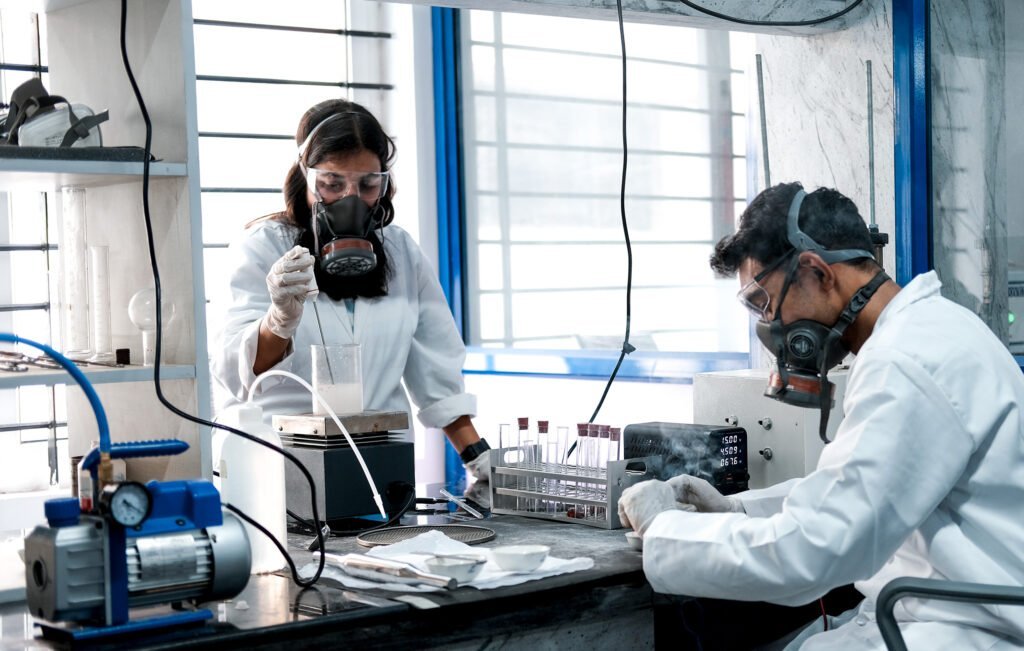
Solid rocket motors are deceptively simple and devilishly hard. The propellant — typically a rubbery composite of fuel and oxidiser — is cast directly into the motor casing, where it waits, stable, for years until ignition. No turbopumps, no cryogenics, no countdown plumbing. That simplicity is why missiles use them. The difficulty is in the chemistry and the casting: a crack or void in the propellant grain can turn a motor into a bomb, and scaling production demands specialised facilities and hard-won process knowledge. In India, that knowledge lived almost entirely with DRDO and state-owned manufacturers.
SpaceFields chose this unglamorous, high-barrier segment deliberately. “Propulsion is like the ink inside a pen,” Masook told The Hindu BusinessLine. “The platform may change, but without propulsion nothing moves.” While much of India’s private space ecosystem chased launch vehicles and satellites, SpaceFields — incubated at IISc Bengaluru — went after the ink — the same subsystem-supplier logic Thrustworks applies to rocket ignition.
From aerospike tests to Navy validation
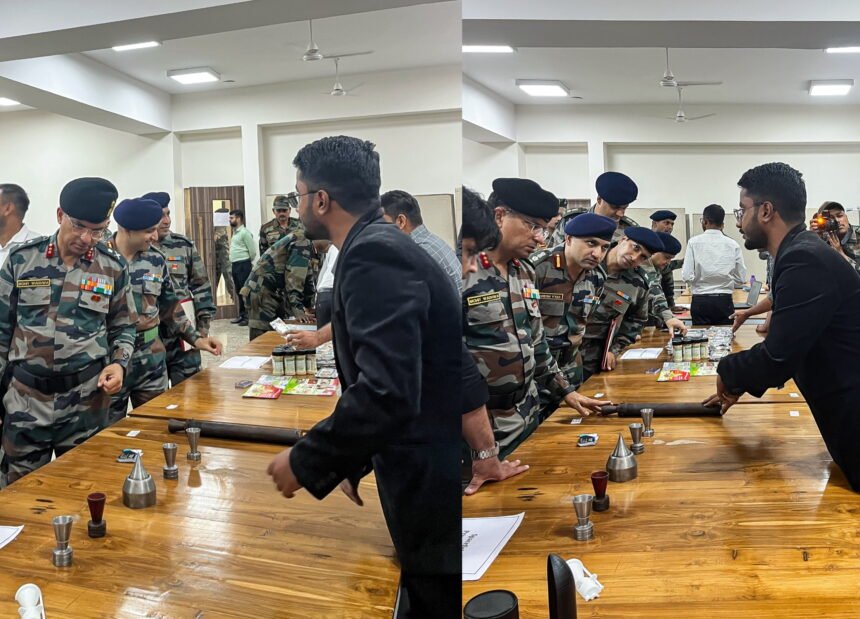
The company’s technical calling card is a 168mm solid rocket motor with an aerospike nozzle — a 1.36-metre HTPB composite motor peaking above 13 kN of thrust, built entirely in-house. An aerospike test-fire at IISc Challakere demonstrated the concept, but the milestone that matters came in February 2026: SpaceFields designed, manufactured and delivered a solid propulsion system to a Naval Armament Inspectorate of the Indian Navy, and hot-fired it both at its own facility and at a naval site, with consistent performance in both tests. Indian Defence News described it as the first time a private Indian firm had hot-fired a naval solid rocket motor under Navy oversight — the outlet’s characterisation, but a striking one.
The institutional scaffolding is building fast. SpaceFields has won four contracts under the Defence Ministry’s iDEX initiative, filed ten patents (five granted), and raised $5 million (₹42 crore) in a pre-Series A round led by Globaz Technologies, with Rockstud Capital, Venture Catalysts, Rainmatter and SIDBI participating. In a move that signals industrial-scale ambition, the Andhra Pradesh government approved 120.76 acres for the company at Thimmasamudram in Anantapur district — a ₹46.84 crore project expected to employ around 300 people, with commercial propellant production targeted from July 2028. Defence-tech startups winning institutional orders is a pattern — Sagar Defence’s Navy contract for uncrewed vessels is another.

Green propellants and the road ahead
SpaceFields is also developing a proprietary aluminium dinitramide (ADN) green propellant intended to replace conventional AP/HTPB formulations — cleaner-burning chemistry that the industry has chased for years. The company’s product work spans the applications you would expect: the founders discuss missiles, rockets, drones and pyrotechnic systems as addressable markets — though it is worth being precise. Those are markets the technology could serve, not delivered weapons systems.
A startup founded by three college friends who built PVC-pipe rockets has hot-fired solid motors for the Indian Navy — and is building a 120-acre propellant plant.
Key takeaway
SpaceFields matters because it attacks the least visible, most strategic layer of the stack. Launch startups get the headlines; the company that masters solid propellant chemistry gets the arsenals. A 120-acre plant in Andhra Pradesh suggests the founders are thinking in those terms.
What does SpaceFields make?
Solid rocket propulsion systems and energetic materials for aerospace and defence — solid rocket motors, propellant formulations and related hardware, built in-house at its Bengaluru R&D facility.
What was the Navy milestone?
In February 2026, SpaceFields delivered a solid propulsion system to a Naval Armament Inspectorate and hot-fired it both at its own facility and at a naval site with consistent performance — described by Indian Defence News as a first for a private Indian firm under Navy oversight.
Who founded SpaceFields?
Apurwa Masook, Rounak Agrawal and Sudarshan Samal — VSSUT Burla alumni who built student sounding rockets before incorporating SpaceFields in September 2021. The company is incubated at IISc Bengaluru.
What is the Anantapur plant?
A 120.76-acre solid propellant manufacturing facility approved at Thimmasamudram, Anantapur district, Andhra Pradesh — a ₹46.84 crore project targeting commercial production from July 2028, expected to employ around 300 people.
More Read

Sources & further reading
- SpaceFields official website — The company’s official site with programme details
- SpaceFields hot-fires solid rocket motor for Indian Navy — Report on the Navy hot-fire validation
- SpaceFields bags Rs 42 crore pre-Series A — YourStory on the funding round and iDEX contracts
- How SpaceFields is fuelling Indian rocketry’s liftoff — The Hindu BusinessLine founder profile