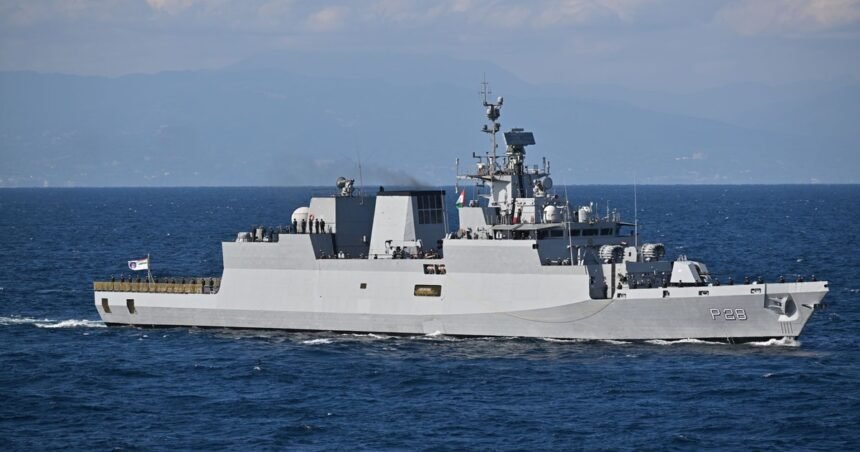
Picture a warship that can hunt submarines below the surface, shoot down incoming missiles, strike targets far over the horizon and guard a coastline — all from a single hull, designed entirely in India. That is the ship Kolkata’s Garden Reach Shipbuilders & Engineers (GRSE) has just been contracted to build, five times over, in one of the largest warship orders in Indian shipbuilding history.
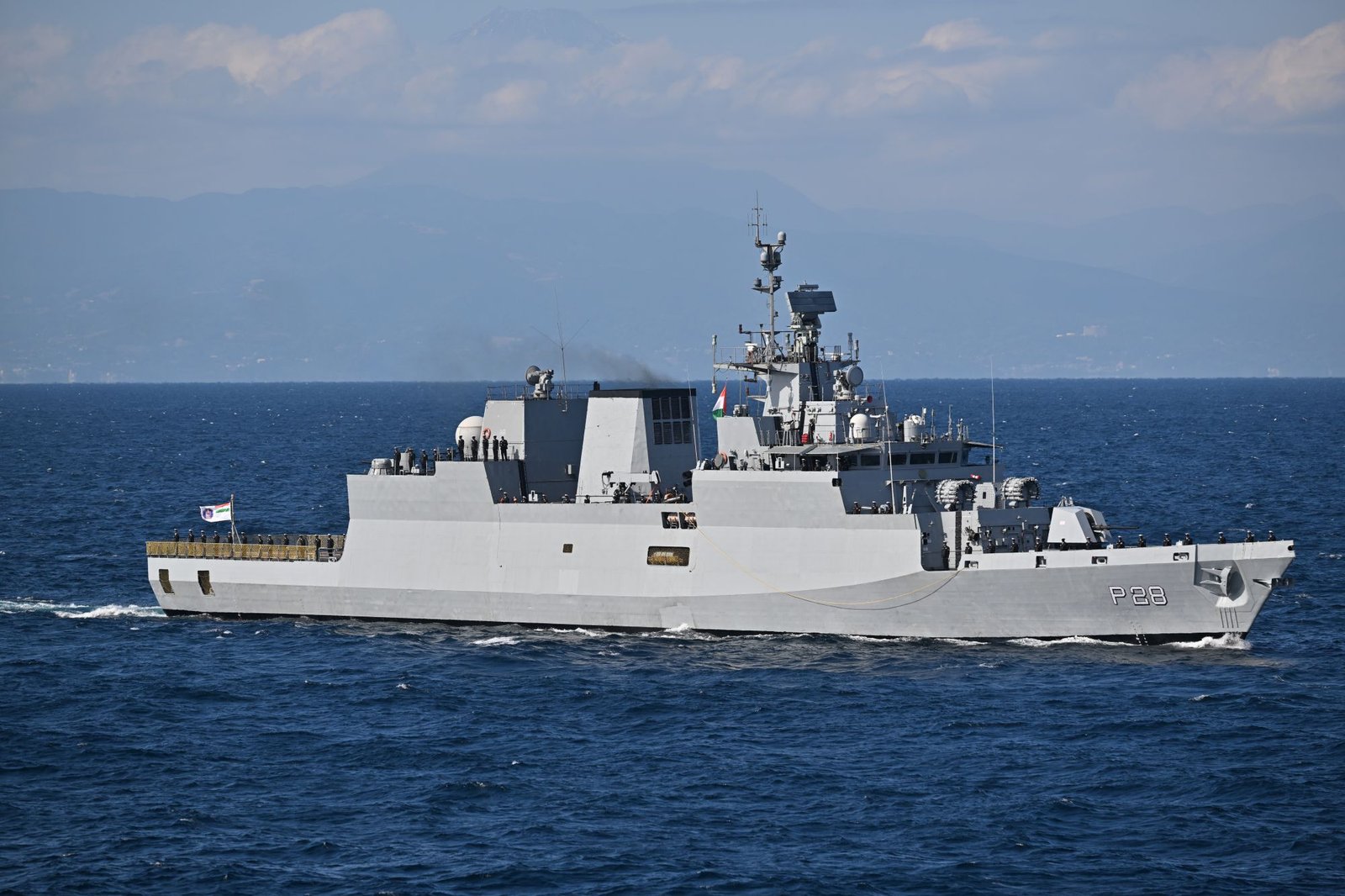
Five ships for Kolkata, three for Goa
On 2 November 2026, the Ministry of Defence signed contracts worth ₹53,866.50 crore with GRSE and Goa Shipyard Limited (GSL) for eight Next Generation Corvettes (NGCs) for the Indian Navy. The contracts were signed in New Delhi, in the presence of Defence Secretary Rajesh Kumar Singh. Under the deal, GRSE will construct five of the corvettes, while GSL will build the remaining three.
GRSE’s share of the programme is valued at approximately ₹32,000 crore, the company says. Its contract was signed by Dinesh Kumar, Joint Secretary & Acquisition Manager (Maritime Systems) in the Defence Ministry, and Commander Shantanu Bose (Retd), GRSE’s Director (Shipbuilding), in the presence of Commodore P. R. Hari (Retd), GRSE’s Chairman & Managing Director. GRSE had emerged as the lowest bidder for the programme when commercial bids were opened in May 2025, and the November signing turns that position into a firm construction contract.
The programme is a landmark for another reason too: the ministry says it is the first project in which warships will be indigenously designed by the Indian Navy itself and built by defence public sector shipyards selected through a competitive process. The deal follows approval from the Cabinet Committee on Security, and the ministry says it will generate around 72 lakh person-days of employment in the shipyards and a further 460 lakh person-days across ancillary industries and MSMEs over the next ten years.
What the new corvettes will carry
Each Next Generation Corvette will measure 127 metres in length and 17.6 metres in beam, with a specified deadweight tonnage of 4,950 tonnes, GRSE says. The ships will be driven by an advanced Combined Diesel and Gas Turbine–Cross-Connect (CODAG-CC) propulsion arrangement powering two controllable-pitch propellers, giving a maximum speed of 26 knots and an endurance of 14 days at sea. Each ship will accommodate 150 personnel — 11 officers and 139 sailors — and will have helicopter-operating capability.
The weapons fit matches the ambition. The corvettes will carry medium-range anti-ship missiles and medium-range surface-to-air missiles (MRSAM), along with 324 mm torpedo tubes, the company says. The gun armament includes an OTO Melara 76 mm Super Rapid Gun Mount with the latest upgrade, an AK-630 close-in weapon system and 12.7 mm stabilised remote-controlled guns integrated with an electro-optic-based fire control system. On the sensor side, the ships will carry a multi-function surveillance, track and guidance radar (MFSTAR) and an electro-optical infrared search and track system, giving them eyes across the air, surface and sub-surface domains.
More Read

Put together, that makes the NGC a true multi-role combatant. The ministry says the ships will undertake offensive ship-to-ship and ship-to-surface missile attacks, anti-missile defence, anti-submarine warfare, escort duties and maritime interdiction operations, while also safeguarding trade routes, strengthening coastal defence and carrying out littoral combat and surveillance missions. The company says the design also incorporates green, energy-efficient and environment-friendly features.
A shipyard with corvettes in its blood
GRSE is no stranger to this kind of ship. The Kolkata-based Navratna shipyard has manufactured and delivered ten corvettes to the Indian Navy so far, including six missile corvettes of the Khukri and Kora classes and four anti-submarine warfare corvettes of the Kamorta class. The new corvettes will succeed the Navy’s ageing Khukri- and Kora-class ships, bringing a far more capable, stealthier multi-role platform into service.
The order also lands on a busy slipway. GRSE says it is currently building nine warships, including an advanced guided-missile frigate under the Navy’s Project 17A, four anti-submarine warfare shallow-water craft and four Next Generation Offshore Patrol Vessels. For Goa Shipyard, the three-ship share is the largest order in its history — a sign of how far India’s indigenous warship industry has come, with two Indian yards now trusted to deliver the Navy’s next generation of fighting ships, designed at home and built at home.
Keep reading: From Kerala’s Backwaters to the Open Sea: Inside MKEL Marine’s Five Indigenous Watercraft Lines · The Ship That Keeps the Fleet at Sea: Inside Surya, India’s First Indigenous Fleet Support Ship · More Shipbuilding & Maritime stories
Like stories like this? Add Exceptional Technology as a preferred source on Google to see more of our reporting in your search results and Discover feed.