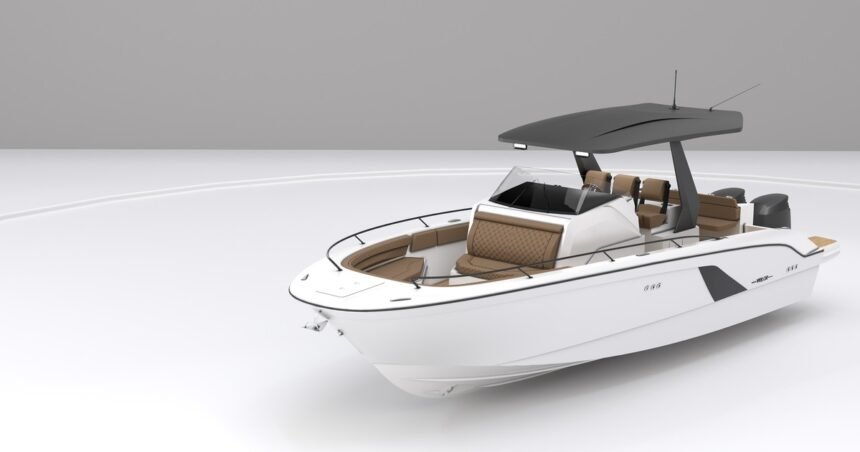
Kerala’s backwaters have always been full of boats — but almost none of them were designed and built in Kerala. MKEL Marine, a Kochi watercraft specialist founded by naval architect Jose Babu Maliakel, set out to change that, and in late August 2026 the company unveiled five lines of indigenously built watercraft at its manufacturing yard in Njarakkal, Vypin, from expedition kayaks to ocean-going sailing yachts.
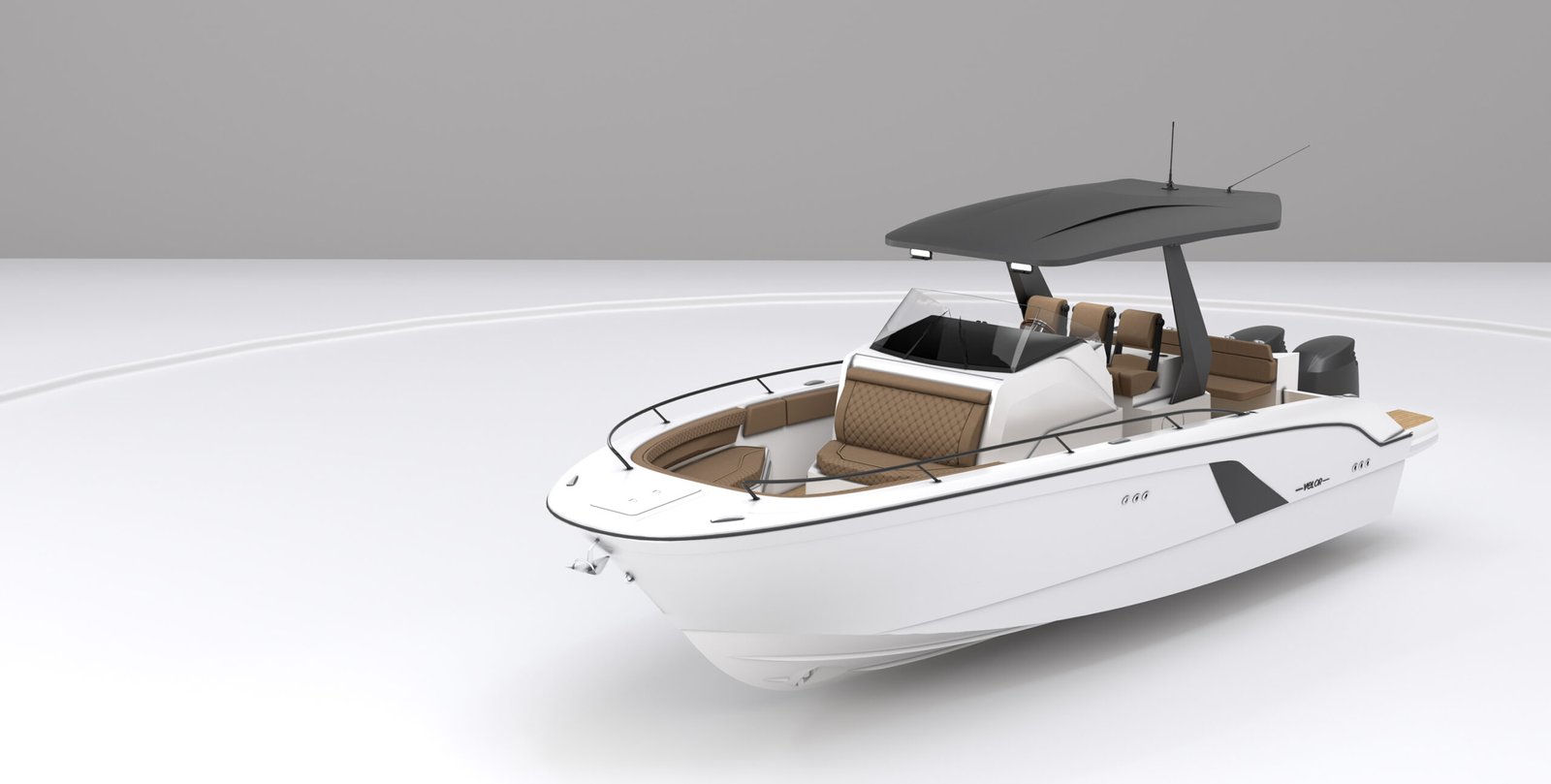
MKEL Marine’s Velor powerboat, built in impact-resistant marine composites at the company’s Njarakkal facility. (Image: MKEL Marine)
Five lines, one composite workshop
The range covers the full span of recreational and working watercraft. The Touring & Expedition Kayaks are hydrodynamic, ultra-light composite craft built for touring, expedition paddling, eco-tourism and competitive watersports. The Stand-Up Paddle Boards & Surfboards are rigid composite boards made for coastal and backwater conditions, in a category the company says has long been dominated by imported inflatables. The Velor Powerboat Series is an ocean-going platform built in impact-resistant marine composites, with applications spanning sports fishing, offshore day cruising, coastal patrol and surveillance, dive and charter operations, and resort and luxury transfers. The Work Boats are rugged, fuel-efficient craft for crew transfer, diving support, passenger transport, harbour and backwater operations, and marine survey and inspection support. And the Sailing Yachts are series-built yachts developed under an international design partnership.
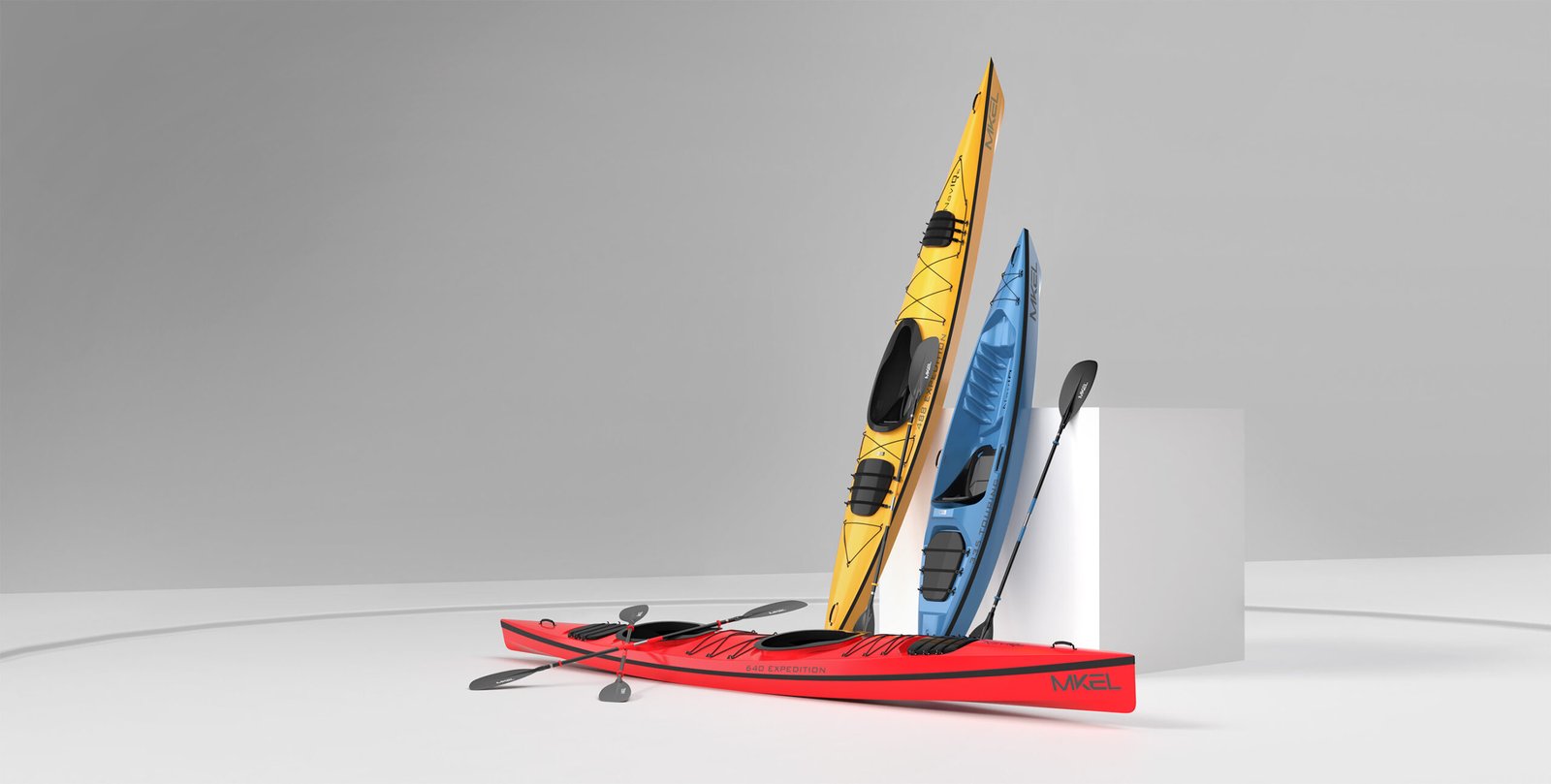
MKEL Marine’s NavIQ kayak range, including the 640 Expedition in red. (Image: MKEL Marine)
More Read
Built for Indian water, priced for Indian buyers
The engineering story is in the hulls. MKEL Marine’s 25-member specialised production team uses vacuum resin infusion technology with E-glass, fibreglass and carbon-fibre composites to produce lighter, structurally rigid hulls — the same approach behind high-performance boats worldwide, applied here to Indian conditions and Indian prices. The initial kayak line-up includes the NavIQ 21-foot Expedition Kayak, designed for open-water crossings; the NavIQ 16-foot Touring Kayak, a two-person craft balancing glide, stability and storage; and the NavIQ 11-foot Touring Kayak, a 21-kg solo recreational kayak. The company says a typical imported 16-foot two-person kayak costs around ₹1.5 lakh and an 11-foot single around ₹1 lakh, and that local production can cut the acquisition cost by approximately ₹50,000 per unit while eliminating customs costs and shipping delays. That price difference, the company says, is what makes kayaking viable as an amenity for hotels, resorts and tour operators — and the company says its focus is tourism first, because volume is what keeps a boatbuilding business running.
From kayaks to ocean-going yachts
The most ambitious part of the launch looks furthest offshore. MKEL Marine has entered into a non-exclusive design licensing agreement with Perth-based B&G Yacht Design, founded by renowned yacht designer Roberto Barros, to build and sell two B&G sailing yacht designs worldwide — the ORC 33, a 9.9-metre performance racing sailboat, and the Explorer 39, a 12-metre blue-water cruising yacht — with plug and mould construction and classification documentation done in-house at Njarakkal. The company says it will serve the domestic industry first and then enter the export business, targeting markets in Europe, the Middle East, Southeast Asia and the Maldives. The launch was unveiled by circumnavigator Commander Abhilash Tomy (Retd), the first Indian to sail solo, non-stop and unassisted around the world — a fitting christening for a company whose founder says its mission is to evolve Kerala into Asia’s flagship hub for high-performance watercraft manufacturing and design. Having invested ₹2.5 crore to date, the company says it plans to scale investment to ₹10 crore by 2027, directed at production moulds for the sailing yachts, powerboat and work boat lines, a larger waterside manufacturing facility, and a marina and experience centre, growing its team to 35 by the end of 2026, 60 by the end of 2027 and 100 by 2028.
Keep reading: The Ship That Keeps the Fleet at Sea: Inside Surya, India’s First Indigenous Fleet Support Ship · Seeing Clearly in Murky Water: Inside Ci4, the Bengaluru Startup Giving the Navy Eyes Below the Surface · More Shipbuilding & Maritime stories
Like stories like this? Add Exceptional Technology as a preferred source on Google to see more of our reporting in your search results and Discover feed.