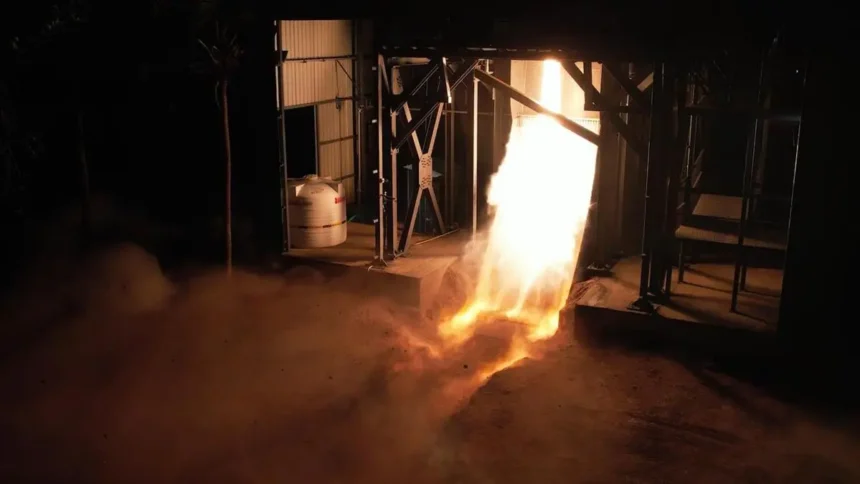
A rocket engine is usually hundreds of parts welded, bolted and brazed together over the better part of a year. Agnikul Cosmos, the Chennai spacetech startup incubated at IIT Madras, says it can print one as a single piece of metal in about a week. In March 2026, the company test-fired that engine — called Agnite — at its in-house Chennai facility. Multiple outlets reported it as the world’s largest single-piece 3D-printed rocket booster engine. That superlative comes from the company and is echoed by press; it is not an independently adjudicated record.
What Agnite actually is
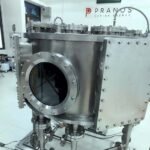
Agnite is a semi-cryogenic booster engine whose combustion chamber, injector and cooling channels are 3D-printed as one integrated Inconel structure using laser powder-bed fusion. The thrust chamber is roughly a metre across. Printing the hot end of a rocket engine as a single piece eliminates dozens of welds and joints — each one a potential failure point and a manufacturing bottleneck. According to the company, the engine prints in about 7 days, versus 6–7 months for a traditionally manufactured engine — a company claim, but one that captures why the industry is watching.
Two design choices stand out. First, Agnite uses electric motor-driven pumps instead of complex turbopumps — reported as a first at this scale — which means fewer parts to refurbish between flights, supporting the company’s reusability roadmap.
Don’t confuse Agnite with Agnilet
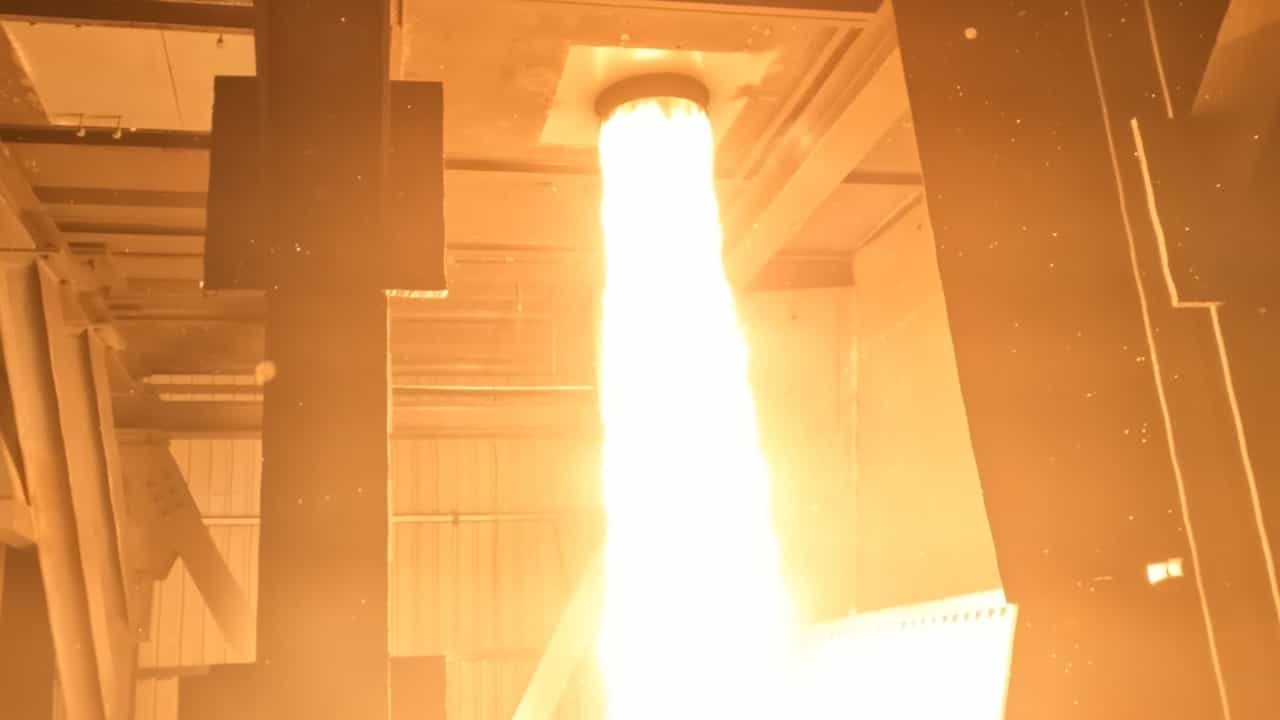
This is the easiest factual error to make in the Agnikul story, so let’s be precise. Agnite is the new large booster engine, test-fired in March 2026. Agnilet is the smaller 6 kN upper-stage engine — also single-piece 3D-printed — that powered Agnikul’s Agnibaan SOrTeD sub-orbital demonstrator on its controlled ascent from Sriharikota on 30 May 2024, from India’s first private launchpad (“Dhanush”). Same manufacturing philosophy, very different engines, two years apart. In February 2026 the company also fired three semi-cryogenic engines in synchronisation, reported as a first for India.
The “world’s largest” claim — handled honestly
Business Today headlined its March 2026 report: “Agnikul Cosmos tests Agnite, the world’s largest single piece 3D printed booster engine.” The Economic Times, Business Standard and NewsBytes carried similar framing. All of it originates from the company. There is no independent body that certifies “largest 3D-printed rocket engine” records, and definitions vary — largest by thrust? By printed mass? By chamber diameter? Until someone adjudicates it, the honest phrasing is: Agnikul says Agnite is the world’s largest single-piece 3D-printed rocket booster engine, and the press has repeated the claim. The test-fire itself, however, is independently reported fact.
Agnikul says Agnite is the world’s largest single-piece 3D-printed rocket booster engine — a company claim echoed across press coverage, test-fired in March 2026.
The money and the mandate
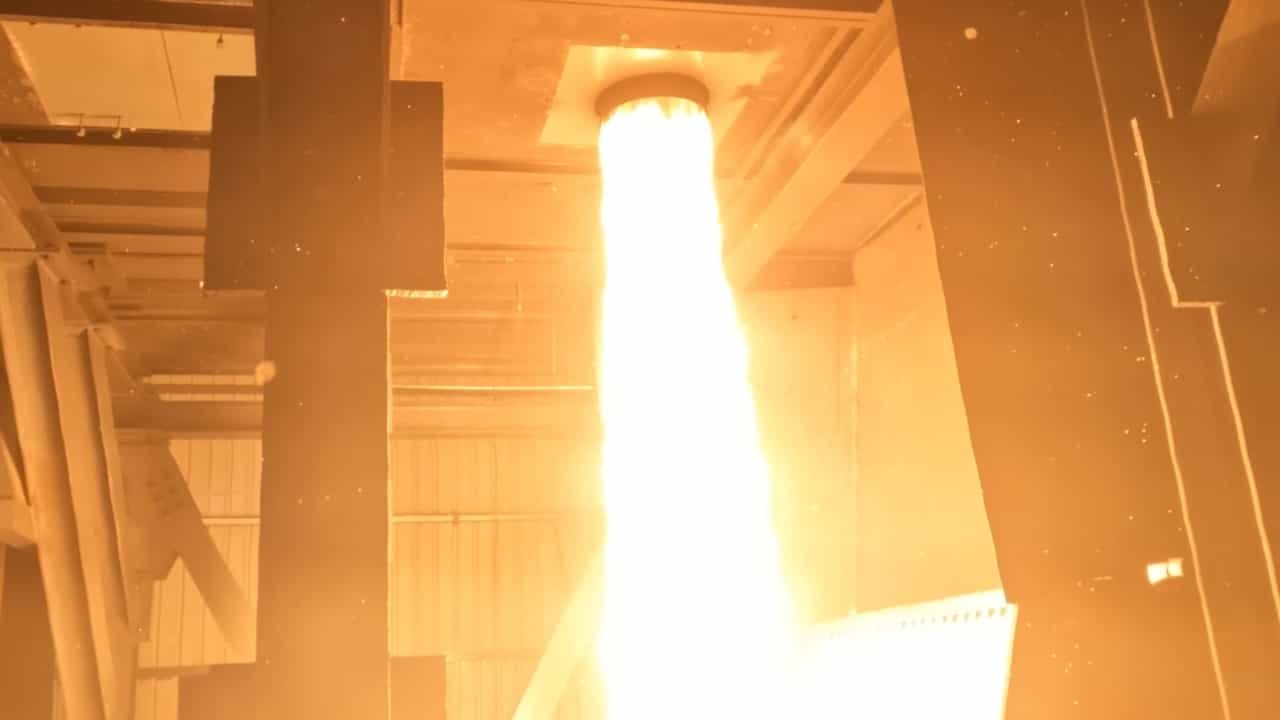
Agnite did not emerge from a garage. Agnikul was founded within IIT Madras by Srinath Ravichandran (CEO) and Moin SPM (COO) with ₹3 crore in seed funding, and the March 2026 round valued the company at over $500 million, with investors including HDFC Bank. In early 2026, TIDCO — the Tamil Nadu government’s industrial development corporation — invested ₹25 crore, reported as the first government equity investment in an Indian space startup. Then on 25 September 2026, the Technology Development Board (under the Department of Science and Technology) signed ₹200 crore in RDI-fund support for the Agnibaan reusable launch vehicle programme, taking it from TRL-4 toward TRL-8. Note what that is: R&D support for development, not a launch contract — the distinction matters.
The company holds patents in the US, Europe and India, and operates a Large Format Additive Metal Manufacturing facility housing what it calls India’s largest 3D metal printer for rocket components — additive manufacturing at a scale Astrobase is also betting on for EVEREST.
Key takeaway
The takeaway: Agnite’s test-fire is independently verified; the “world’s largest” framing is a company claim the press repeated. What is not in dispute is the manufacturing achievement — a metre-class booster engine printed as a single piece — and the institutional backing now flowing to Agnikul, from TIDCO equity to ₹200 crore in TDB R&D support. Smaller propulsion startups are proving the model too — Thrustworks’ resonance igniter cost about ₹1 crore.
Where Agnite goes from here
Agnite is a booster engine, which means its destiny is the first stage of a launch vehicle — presumably Agnibaan, Agnikul’s configurable small launcher. The path from a single successful test-fire to a flight-qualified, reusable booster is long: repeated firings, stage integration, and eventually a full launch.
More Read
What is Agnite?
Agnite is a semi-cryogenic booster engine developed by Agnikul Cosmos, with its combustion chamber, injector and cooling channels 3D-printed as a single Inconel structure, test-fired in March 2026 at the company’s Chennai facility.
Is Agnite really the world’s largest 3D-printed rocket engine?
That is the company’s claim, repeated by press outlets including Business Today and The Economic Times. There is no independent adjudication of such records, so it should be read as a company claim rather than settled fact.
What is the difference between Agnite and Agnilet?
Agnite is the new large booster engine test-fired in March 2026. Agnilet is the smaller 6 kN upper-stage engine that powered Agnikul’s sub-orbital Agnibaan SOrTeD flight in May 2024. Both are single-piece 3D-printed, but they are different engines.
Who founded Agnikul Cosmos?
Srinath Ravichandran (co-founder & CEO) and Moin SPM (co-founder & COO) founded the company within IIT Madras. It is incubated at the National Centre for Combustion Research and Development.
What government backing does Agnikul have?
TIDCO invested ₹25 crore in early 2026 (reported as the first government equity in an Indian space startup), and the Technology Development Board signed ₹200 crore in RDI support in September 2026 for the reusable Agnibaan programme.
Sources & further reading
- Business Today on the Agnite test — March 2026 report on the Agnite test-fire and the “world’s largest” claim
- Agnikul Cosmos official site — Company profile, LFAMM facility and engine programme details
- Technology Development Board RDI support — September 2026 announcement of ₹200 crore support for the reusable vehicle programme