The $1-an-hour job description
In February 2026, an Instagram post predicted something that sounded, at the time, like dystopian fiction: India’s manual workforce — the labourers, loaders, and cleaners who keep the country’s informal economy running — was being quietly assembled into the training-data supply chain for humanoid robots. Workers wearing camera rigs and sensor gloves would perform everyday chores while their every movement was recorded, digitised, and fed to machines learning to do the same jobs.
The mechanics are simple. A humanoid robot doesn’t learn to fold laundry or stack boxes from a textbook. It learns from thousands of hours of first-person video: what the task looks like from the worker’s point of view, how hands grip and release, how weight shifts when lifting. The cheapest place in the world to collect that footage at scale is where manual labour is abundant and cheap — which is to say, India.
The vignettes stay with you. Workers paid roughly $1 an hour — about ₹85 — to wear GoPro-style rigs through their shifts. The footage uploaded, annotated, and sold into a global pipeline whose end customers are robotics companies in California, each valued in the billions.
Why your point of view is the scarcest input in AI
Roland Berger’s “Humanoid Robots 2026” study puts it plainly: the industry has moved past the question of whether humanoids work and into the question of how to train them. The bottleneck is data — specifically, synchronised sensor-to-actuator data showing how a body moves through a task. Simulation helps, but nothing beats real human demonstration.
Research proved the concept years ago. Stanford’s Mobile ALOHA project (January 2024) showed that a mobile manipulator could learn complex household tasks — cooking, folding, tidying — from just 50 human demonstrations collected with a low-cost teleoperation setup. The catch: 50 demonstrations teach one task. A general-purpose humanoid needs millions.
Enter India. With the world’s largest young workforce and a vast informal labour market, the country offers something no lab can: endless, cheap, real-world task demonstrations. Workers already doing the chores; all that’s needed is to record them. It is the same AI wave already reshaping white-collar workflows like graphic design — now coming for physical work.
Key takeaway
India has emerged as the leading hub for collecting first-person training video for humanoid robots — a role built on the same labour-cost arbitrage that once powered IT outsourcing, now applied to physical work itself.
Follow the money
Research and Markets, via Bloomberg, projects the video training-data market growing from $11.9 billion in 2026 to $49.8 billion by 2031. That’s the market these workers are feeding — a nearly $50 billion pipeline built on footage captured at roughly $1 an hour.
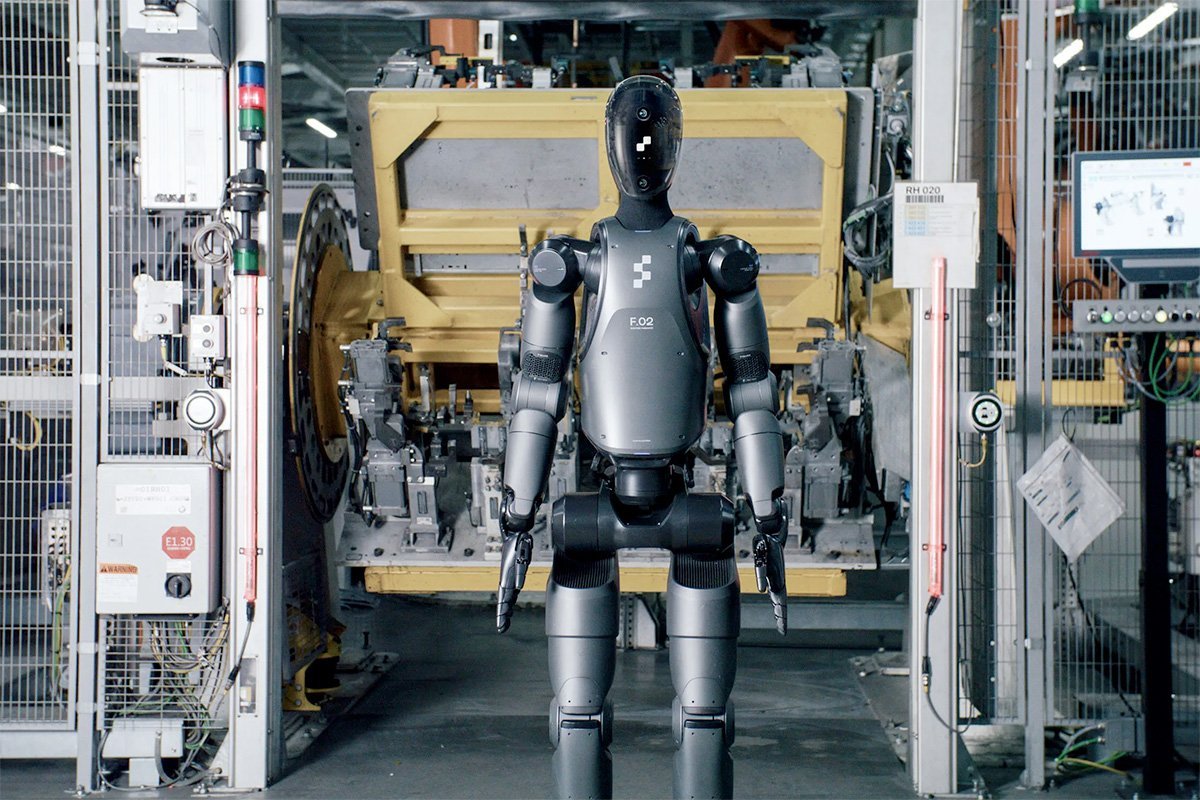
Figure AI’s “Index,” launched 25 August 2026, made the pipeline explicit: a programme paying ordinary people to record their daily chores on camera, with the footage used to train the company’s humanoid robots. The company’s BotQ manufacturing facility in California targets 12,000 humanoids a year — each one trained, in part, on video harvested far more cheaply than any American worker would accept.
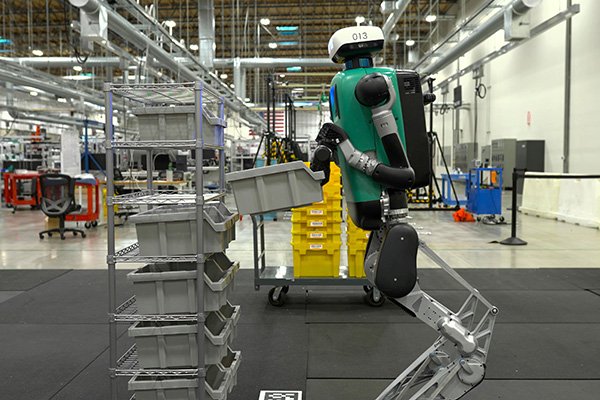
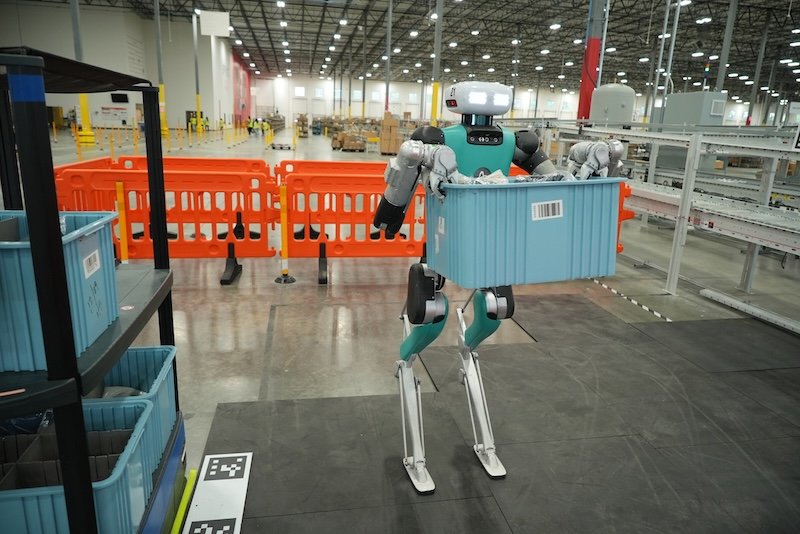
The end prize is enormous. Analysts project the humanoid market reaching tens of billions of dollars within the decade, with deployment already beginning: Figure’s robots at BMW’s South Carolina plant, Agility’s Digit in warehouses. Every deployed robot traces part of its competence back to footage recorded by hand in India.
The video training-data market is projected to grow from $11.9 billion to $49.8 billion by 2031 — fed, in large part, by workers paid $1 an hour.
The consent question
None of this is secret — companies advertise these programmes openly. But the ethics are murkier than the marketing. A worker paid ₹85 an hour to be recorded isn’t negotiating data rights; they’re taking the best-paying option available that day. The footage may train a robot that eventually does their job — a transaction the worker can hardly be said to have consented to in any meaningful sense.
Intermediaries are professionalizing fast. Data-collection firms now run structured programmes with quality control, task scripts, and shift schedules — the gig economy’s logic applied to bodily movement itself. India’s IT-services giants are circling too: several have announced physical-AI and robotics data practices, seeing the same arbitrage.
The uncomfortable point: this is not exploitation in the classic sense — the pay, while low by Western standards, can exceed local alternatives. It is something newer: the conversion of human physical competence into a tradeable, ownable asset, with the humans as the raw material.
The strategic paradox
Step back and the trade’s structure is stark. India exports the raw material (human movement data), American and Chinese firms own the refined product (trained humanoids), and India will eventually import the robots — possibly to do the very jobs the data came from. It’s the colonial trade pattern, recompiled for the AI age: raw materials out, finished goods in.
Scale is already non-trivial. Tens of thousands of workers are estimated to be participating in data-collection programmes across India, and the infrastructure — annotation firms, collection startups, quality pipelines — is growing into a genuine industry.
The optimistic reading is defensible: this is paid work, it builds digital infrastructure, and India’s AI mission explicitly aims to move up the value chain into model-building and robotics. But the pessimistic reading writes itself, and it was written first — back in February 2026, in an Instagram post that turned out to be right.
Sources & further reading
- TechCrunch: Human Archive taps India’s startups for physical-AI data — the data-collection pipeline
- TechXplore: Indian workers, AI robots and jobs — reporting on the labour trend
- Ego4D — large-scale egocentric video dataset for embodied AI
Frequently Asked Questions
Why do robots need first-person video of humans doing chores?
Humanoids must map what they see to how they move. Roland Berger’s 2026 study notes they need synchronized sensor-to-actuator data — exactly what a body-mounted camera plus motion sensors captures. Simulation alone doesn’t transfer to the real world reliably.
Is this work legal? What about consent?
The programmes operate openly and workers are paid, so it is legal. The ethical question is whether meaningful consent is possible when the pay is ~$1/hour and the worker can’t negotiate data rights — or foresee training their own replacement.
How many Indians are doing this work?
Precise figures aren’t published, but industry estimates put participation in the tens of thousands and growing, with dedicated collection firms and India’s IT giants building physical-AI data practices.
Who is buying all this training data?
Humanoid developers — Figure AI (whose ‘Index’ programme made the pipeline explicit), Agility Robotics, Tesla’s Optimus programme, and Chinese firms — all racing to accumulate the real-world demonstration data their robots need.