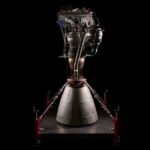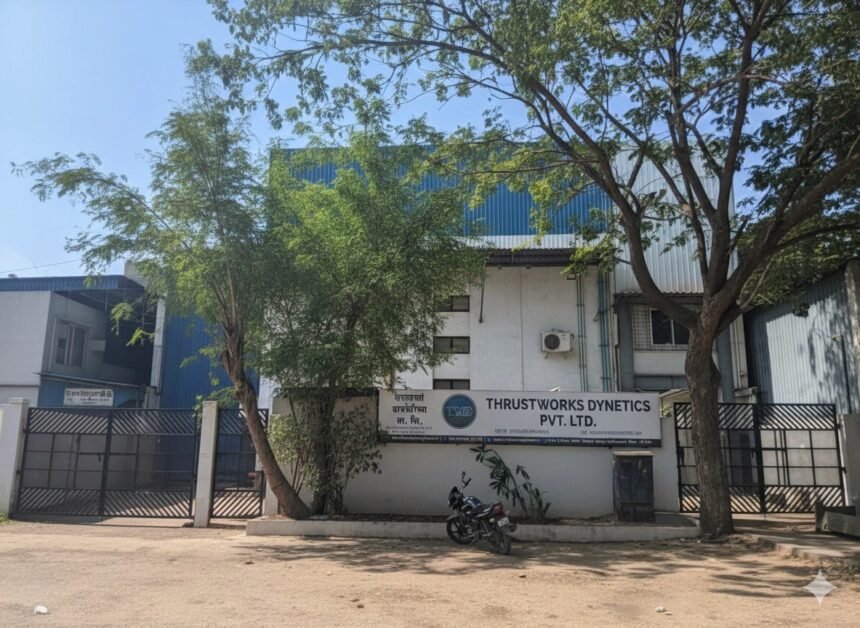
Every rocket engine has to solve the same deceptively simple problem: how do you light the fire? For decades, the answers were spark plugs that demand high voltage, pyrotechnic charges that work exactly once, or torch igniters with their own plumbing. A three-year-old startup in Pune says none of that is necessary. Thrustworks Dynetics has built what it describes as India’s first resonance-based rocket ignition system — an igniter with no spark, no electrodes and no moving parts, validated across three consecutive hot-fire tests — for roughly ₹1 crore. That is about one-hundredth of what a European programme spent developing similar technology.
Lighting a rocket with sound
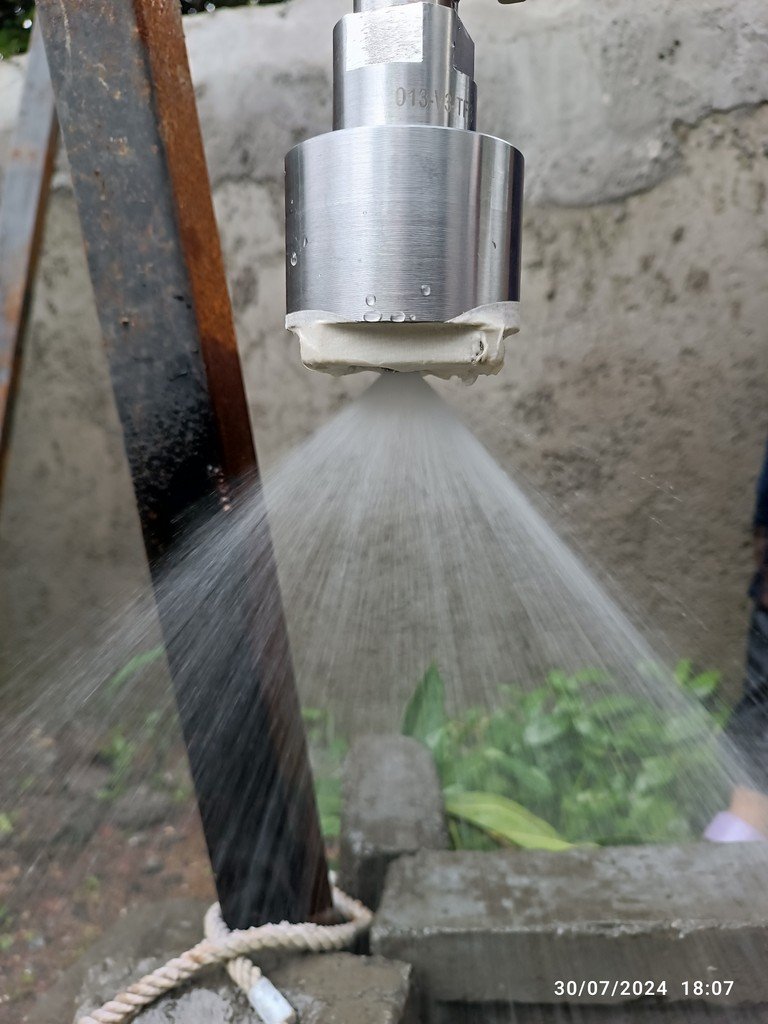
Resonance ignition works on an elegant principle. Instead of adding energy with a spark, the igniter uses precisely engineered combustion-chamber geometry to generate controlled acoustic shockwaves. Propellant gases bounce inside a shaped cavity, building standing waves that compress and heat the mixture until it ignites by itself. The European Space Agency, describing the same phenomenon in The Exploration Company’s tests, notes that the system needs just the propellants themselves — no external ignition devices, little electricity, and almost no additional parts.
The catch is the geometry. Shaping a chamber so that shockwaves focus exactly where ignition must occur — without triggering destructive combustion instability — demands serious modelling. Thrustworks says it designed its igniter with in-house combustion modelling software and a machine-learning-assisted design workflow: engineers fed in performance requirements, the system generated and evaluated geometries, and the hardware was manufactured and tested. According to the company, the igniter worked on its very first firing — a claim that comes from the company’s own accounts and should be read as such — though the three consecutive hot-fire validations at 5.08 bar.g on kerosene and oxygen are documented in its test announcements.
The €9 million comparison — and the fine print
Here is the headline that travelled: Thrustworks built its igniter for about ₹1 crore while Europe spent €9 million on the same technology. The European number is real — ESA confirms that The Exploration Company’s resonance-igniter test campaign, which concluded in November 2025, ran within a €9 million contract under the agency’s THRUST! initiative for reusable propulsion. But the fine print matters: that €9 million funded the broader THRUST! high-thrust propulsion programme, not the igniter alone. An igniter build versus a full propulsion development contract is not apples to apples.
Even with the caveat, the cost discipline is remarkable. Globally, resonance-ignition demonstrators have typically needed national space-agency backing, dedicated combustion laboratories and long validation cycles. Thrustworks did it as a seed-stage startup — and the company tells the industry its approach compresses development timelines from three-to-five years to six-to-eight months, a marketing claim worth treating with the usual caution.
A Pune startup built India’s first resonance-based rocket igniter for about ₹1 crore — roughly one-hundredth of what a European programme spent developing similar technology.
The team behind the shockwaves
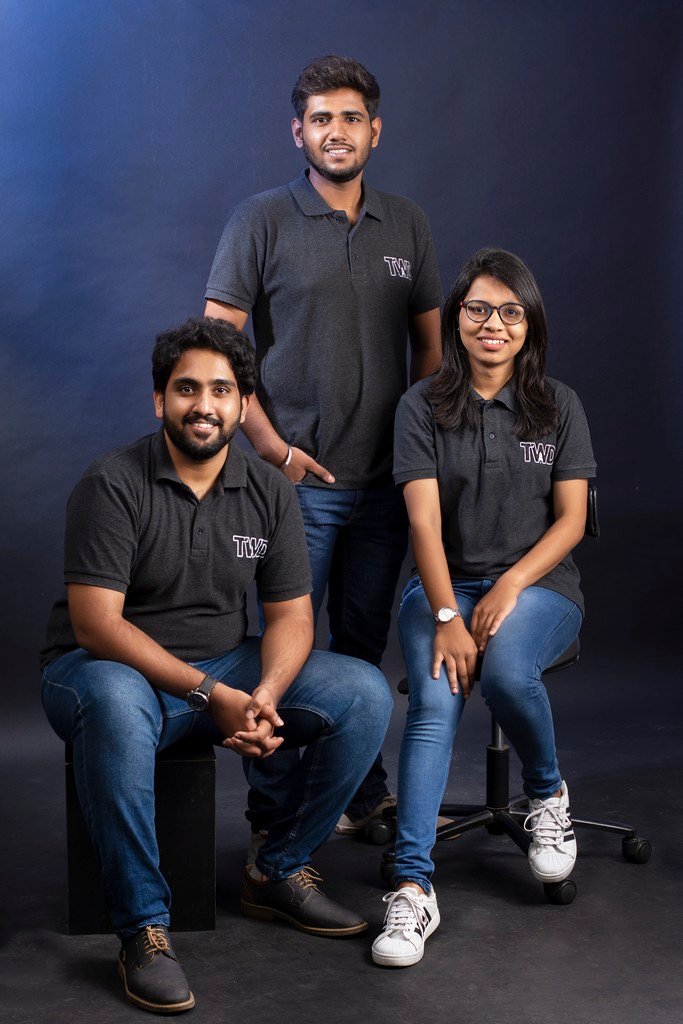
Thrustworks Dynetics was founded in 2023 by Manan Joshi (CEO), Kalyani Shinde (CTO) and Vinith Shenoy (COO) — all three previously worked at Bharat Forge’s aerospace division, which explains the company’s manufacturing-first instincts. Incubated at SINE-IIT Bombay, the startup raised ₹7 crore in seed funding in October 2025, led by Jamwant Ventures with Piper Serica participating.
The igniter is not a standalone product. It is the front end of ANYA, the company’s modular 3D-printed semi-cryogenic engine platform designed to run on kerosene and liquid oxygen, targeting 20–30 kN of thrust with a thrust-to-weight ratio above 100, according to the company. Thrustworks positions itself as a supplier to the rocket industry rather than a launch company — selling engines and subsystems to the firms building vehicles. It has signed an MoU with IN-SPACe for access to ISRO test facilities and lists ISRO, Bharat Forge, Godrej Aerospace and INOXCVA among its collaborators — the subsystem suppliers Astrobase’s EVEREST engine programme will need as it scales.
From igniter to infrastructure
In January 2026, Thrustworks inaugurated its Integrated Rocket Facility in Pune and built a Mobile Semi-Cryo Test Bed in-house. The company has also mentioned potential defence and drone applications, including rocket-assisted take-off (RATO) boosters, but those remain speculative for now: company-stated potential, not demonstrated capability.
Key takeaway
The igniter is a small component carrying a large message. A founding team with forge-industry roots used computational design to solve, for ₹1 crore, a problem Europe attacked with a €9 million programme. Whether ANYA ever flies matters less than what the igniter proves: India’s private space sector is learning to compete on engineering efficiency, not just cost. SpaceFields is applying the same discipline to solid propulsion.
What is resonance ignition?
A rocket ignition method that uses acoustic shockwaves generated by precisely shaped combustion-chamber geometry to heat propellants until they ignite — no spark plug, pyrotechnic charge or external energy source. It has no moving parts and can theoretically restart indefinitely.
Who founded Thrustworks Dynetics?
Manan Joshi (CEO), Kalyani Shinde (CTO) and Vinith Shenoy (COO) founded the company in Pune in 2023 after working at Bharat Forge’s aerospace division. The startup is incubated at SINE-IIT Bombay and raised ₹7 crore in seed funding in October 2025.
Is the ₹1 crore vs €9 million comparison fair?
Only partly. ESA confirms the €9 million THRUST! contract funded a full reusable-propulsion programme, not just the igniter. Thrustworks’ ₹1 crore covers its igniter build — the cost discipline is still striking.
What is the ANYA engine?
ANYA is Thrustworks’ modular, 3D-printed semi-cryogenic engine platform designed for kerosene and liquid oxygen, targeting 20–30 kN of thrust. The resonance igniter is built into it as the ignition system, and the company aims to sell such engines to rocket builders rather than launch its own vehicles.
More Read
Sources & further reading
- Thrustworks Dynetics official website — The company’s official site with programme details
- Thrustworks Dynetics test-fires India’s first resonance ignition system — The company’s official test-fire announcement
- Thrustworks Dynetics wants to supply its engines to India’s rocket industry — YourStory profile: seed round, ANYA platform, supplier strategy
- ESA: Rocket ignition that resonates — ESA on The Exploration Company’s resonance-igniter tests under THRUST!