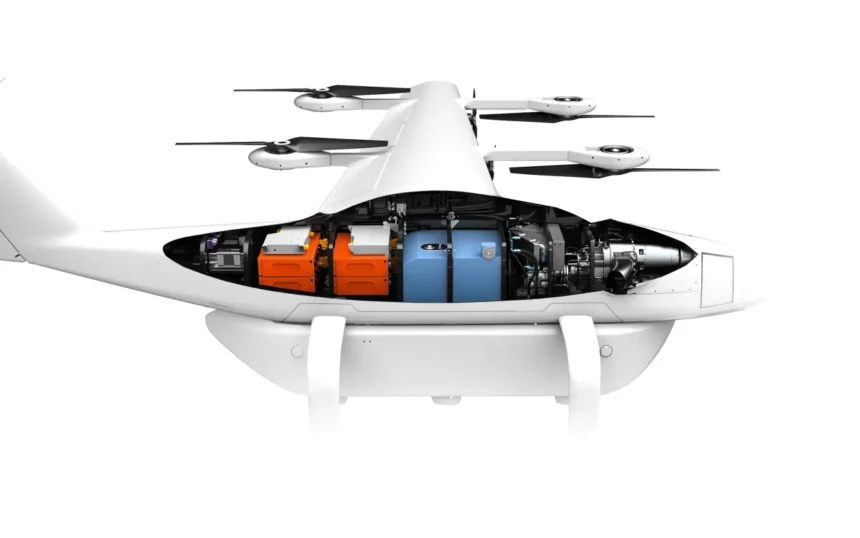
India’s e-commerce runs on trucks, and trucks run on roads — congested, slow, and useless when floods wash them away. A Hyderabad startup called LogiXair wants to skip the roads entirely. The company is developing a hybrid-electric VTOL aircraft designed to carry 300 kg of cargo over 600 km, landing where no runway exists. The idea has a nickname floating around it: the “flying truck.” Here is the honest part, up front: the aircraft has not flown. There are no flight trials on record, and every public detail traces back to a single funding announcement from August 2026. This is a story about a bet being placed — not a machine already in the air.
What LogiXair says it is building
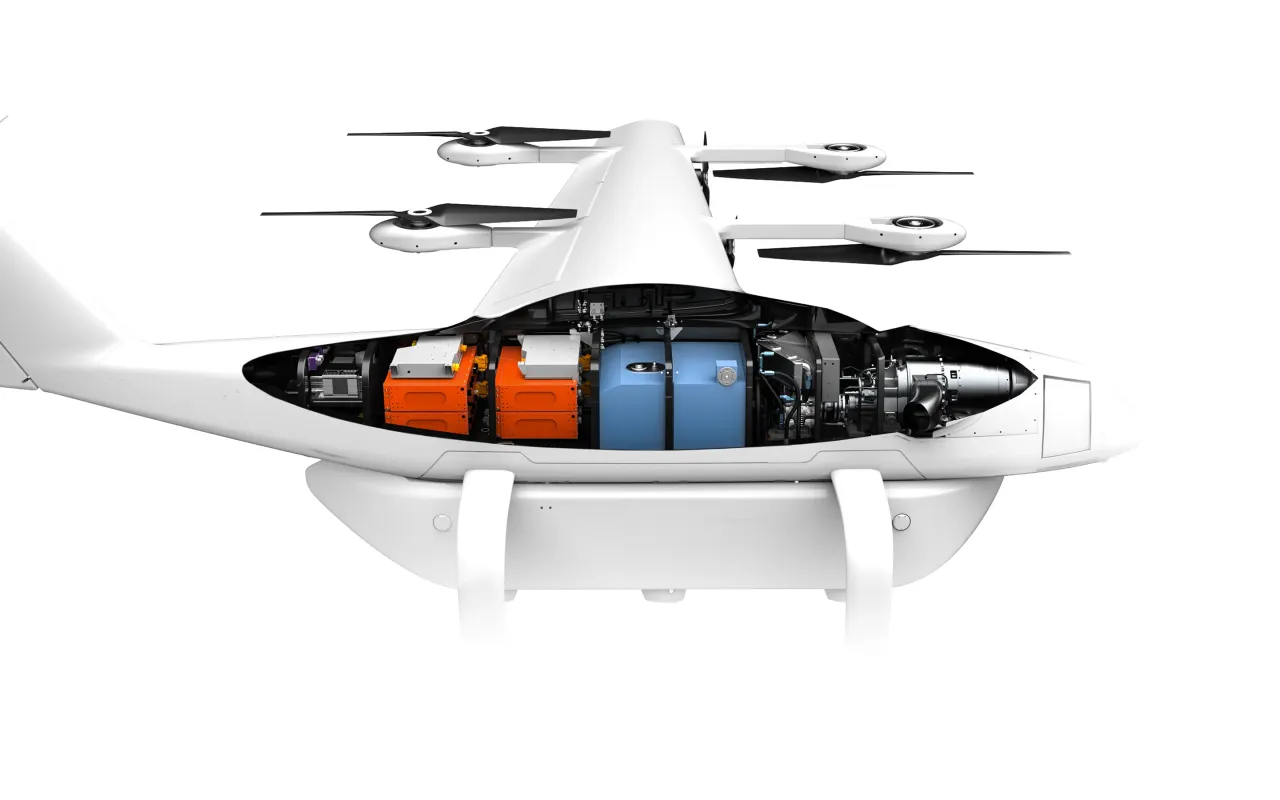
LogiXair describes its platform as an automated, hybrid-electric vertical take-off and landing aircraft for middle-mile cargo movement — the leg of logistics between warehouses and cities, currently served by trucks and small feeder aircraft. The design targets, per company materials, are a 300-kg payload and a 600-km range, aimed at sub-600 km routes connecting metros to Tier II and Tier III cities without dependence on roads, rail, or conventional airport infrastructure. The target sectors the company lists are e-commerce, healthcare, manufacturing, defence, humanitarian relief, and remote connectivity.
The “flying truck” label deserves a note. It appears to be a descriptive nickname from the Instagram caption that surfaced the story — no press release or company source found during research uses it as the aircraft’s official name. Treat it as a handy mental image, not a product name.
Why middle-mile air cargo is heating up
The timing is not accidental. Middle-mile air cargo is one of the busiest frontiers in Indian aerospace startups right now. BluJ Aerospace, also Hyderabad-based, is testing a 500-kg-class eVTOL called VANTIS. BonV Aero of Bhubaneswar builds heavy-lift drones for defence logistics and has raised around $5 million. The logic is the same across all of them: India’s road freight is slow and getting slower, air freight is expensive and airport-bound, and a VTOL that lands on a patch of ground in between could rewrite the economics of everything from pharma cold-chains to disaster relief. Indian aerospace startups are moving fast — Agnikul’s 3D-printed Agnite engine test-fired in March 2026.
LogiXair’s hybrid-electric approach is a deliberate engineering choice worth understanding. Pure-electric VTOLs are range-limited by battery weight; a hybrid system trades some simplicity for much longer legs. For a 600-km cargo mission, that trade-off is arguably the only way the numbers close with today’s batteries.
The funding — and what it actually buys
On 10 August 2026, The Chennai Angels announced an investment in LogiXair, with participation from the Kerala Angel Network and Lead Angels. The round size was not disclosed. What matters more than the amount is what the money is for: the announcement earmarks it for “product development and commercialisation efforts, including validation of key aircraft systems.” Read that carefully — it means the funding pays for proving the aircraft’s systems work, not for manufacturing a fleet. This is a pre-flight-test company.
That stage matters for how you read every spec in this post. The 300-kg payload and 600-km range are design targets from company materials, not demonstrated figures. The autonomy is described as an “automated” cargo aviation platform — a goal, not a demonstrated capability. Nothing in the public record shows the aircraft flying, hovering, or transitioning between vertical and forward flight.
LogiXair’s 300-kg VTOL exists today as a funded engineering plan — the August 2026 round pays for validating key aircraft systems, not for building a fleet.
The single-source problem
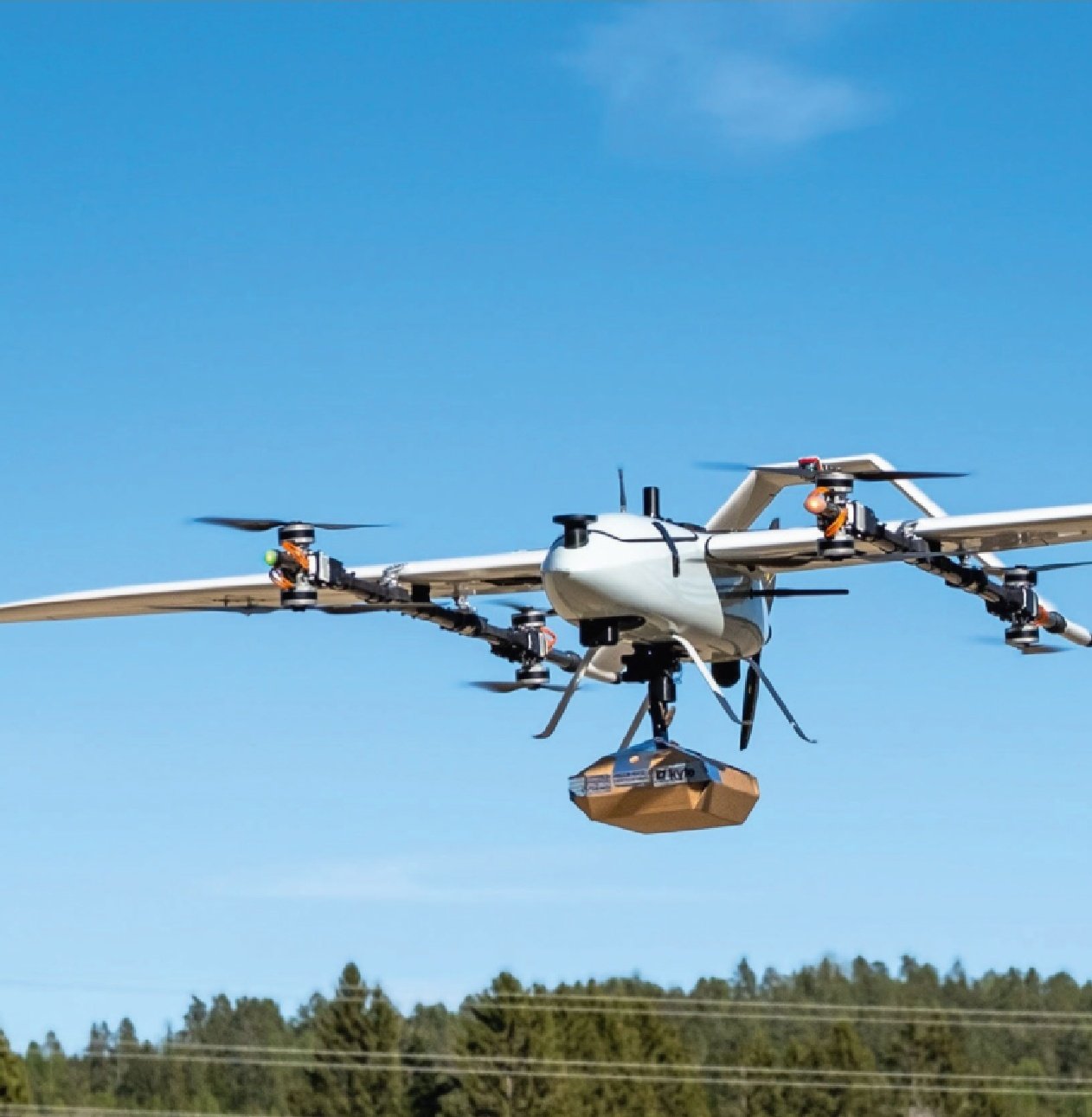
Every press mention of LogiXair found during research traces back to one ANI/VMPL wire release dated 10 August 2026. There is no independent journalism, no verified company website content (the company’s site did not load during research), and no flight-test record. That does not make the company fake — early-stage startups often have thin paper trails — but it means every number in this story should be read as company-stated, and the blog will not dress it up as more.
Key takeaway
The takeaway: LogiXair is a legitimate early bet on middle-mile cargo VTOLs, backed by real angel investors — but it is at the starting line, not the finish line. Watch for system-validation milestones and, eventually, a first flight. Until then, the “flying truck” is a plan with funding. Contrast with Thrustworks’ hot-fired igniter — validated hardware from the same ecosystem.
What to watch next
The milestones that would move this story from plan to programme: validated propulsion and flight-control systems, a demonstrator flight, and regulatory engagement with the DGCA for cargo VTOL operations. Certification — not engineering — is where many cargo-aircraft startups stall.
More Read

What is LogiXair building?
LogiXair, a Hyderabad aerospace startup founded by Bhanu Teja Chidura and Pulla Kapil, is developing a hybrid-electric VTOL aircraft designed to carry 300 kg of cargo over 600 km for middle-mile logistics. These are design targets, not demonstrated figures.
Has the LogiXair aircraft flown?
No. No flight trials have been found in the public record. The August 2026 angel funding is earmarked for product development and validation of key aircraft systems — a pre-flight-test stage.
Is “Flying Truck” the aircraft’s official name?
Not verified. The nickname appears to come from the Instagram caption that surfaced the story; no press release or company source uses it as an official product name.
Who funded LogiXair?
The Chennai Angels announced an investment on 10 August 2026, with participation from Kerala Angel Network and Lead Angels. The round size was not disclosed.
Who else is building cargo VTOLs in India?
BluJ Aerospace (Hyderabad, 500-kg-class VANTIS eVTOL in testing) and BonV Aero (Bhubaneswar, heavy-lift defence drones) are the closest adjacent players in middle-mile air cargo.
Sources & further reading
- The Chennai Angels investment announcement — ANI wire release on LogiXair’s angel round, 10 Aug 2026 — the single source for funding and specs
- BluJ Aerospace VANTIS programme — Context on the adjacent 500-kg-class eVTOL in testing
- DGCA drone regulations overview — India’s aviation regulator — certification framework for cargo VTOLs