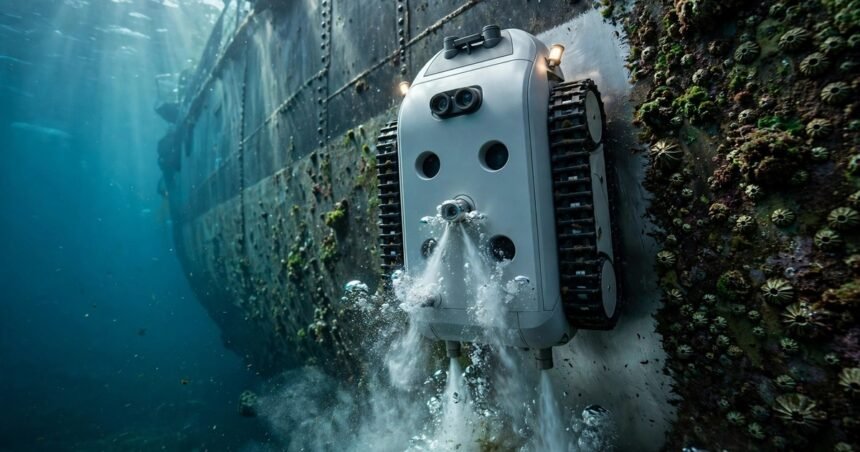
Every ship that sails grows a beard. Within weeks of leaving port, a hull picks up algae, barnacles and weed — a living carpet that drags through the water, burns extra fuel and costs the shipping industry billions. Cleaning it has always meant a hard choice: haul the ship out of the water into dry dock, or send divers down with brushes and high-pressure jets. A Delhi startup has built a third option: a robot that sticks to the steel and cleans it while the ship keeps working.
A robot that sticks to steel
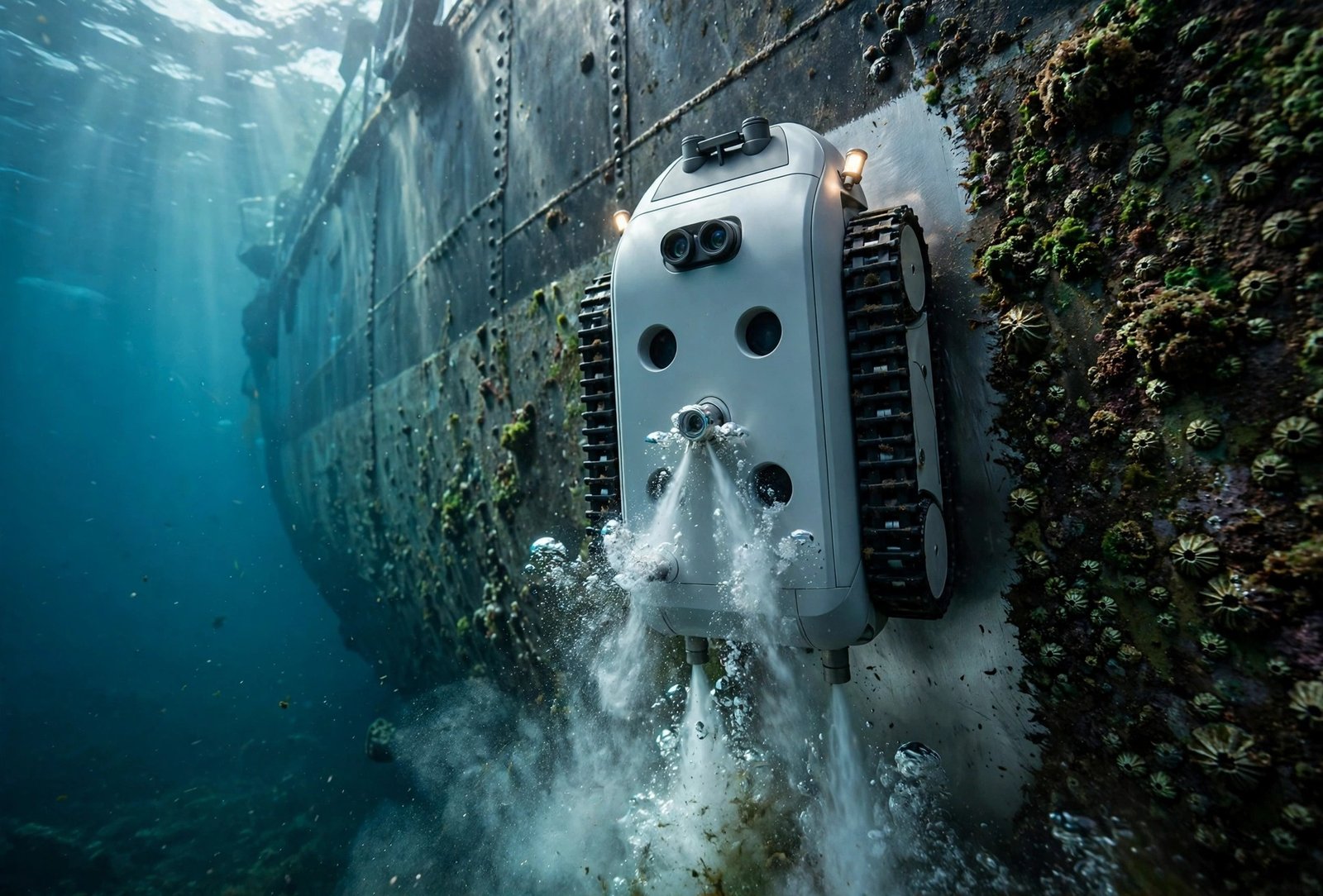
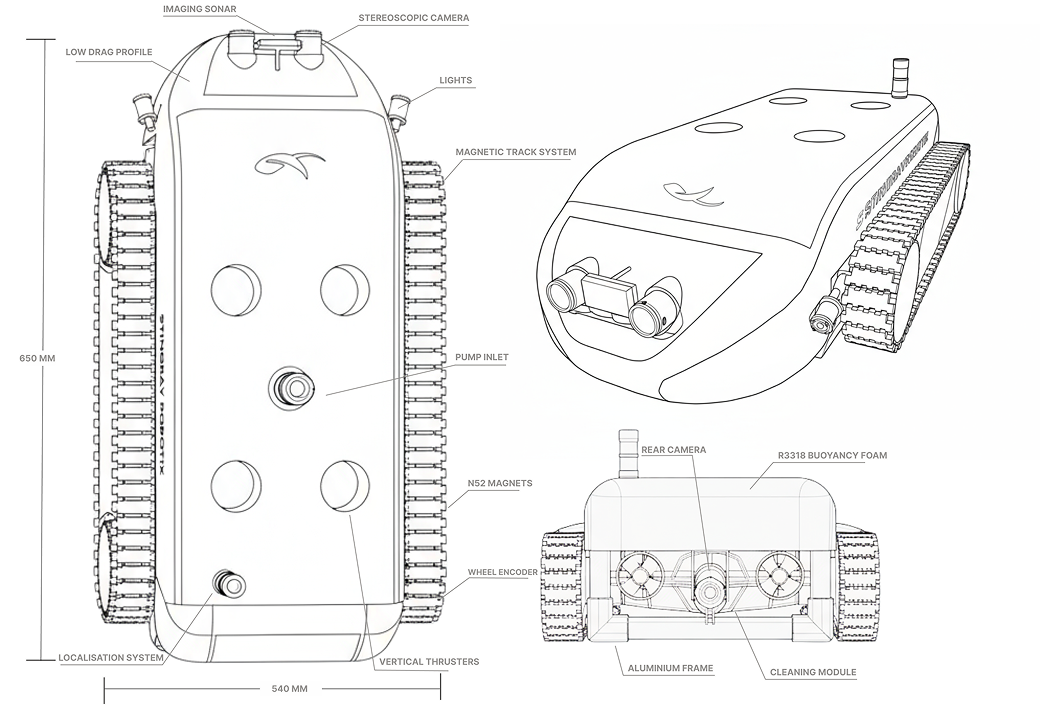
Stingray Robotix, founded in Delhi in 2024, builds marine robots for underwater maintenance and inspection. Its flagship is the Hull Crawler, a magnetically attached remotely operated vehicle that clings to a ship’s steel hull and works at depths of up to 200 metres. Powerful N52 magnets hold it to the hull while caterpillar tracks carry it across the steel, and a low-drag aluminium body — about 650 millimetres tall and 540 wide — keeps it steady in the current. An imaging sonar, a stereoscopic camera, lights and vertical thrusters give it eyes and balance in dark, murky water, while a localisation system and wheel encoders track exactly where it has been. The platform is modular by design: the company says sensors from sonars to non-destructive-testing probes can be mounted on the same frame, so the same robot that cleans can also inspect.
Cleaning without touching the paint
The clever part is how the Hull Crawler cleans. Instead of abrasive brushes that scour the hull, it fires high-pressure cavitation water jets — collapsing bubbles that blast marine growth off the steel without damaging the protective coating underneath. That matters, because a stripped coating means corrosion, and corrosion means an expensive repaint. The robot works while the vessel stays in service, cleaning during loading and unloading, so there is no dry-docking bill and no schedule lost to maintenance. Real-time analytics report on cleaning effectiveness and hull condition as the work happens, and with underwater-inspection-in-lieu-of-dry-docking capability, the company says the system can stretch the interval between dockings to up to 12 years.
No downtime, no divers
More Read

The whole system is built to be light and fast to deploy: one operator, one person to carry it, no divers in the water and no risk to human life. It runs around the clock, and because a clean hull slips through the water more easily, the company says the savings stack up fast — millions in fuel costs, emissions down by up to 55%, and fewer invasive species carried between ports on fouled hulls. It is the kind of unglamorous, essential engineering that keeps the world’s fleet moving: no drama, just a robot doing dangerous, dirty work better than the old way.
What comes next
Stingray Robotix is a young company — founded only in 2024 — and the Hull Crawler is its opening act: the team is also working on what it calls India’s first working-class ROV, a bigger machine for heavier underwater jobs. It arrives as part of a wider wave of homegrown underwater robotics: Kochi’s EyeROV has already put its military-grade TROUT systems into service with the Indian Navy, and research institutes are pushing indigenous subsea vehicles to ever greater depths. From that wave, the Hull Crawler stands out for aiming at the everyday economics of shipping — cleaner hulls, cheaper fuel, safer work — built by a Delhi startup that decided the hardest jobs underwater should belong to robots.
Keep reading: The Robot Submarine That Patrols Alone for 45 Days: Inside Rekise Marine’s Jalkapi · No Divers Needed: Inside CSIR-NIO’s C-BOT, the Robot Watching Over India’s Coral Reefs · More Shipbuilding & Maritime stories
Like stories like this? Add Exceptional Technology as a preferred source on Google to see more of our reporting in your search results and Discover feed.