Hypersonic weapons move too fast for the old rules of defence. Past Mach 5, a missile can cross hundreds of kilometres in minutes, change course mid-flight and hide behind a sheath of plasma that blinds ordinary radar — shrinking the time to see it, understand it and answer it to seconds. On 20 November 2026, a Bhubaneswar company called Kristellar Aerospace unveiled the system it has spent nearly five years building for exactly that moment: an indigenous hypersonic countermeasure, designed and engineered in India, built to spot the fastest threats in the sky and give the country time to act.
Kristellar Aerospace was founded in August 2021 by Uday Bhanu Das, a technologist who has spent more than two decades working across cyber warfare, artificial intelligence and aerospace systems. The company says its team of 54 young engineers at its research centre in Bhubaneswar has worked on the countermeasure since the company’s earliest days, alongside a wider portfolio that spans nine core technology domains and more than 50 products and system initiatives — from radar and radio-frequency engineering to advanced sensing, real-time signal processing and high-performance computing. The company’s stated mission is simple and ambitious: India should be able to build, on its own, the technologies that will define the future of national security.

Seeing through the plasma sheath
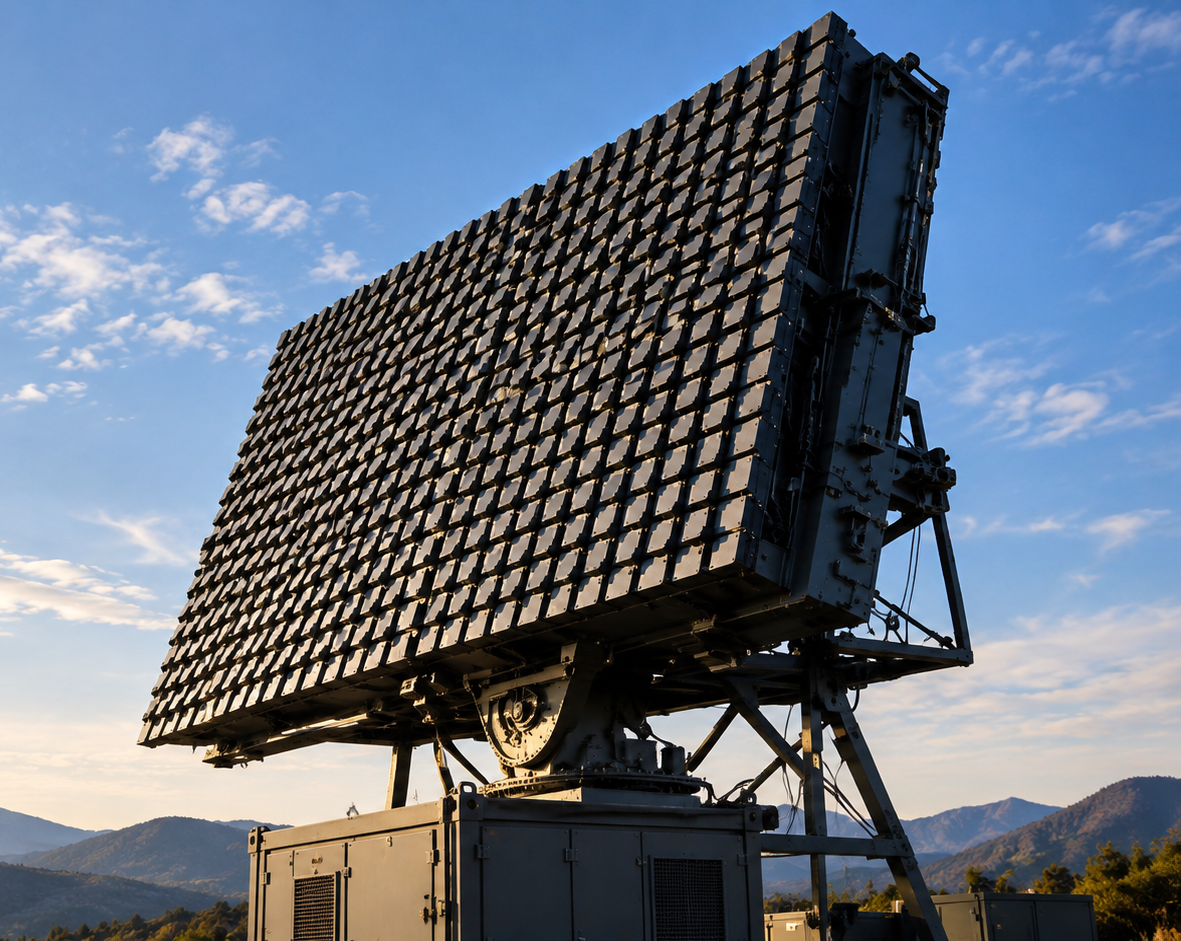
The hardest part of stopping a hypersonic weapon is seeing it at all. Travelling beyond Mach 5, hypersonic targets are far harder to detect and track with conventional sensors, and their unpredictable manoeuvring makes continuous tracking a challenge of its own. Kristellar’s answer is a three-layer sensing architecture: ground-based sensors, high-altitude platforms and, in time, satellites in low Earth orbit, working together as one shield. At the heart of the system, the company says, is artificial intelligence running directly on the radar hardware — on-chip AI inference that lets the system process signals and identify aerial threats faster, without waiting for data to travel to a distant server. The company has also developed a photonic radar architecture, which uses light rather than radio waves and is designed to resist jamming and keep working against stealthy, fast-moving targets. The company says around four-fifths of the technology is developed in-house.
Five years of quiet engineering
The unveiling in Bhubaneswar was the public face of five years of research, engineering and experimentation. A visible milestone along the way came on 5 June 2025, when the company inaugurated its ORION Deep Neural Network laboratory at its Nayapalli campus — Odisha’s first DNN laboratory for aerospace and defence — giving its engineers a home base for the AI work at the centre of the countermeasure. The company’s wider work has drawn the attention of India’s defence establishment: in May 2026, defence PSU Bharat Electronics Limited signed a tripartite agreement with Kristellar and Metamind Systems to co-develop future technologies across cyber security, electronic warfare and avionics, semiconductors and data centres. Kristellar’s portfolio also includes Trinetra, a cognitive electronic warfare system, quantum-resilient secure communications, CubeSat systems and a 2.5 N composite propulsion engine — the kind of breadth that lets one team build sensing, computing and communications as a single system rather than buying them in pieces.
More Read

An ecosystem, not a single product
Kristellar’s ambitions reach beyond a single system. At the unveiling, the company announced two proposed strategic investments worth ₹1,350 crore in Odisha: a ₹1,000-crore Kristellar Space Technology Park, and a ₹350-crore project to transform the ORION DNN laboratory into a quantum datacentre and a dedicated facility for developing and manufacturing hypersonic countermeasure technology. Four agreements were signed at the event, including a partnership with ADJ Engineering to bring the quantum datacentre into operation within nine months. The company says it plans to grow its Bhubaneswar team by several hundred engineers as the work scales — building the technology in Odisha rather than depending on established defence manufacturing centres elsewhere. “When we began this journey, we understood the extraordinary technological challenges associated with hypersonic threats,” says Uday Bhanu Das, the company’s founder and CEO. “We also believed that India must develop its own capabilities in the technologies that will define the future of national security.”
What comes next
The next chapter is testing. Kristellar says initial field trials are planned at the Army Air Defence College in Gopalpur, followed by further trials with the Army’s Northern Command, and the company expects the countermeasure to be ready for service in the coming months as testing and validation progress. If the trials go as the company hopes, a technology that began as a five-year bet by 54 young engineers in Bhubaneswar will become part of how India watches its skies — a home-grown shield for the fastest threats ever built, designed, engineered and manufactured in Odisha. For a country that has long imported its most advanced defence technology, that is the point: the shield itself is Indian.
Keep reading: The Drone That Keeps Flying When GPS Goes Dark: Inside Gamma Rotors’ NightHawk · Launch, Recover, Relaunch: Inside BAAS Technologies, the Pune Startup Building Reusable Rockets · More Aerospace & Defense stories
Like stories like this? Add Exceptional Technology as a preferred source on Google to see more of our reporting in your search results and Discover feed.