Every modern drone has the same quiet weakness: it trusts the sky. It trusts the satellite signal that tells it where it is, and the radio link that tells it what to do next. Take both away — jam the GPS, cut the link — and most drones are finished. They hover, they drift, they come down. On 18 November 2026, a Noida company called Gamma Rotors unveiled a drone built for exactly that moment: NightHawk, a surveillance platform designed to keep navigating, keep talking and keep flying when the spectrum fights back.
Gamma Rotors has been building drones for India’s uniformed services since 2018. The company says it has delivered more than 650 drones, logged over 5,000 flight hours and trained more than 5,000 personnel to fly them. Its systems serve the Indian Army, the BSF, the CISF, the NSG, the ITBP, the Railway Protection Force and police forces in Delhi, Andhra Pradesh and Mumbai. NightHawk is the flagship of that fleet — and the new electronic-warfare resilient version is the company’s answer to the hardest lesson of modern conflict: the airwaves are now a battlefield of their own.
Built for the jammed sky
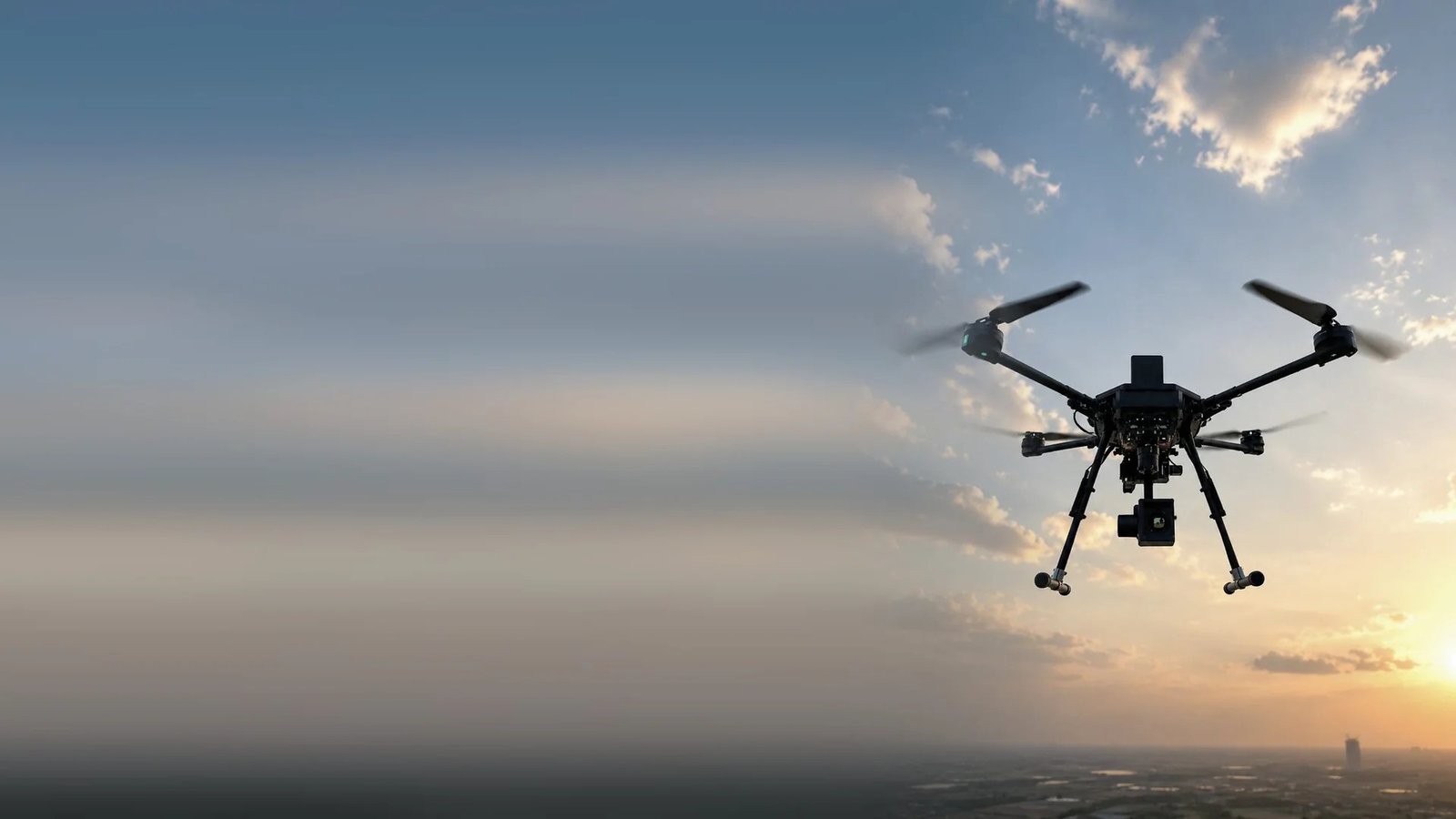
NightHawk’s resilience is engineered as one integrated system, not a bolt-on. The company says its satellite-independent navigation keeps the drone on course when GPS is jammed or spoofed, its hardened, encrypted datalink is built to hold under interference, and its autonomous fallback functions take over if the link is cut altogether — returning home, holding position or continuing the mission on its own, with onboard tracking keeping the target in view. The platform has been tested in field trials under simulated contested conditions, and the core of the resilience — the navigation and the communications — was developed in-house rather than adapted from imported technology.
The timing is no accident. Operation Sindoor exposed where unmanned systems fall short when the electromagnetic environment turns hostile, and the armed forces have since set three priorities for new drones built within the country: secure communications, GPS-free flight and anti-jamming capability. Gamma Rotors built NightHawk to address all three in a single platform. “India’s borders and airspace are among the most contested in the world, and the drones that watch over them are only useful if they keep working when GPS is jammed and communication links are attacked,” says Arpan Ghosh, the company’s founder and director. “At GRL, we set out to close that gap with Indian engineering behind the core of the system.”
The sentinel’s eyes
More Read
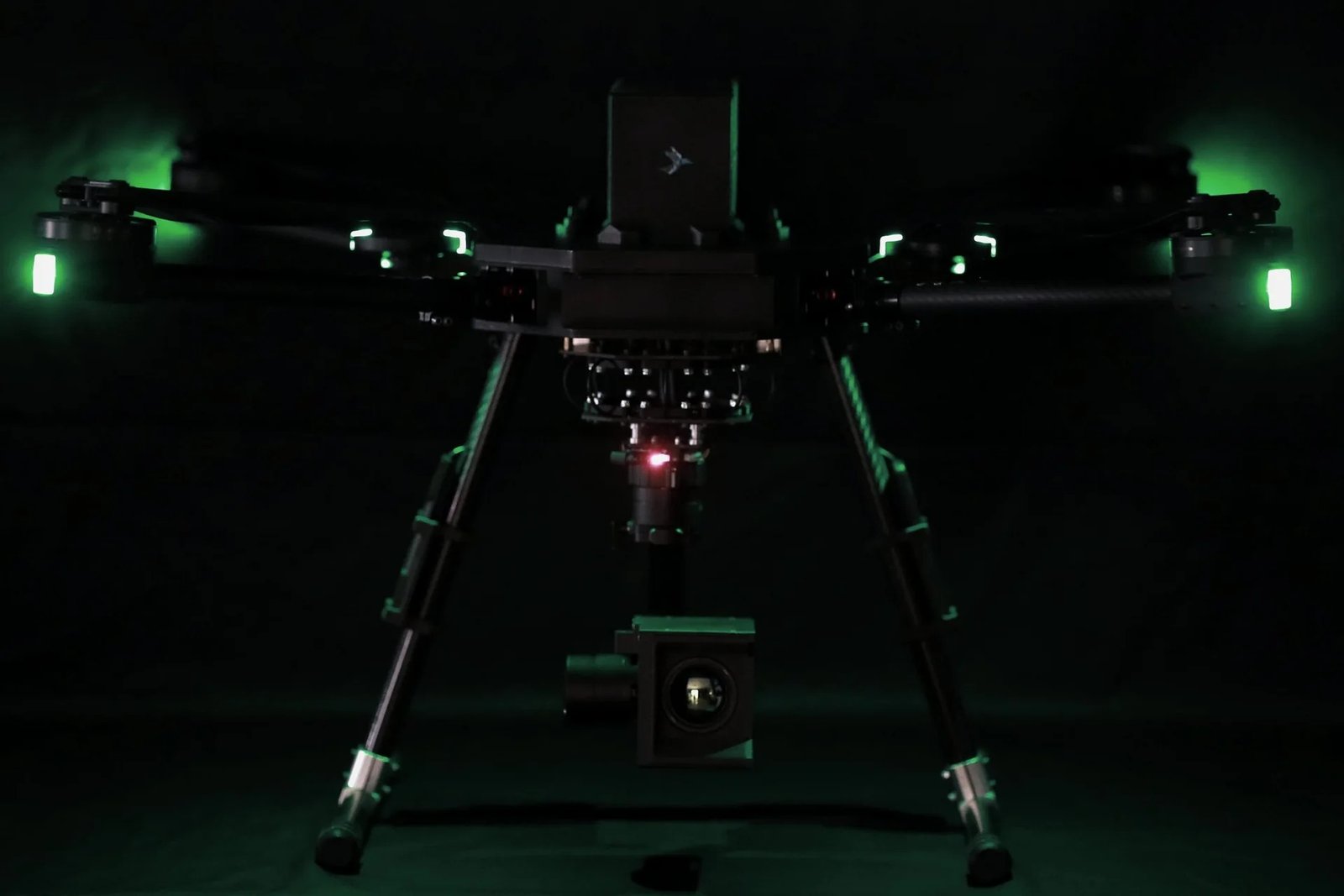
NightHawk is an IP65 all-weather surveillance platform, built to fly through rain and dust. It carries a 30× day camera and a 35 mm thermal imager on a stabilised gimbal, so it can watch a border through darkness, haze and heat. The company says it flies for up to 60 minutes, reaches a 10 km transmission range and climbs to a 5,000 m service ceiling, and it carries an in-air grenade dropping mechanism with precise software targeting. The family grows from there: the NightHawk Pro carries the anti-jamming GPS and hardened communications, and the NightHawk-XL Pro stretches endurance to 90 minutes and the ceiling to 6,000 m. Automatic return-to-home on communication loss is standard across the NightHawk and MiniBot XL families.
Eight years of flying with the forces
The NightHawk story sits on eight years of steady engineering. Gamma Rotors was founded in 2018 by Arpan Ghosh, a recipient of the Prime Minister’s Award for creating the world’s first aerial bomb-defusing robot. His chief design officer, Praveenkumar J., is a former IIT Bombay research engineer who developed a coaxial helicopter for air taxis. Alongside NightHawk, the company builds the MiniBot family of compact surveillance drones — including a titanium-bodied variant for rugged military environments — the MiniBot XL heavy-lift platform, and remote-controlled weapon systems. Every system ships with hands-on training for the operators who will fly it, which is how the company has put 5,000 trained personnel behind its fleet. The company is DPIIT licensed and a GeM certified OEM, building in Noida under the Make in India banner.
What comes next
Gamma Rotors says it will keep improving NightHawk as requirements evolve, and the direction of travel is clear: drones that can operate without GPS or a live link will increasingly set the standard for the category. India has no shortage of drone makers, but few have spent eight years delivering hardware to the forces that guard its borders — and fewer still have built the jam-resistant navigation and communications at the heart of the machine themselves. NightHawk is a quiet, practical kind of breakthrough: a drone that does its job precisely when the enemy is trying hardest to stop it. For the soldiers watching India’s most contested skies, that is the difference that matters.
Keep reading: Launch, Recover, Relaunch: Inside BAAS Technologies, the Pune Startup Building Reusable Rockets · The Clock That Keeps India on Time: Inside QuPrayog’s Indigenous Atomic Clock · More Aerospace & Defense stories
Like stories like this? Add Exceptional Technology as a preferred source on Google to see more of our reporting in your search results and Discover feed.